other

blogs

Home

blogs

  • Floors in commercial kitchens and canteens: how to deal with grease, slip risk and fast turnaround?
    Oct 10, 2026
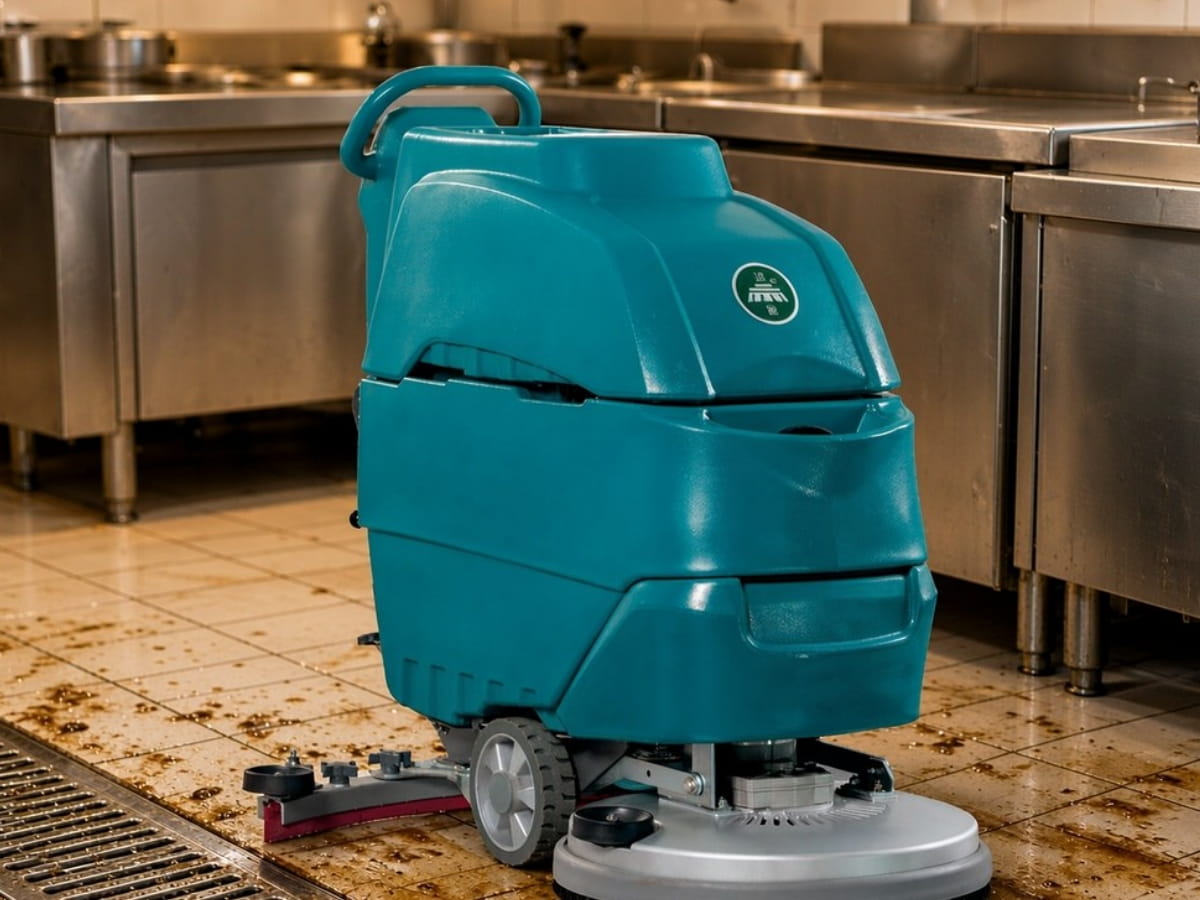
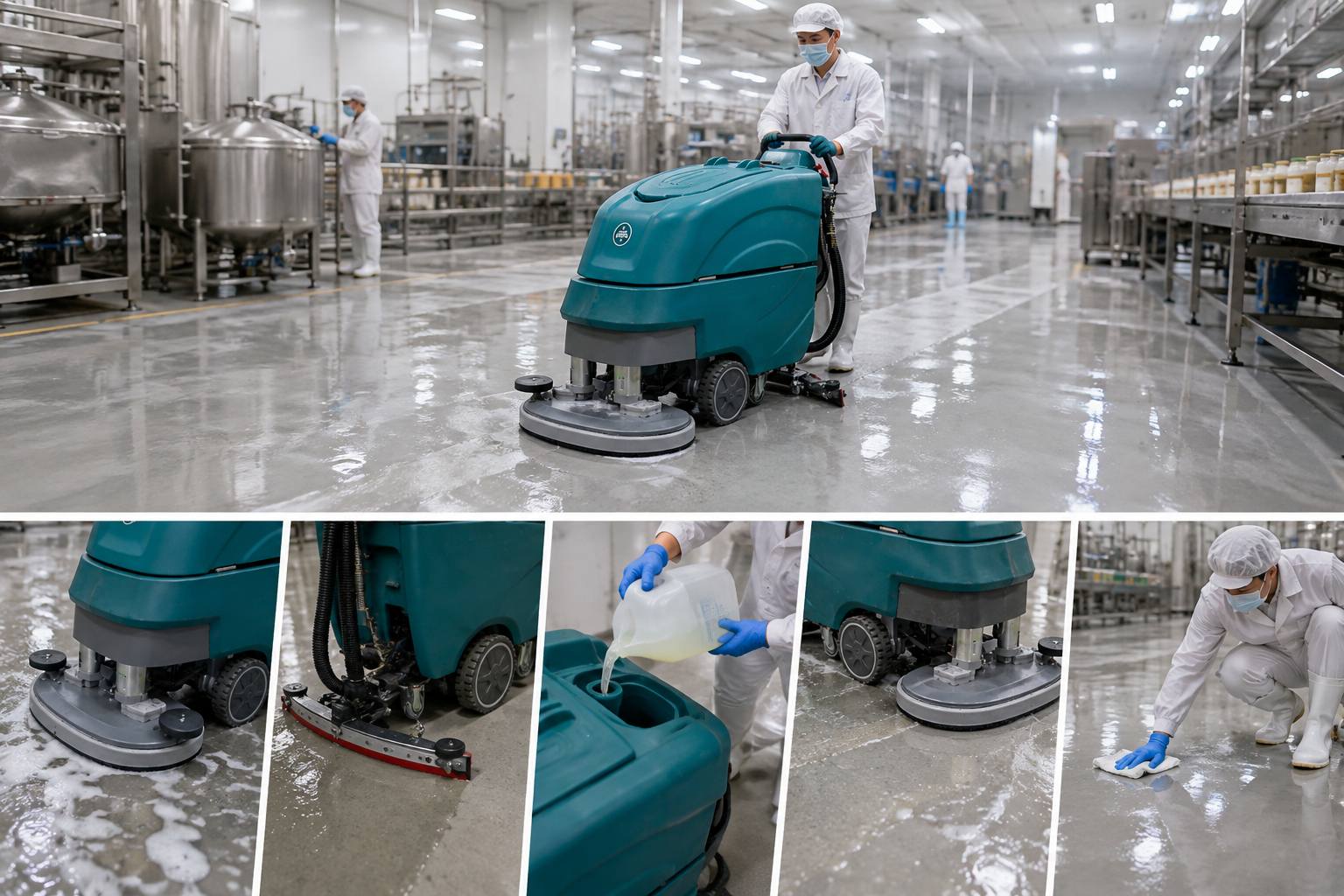
      Key Takeaways Grease is a chemistry problem first. Detergent may be used as appropriate. However, once detergent is added to the clean water tank, anti-foaming agent must be added to the waste water tank. Machine footprint decides whether the plan survives contact with a real kitchen. Degreasing sequence that actually works Kitchen and food service work sits near the top of slip-claim statistics in most countries, Kitchen and canteen floors fail in a specific way. They look acceptable from the doorway and turn slippery two steps past the fryer, where a thin grease film has been mopped rather than removed. Dry pick-up first: food scraps, wrappers and anything solid go up before any water touches them, or you end up pushing a slurry around. Then apply degreaser at the dilution the label states, not stronger. Stronger does not clean faster and it leaves its own residue.  Cleaning between service periods A kitchen floor cannot wait for closing time. Grease from a lunch service is a slip risk by mid-afternoon, and a full degrease cannot run while the line is firing. The answer is short, defined cleans fitted into the gaps the service already has. Window Time Priority task Tool Mid-morning lull 15–20 min Spot degrease fryer zone Deck brush + squeegee Between lunch and dinner 30–45 min Full scrub of kitchen floor Compact scrubber dryer After close 60–90 min Full degreasing sequence + drains Scrubber + wet vacuum Weekly Half shift Equipment bases, corners, grates Detail tools Post the table at the pot wash. A between-service clean that depends on someone noticing the floor is a clean that happens on the day somebody slips instead. Machines small enough for tight kitchens Most cleaning machines are built for lobbies, not for a galley kitchen with two metres between the range and the wall. A canteen cleaning machine has to turn in the aisle, pass through a standard door, and leave the floor dry enough to walk on when service restarts. A compact scrubber such as the JIECHI A3 walk-behind scrubber or its self-propelled sister model, the A3D, answers that. They share the same core platform, which makes the choice between them a working-condition decision rather than a specification fight. Item JIECHI A3 JIECHI A3D Drive Operator-pushed Self-propelled Battery 24 V / 100 Ah 24 V / 100 Ah Brush / suction width 530 mm / 770 mm 530 mm / 770 mm Rated output 2,200 m²/h 2,400 m²/h Tanks, fresh / recovery 50 L / 55 L 50 L / 55 L Brush / vacuum motor 550 W / 550 W 550 W / 550 W Size / weight 127×55×109 cm, 155 kg 127×55×109 cm, 165 kg   From the field: sizing the between-services scrub Take a kitchen plus canteen floor of around 400 m². At the A3's rated 2,200 m²/h the pass is 11 minutes on paper; at a realistic 60 per cent coverage around tables and equipment it is closer to 18 to 20 minutes, which fits the lunch-to-dinner window. Shanghai Jiechi builds both versions on the same platform, so spares, brushes and training carry across the fleet. FAQ Which one should a small kitchen buy, the A3 or the A3D? For one compact kitchen the A3 usually covers it: push operation plus adjustable brush pressure for baked-on grease. Move to the A3D for long pot-wash-to-canteen routes, tight aisles, or the built-in high-pressure jet for stubborn spots. What should the floor look like after a correct clean? Matte and dry, with no sheen under the kitchen lights. A glossy tile floor in a kitchen is a warning sign, not a result; that shine is usually the residue the routine failed to rinse away.   Equip Your Kitchen And Canteen Tell us the floor area, the tightest aisle and your service windows. We will match a compact scrubber and slurry vacuum to the routine. Tel: +1 2403149021  |  Email: kliu@jiechi.com  |  www.rceautofloorclean.com
  • Scrubber-Sweeper Combination Machines: When One Machine Beats Two
    Oct 08, 2026
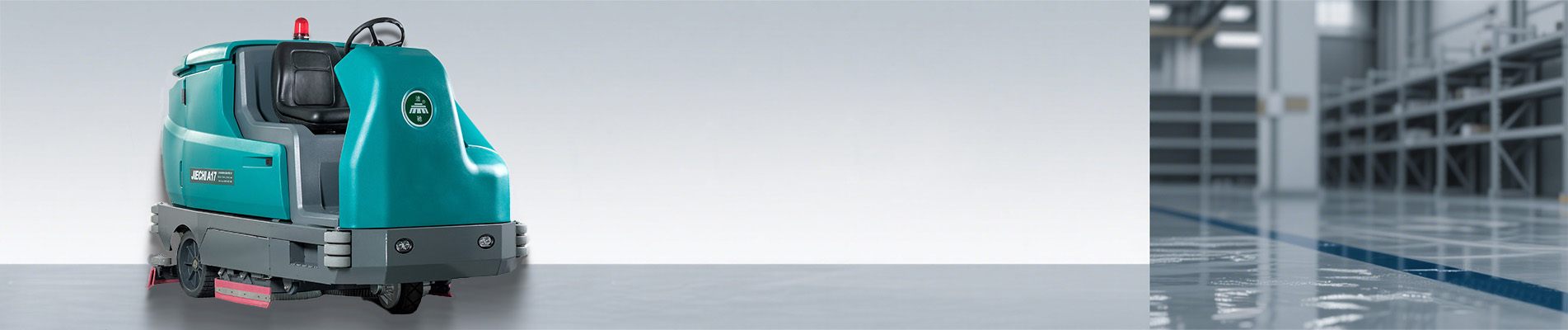
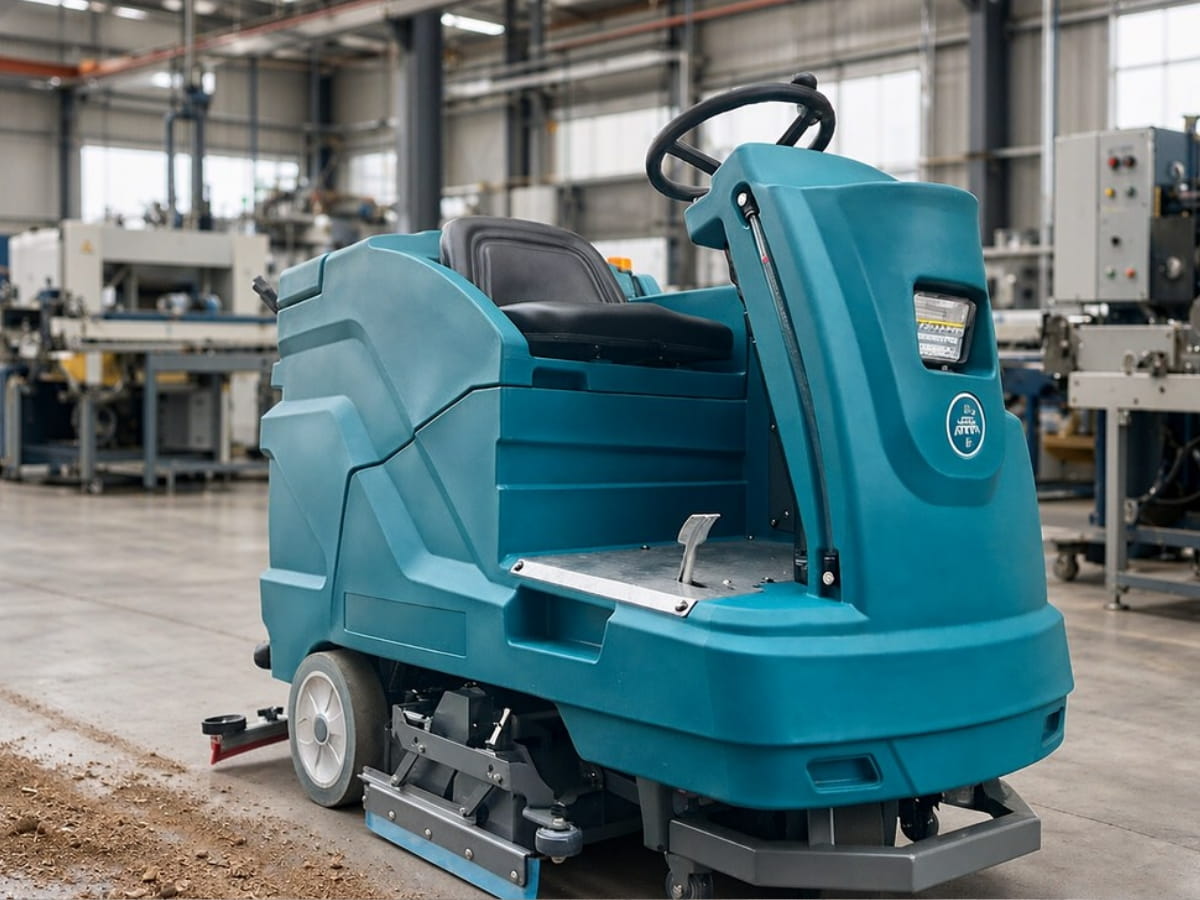
    Quick Answer Key Takeaways How It Works Two Passes Into One Site Conditions Payload & Shift Time Dual System Care Walk-behind vs Ride-on FAQ Conclusion Contact Us Quick Answer A scrubber sweeper combination machine sweeps dry debris into a hopper and scrubs the same strip of floor in one pass, so one operator replaces a two-machine, two-pass routine. It beats two machines when the floor carries both dust and stuck-on soil, and when the site is too small to justify a separate sweeper. Key Takeaways The hopper handles dry debris first, the brush deck and squeegee handle the wet work second, in the same travel direction. The saving is mostly operator hours and scheduling, not water or detergent. Mixed soil is the deciding factor. Floors with only dust suit a sweeper; floors with only film suit a scrubber. Dual systems mean two service routines. Skipping the sweeping side is how these machines get a bad reputation. The usual cleaning routine on a factory floor is two machines and two passes: a sweeper to get the grit up, then a scrubber once the loose material is gone. It works, and it costs two operators, two sets of consumables and a slot in the production calendar twice. A combination machine collapses that into one pass. Whether that is a genuine improvement depends on the soil, the aisle layout and how much of the shift is spent on things other than cleaning. Here is how to tell. How a combination machine works: sweeping then scrubbing The sequence matters, and it runs front to back. A cylindrical main brush lifts and throws. Unlike a disc brush that works flat against the floor, the roller brush on a combination unit turns against the direction of travel and flicks debris forward into a hopper. That is what lets it pick up a bolt or a wood offcut rather than pushing it around. The hopper collects dry. Debris goes into a separate container, kept dry and separate from the recovery tank. This is the part that makes the single-pass idea work at all: if grit went into the wet system it would settle in the tank and shorten the life of the suction motor. Solution goes down behind the debris pickup. With the loose material gone, the brush deck works on film and marks rather than grinding grit into the surface. The squeegee recovers immediately. Same pass, same direction, floor left dry behind the machine. An all in one scrubber sweeper is not a compromise between the two jobs; it runs them in the correct order, one behind the other. One practical limit worth knowing before you buy: the hopper handles debris up to a certain size, and beyond that the operator still needs a broom and a dustpan. Fine grit, sand, food residue, swarf and broken packaging are all inside the range. Pallet fragments and long offcuts are not. Where two passes become one The obvious saving is the second pass over the same floor. The real saving is usually somewhere else. Scheduling. Two machines need two windows, and in a plant running two shifts those windows are the hard part. One machine needs one window, which is often the difference between cleaning daily and cleaning when there is space in the calendar. Labour. One operator, one set of tank stops, one end-of-shift rinse. On a mid-size site that is commonly 60 to 90 minutes a day recovered. Fleet count. A combination floor machine replaces two assets in the register. Fewer machines means fewer batteries to manage, one parts list and one service contract.   Site conditions that suit combinations Use this table against your own floor before you decide. The pattern to look for is mixed soil, not heavy soil. Site condition Suits a combination? Why Dust plus tyre marks and spills Strong fit Both jobs are genuinely needed on every pass Mixed debris, small metal swarf, packaging Strong fit Roller brush lifts what a disc brush would push Fine dry dust only, no wet soil Poor fit The scrubbing half never earns its keep Heavy liquid or thick sludge Poor fit The hopper is the wrong container for the volume Very tight aisles under 1.2 m Check the width Combination decks are wider than a plain scrubber Long unbroken runs over 5,000 m² Ride-on class Operator fatigue becomes the limit, not the machine Payload, water capacity and shift time A combination machine carries three things instead of two: solution, recovered water and dry debris. All three fill up, and whichever fills first ends the run. On a walk-behind class unit that usually means a 95 L solution tank and 105 L recovery tank alongside a hopper of around 20 L. The hopper is the one that surprises people, because on a floor with genuine debris it fills long before the water does. Empty the hopper when it is a third full rather than waiting; a full hopper stops lifting and the main brush starts redepositing. From the field: what one ride-on covers in a shift The JIECHI M10 is published at 6,000 m²/h with a 280 L solution tank, 300 L recovery tank and 36V/220Ah. At a realistic 60% of that rate, four hours of running moves roughly 14,000 m² before tank stops. That is a planning figure from published specifications, not a measured result. Work backwards from the shift rather than forwards from the spec sheet. Decide how many hours the floor is available, subtract tank stops and hopper stops, and check the remaining time still covers the area. If it does not, the answer is a bigger machine, not a faster operator. It also helps to know where the water actually goes. Recovery capacity should be at least as large as solution capacity, because detergent, soil and the rinse water from the previous shift all add volume. A machine with a solution tank larger than its recovery tank will stop sooner than the spec sheet suggests. Maintenance of dual systems Empty and clean the hopper every shift. Left overnight, damp debris compacts and the following day the brush carries it instead of lifting it. Check the hopper seal at the same time. Inspect the roller brush for wrapped material. Strapping, film and wire bind around the cylinder and flatten the bristles in one section. It takes a minute to cut away and it changes how the machine picks up. Keep the squeegee and recovery side separate in your head. Blades, filters and the recovery tank need the same attention as on any scrubber. Treating the machine as a sweeper with a tank bolted on is the common failure. Watch brush pressure. Combination units run the main brush at a set pressure range, and worn bristles change what the machine does to the floor. Set it to the published range rather than guessing. Walk-behind vs ride-on combination classes Both classes exist for a reason, and the choice is mostly about area and aisle geometry rather than budget. Walk-behind suits up to roughly 4,000 m² per shift. It turns in tighter spaces, needs less storage, and one operator can load it into a van. An M series cleaning machine in this class, such as the JIECHI M16, carries 24V/200Ah, an 860 mm path, 4,200 m²/h and a 20 L hopper, which is the configuration that fits a small or mid-size plant with mixed debris. Ride-on suits long runs and continuous shifts. Above about 5,000 m² per shift, operator fatigue becomes the limiting factor, and a seated machine with a large tank set runs longer between stops. The trade-off is turning radius and machine weight, so check the tightest corner the route includes. If the site has both conditions, a long main hall and a tight packing area, the honest answer is often one of each rather than one machine trying to do both. Splitting the fleet also protects the schedule: when one unit is in for service, the floor still gets cleaned. Whichever class you land on, ask the supplier for the cleaning width. The width decides how long the job takes. Frequently Asked Questions Can a combination machine replace a sweeper and a scrubber entirely? On mixed-soil floors, yes for day-to-day work. Sites with heavy fine dust or heavy liquid usually still keep a dedicated machine for those areas. Does one pass clean as well as two? For typical factory soil, yes. The order is the same as a two-machine routine: dry debris up first, then solution, then recovery. What fills first, the hopper or the tanks? Usually the hopper on any floor with real debris. Empty it at a third full so the main brush keeps lifting. How much area suits a walk-behind combination? Up to roughly 4,000 m² per shift. Beyond that, operator fatigue makes a ride-on the better answer. Conclusion A scrubber sweeper combination machine wins when the floor carries dust and stuck-on soil at the same time and the site cannot spare two windows. Match the class to the area, empty the hopper early, and service both halves. Send us your floor area, aisle widths and debris type and we will tell you which class fits. Find the Right Combination Machine Tell us the floor area, aisle widths and what ends up on the floor. We will match a walk-behind or ride-on class to it. Tel: +1 2403149021  |  Email: kliu@jiechi.com  |  www.rceautofloorclean.com
  • Autonomous Floor Scrubbers: A Site Readiness Checklist
    Oct 06, 2026
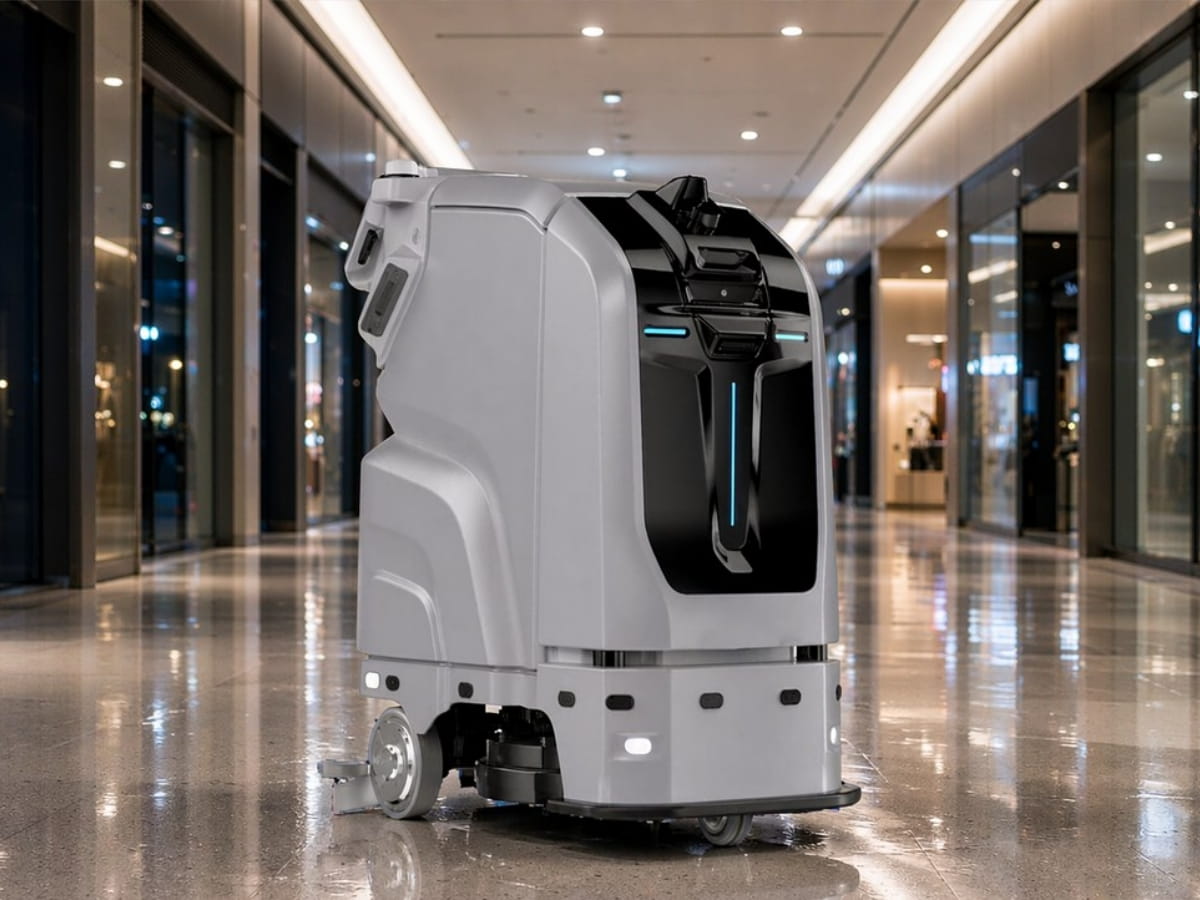
    Quick Answer Key Takeaways Floor & Lighting Wi-Fi & Docking Traffic & Lifts Staff Roles Rollout Failures FAQ Conclusion Contact Us An autonomous floor scrubber site readiness check covers five things before the machine arrives: floor gradient and surface condition, a mapped route with a fixed start point, Wi-Fi for task reports, a docking station with power and water so it charges, refills and drains itself, and a named operator for the daily checks. Miss one and the robotic floor cleaner deployment stalls in week two. Most stalled deployments are infrastructure failures: map quality, a disturbed docking point, no routine. Fill in the driverless scrubber checklist on site, not over email. The building tells you more in an hour than a spec sheet. Jobs change rather than disappear. Someone still cleans the squeegee and works the edges. The machine returns to its task start point when a job ends. Put that point at the workstation and it charges, refills and drains unattended. Autonomous scrubbers are past the novelty stage. Airports and shopping centres run them overnight, and the question has shifted from whether the machines work to whether the building is ready for one. Here is the checklist we go through before a machine ships. Floor, layout and lighting requirements Robots are fussier about floors than people are. A cleaner steps over a cracked joint; a machine tries to plan around it and sometimes decides it cannot. Gradient and joints. Gradeability is the hard number: the JC80 climbs 6%, so a steeper ramp is not a route and a step is a wall. Lifted tiles, open joints and cable covers stop a machine much as they stop a pallet truck. Fix the worst ten before delivery. Layout. Open floor pays best. Area coverage needs a regular open area over 3 × 3 m to plan a sensible path; anything narrower is taught as a follow-path route, down to about a metre wide. Glass and reflective surfaces. Navigation runs on vision plus laser, and glass is difficult for both. Floor-to-ceiling windows, balustrades, glass floor panels, overhangs and top-heavy objects get marked on the map rather than left to the sensors. For narrow corridors and routes under shelving, a compact unit such as the JIECHI JC10 mini smart floor cleaner measures 52 × 42 × 49 cm at 26 kg with a 350 mm path, and gets through gaps that stop a full-size machine. Wi-Fi, mapping and docking station needs Connectivity and navigation are the two items everybody assumes IT will sort out, and the two that hold deployments up longest. The network is for management. Being online is what lets you manage the machine remotely, receive task reports and have an engineer diagnose a fault without a visit. It is configured once in management mode: SSID and password exact. Mapping. Walk the machine through the area until the map is fully white, then save it. Three rules decide whether it stays usable: straight lines under 1 m/s, turns under 20°/s, and a closed loop, small circuit first, larger one second. Keep each map under 15,000 m². Start point. Pick somewhere the surroundings will not change within 10 m, with a wall as a reference and room to start, not the middle of a long corridor. It locates itself by a point on the map or a QR code on the wall. Codes suit complex sites: 30 to 150 cm high, 100 to 200 cm in front, never moved. Also on the map: air walls around glass, overhangs and escalators at 20 cm; solid walls along glass panels and racking at 7.5 cm; drop zones under glass panels shielded. Docking station. Two metres clear all round, no reflective material, and the station's emergency stop released before it charges. Park the machine about half a metre in front to deploy it, and redeploy if it shifts more than 20 cm. Set the task start point there too: the machine returns to it when a task ends, and a workstation fills the 70 L tank, empties the 50 L one and charges on the same visit. It can also be sent back from anywhere mid-task; if it reports lost positioning, drive it to within 1.5 m first. Traffic, lifts and door integration Anything crossing floors or passing through doors needs the building's cooperation, and that conversation goes better before the machine is on site. Lifts. Riding one needs the elevator control module, an option rather than standard, plus the lift area boxed on the map. Without it, keep the robot on one floor and clean the rest conventionally. Check the rated load with margin: 199 kg dry, before 70 L goes in. Doors and passages. The body is 1,160 × 580 × 1,210 mm and wants clearance, not an exact fit: 7.5 cm to walls and racking it cleans along, 20 cm to an air wall. Automatic doors have to hold long enough for a slow approach. Traffic. Find out when the area is busy and stay out of those hours, then group tasks to suit battery, tank size and output. Speed bumps can be marked as deceleration zones; the machine lifts its parts to cross. Clearing the route is still a person's job. For open floors, the JIECHI JC80 large intelligent driverless floor scrubber runs a 510 mm path behind an 810 mm squeegee at up to 2,040 m²/h, carries 70 L of solution and 50 L of recovery, and works at under 65 dB. It scrubs 3.5 hours or dust-mops 10 on a 25.6 V 100 Ah pack, and drives by hand too. From the field: what the published numbers work out to Rated at 2,040 m²/h with 3.5 hours of scrubbing per charge, one shift on the JC80 covers roughly 7,000 m² before it needs the station, and the 15,000 m² map limit means a large building runs two maps. Charging takes around 2 hours, and the workstation fills and empties the tanks on the same visit. Send us your floor plan and we will work it through. Staff roles after deployment The pitch says it replaces a shift. What happens is that the shift changes shape. Two logins, not interchangeable. Cleaners start and pause tasks and can drop into manual for a corner. Administrators map, edit, plan tasks and schedules, set cleaning strength and read reports. Most sites need one person comfortable in both. Before an automatic run: battery, clean and recovery water, dustbin; brush, squeegee and rubber strip clean; the right parts for the mode, dust-mop cloth or disinfection module; route clear. Key switch on, emergency stop out. Afterwards it is routine: rubber blade cleaned daily, the other cleaning parts weekly, filter screen cleared, blade checked for damage and squeegee checked for level. Water is not on that list. At a workstation the machine refills and drains itself, so the daily job is the parts and the floor. Skip it and the streaky floor gets blamed on the machine. The new work is supervision: reading the task report, answering what the machine flags, knowing when to take over. Sites that get value from a robot give it one named owner. Sites where everybody owns it park it in a corner. Common rollout failures and fixes The same problems turn up on most sites, and all are cheaper to plan around than to fix. 1. A poor map, not a poor machine. Open loops, ghost walls and unscanned areas cause position jumps and lost runs. Close the loops, rescan gaps, keep each map under 15,000 m². 2. The docking bay became storage. A shiny trolley beside it is just as bad. Two metres clear, nothing reflective, redeploy if it moves more than 20 cm. 3. The building changed after mapping. Sales floors get re-laid constantly. Re-map or edit: air walls for new glass, solid walls along new racking. 4. Obstacles left on the route. Pallets and cable runs stop a machine that cannot argue. Clear the path before starting, and use manual mode for the corner someone blocked. 5. Resume and return-to-station never switched on. A task that stops on low battery and never restarts is a settings problem, not a machine fault, and so is one that finishes and stays put. 6. The emergency stop used as a pause button. It drops positioning and costs you the run. Use the green pause key, or drop into manual and back. 7. Expecting edges, washrooms and stairs. Robots do open floor, not those. Keep a conventional scrubber for them. FAQ Q1: How do I know whether my site is ready for an autonomous floor scrubber?A1: Walk the route at the hour the machine would run. Check the gradient against 6%, joints and lifted tiles, whether glass and reflective surfaces are marked, and a station spot with 2 m clear, power, water and a drain. Q2: Does the machine need Wi-Fi?A2: For remote management, task reports and fault diagnosis, yes. It is configured once in management mode, and the SSID and password have to be exact. Q3: How long will it clean before it has to charge?A3: On the JC80, 3.5 hours of scrubbing or 10 hours of dust mopping per charge, and about 2 hours to charge. The station does it unattended and a workstation handles the tanks at the same time. Group tasks to suit battery and tank size, out of your busy hours. Q4: What does daily maintenance actually involve?A4: Clean the rubber blade daily and the other parts weekly, clear the filter screen, check blade and squeegee, and leave the machine at the station so it charges, refills and drains itself. Autonomy works on floors prepared for it. The machines are capable; the buildings usually are not. Survey first, build and edit the map second, set the workstation as the task start third, then name the person who owns the daily checks. Contact us for catalog & quotation Send us your floor plan, route areas, gradients and cleaning window. We will tell you which parts of your site are ready. Tel: +1 2403149021 Email: kliu@jiechi.com

  • Electric Street Sweepers for Municipal Contracts: Specifications That Matter
    Sep 30, 2026
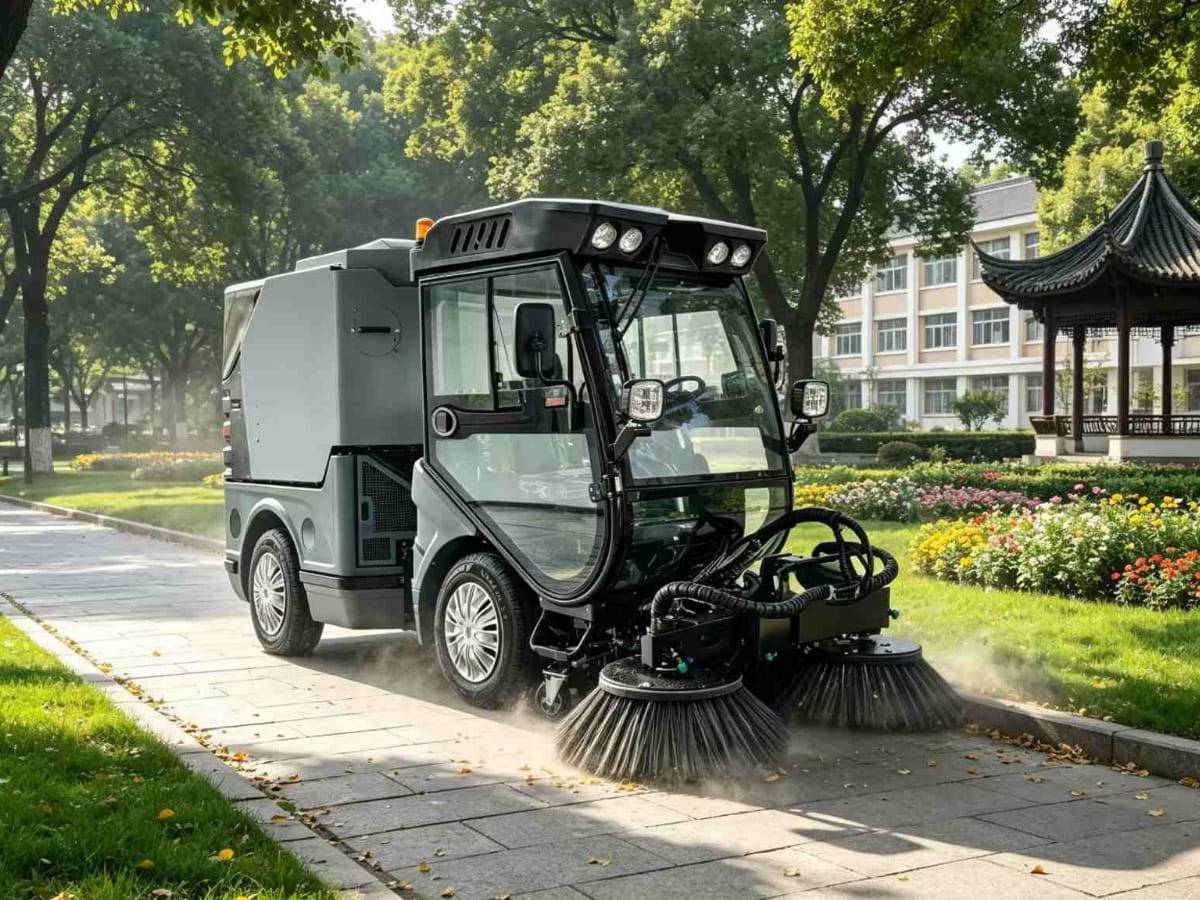
    Compact vs Truck-Mounted Width, Hopper and Tank Sidewalks and Cycle Lanes Operator and Routes FAQ Conclusion Contact Us Public works contracts do not reward clever engineering. They reward a machine that turns up, sweeps the legal width, and still has charge at the end of the shift. This guide is for the people on both sides of that paperwork. If you are writing or answering a spec for an electric street sweeper for municipal work, here is what the numbers on a datasheet actually control, and where a compact battery machine beats the depot truck. Where compact electric sweepers beat truck-mounted units A truck-mounted mechanical sweeper is a good tool for a three-lane arterial road: big hopper, 3 m or more in one pass, and it reaches the far end of a district at traffic speed. What it cannot do is enter a pedestrianised street 2.4 m wide between bollards. That gap is where compact electric machines earn their place in municipal sweeping equipment. A ride-on unit sweeps 1.2 m to 2.2 m, takes one operator instead of two, and shares space with pedestrians at walking pace. No diesel exhaust in a market hall, no engine noise outside a bedroom window at five in the morning. The cost picture matters too. A truck-mounted unit needs a licensed driver, a second operative on the rear brushes and a yard to park in. A battery machine runs a footway round, dumps the hopper and goes back out on the same charge, at under a third of the hourly cost. Where trucks still win: dual carriageways, storm clean-up, and anywhere debris runs into tonnes rather than bags. Sweeping width, hopper and water tank sizing Three numbers decide how much ground an electric street sweeper covers in a shift. Take sweeping width first, and check whether the quoted figure includes the side brushes. A machine quoting 1,200 mm deployed might be 900 mm raised, which matters when squeezing between parked cars. The JIECHI S1 small-size electric street sweeper runs 1,200 mm to 1,486 mm with its twin side brushes down; its 600 W main brush pulls grit off a kerb edge rather than flicking it sideways. Width times working speed gives a theoretical area rate. The S1 is rated at 14,000 m²/h; halve it for a realistic figure and it still covers a footway route that would take a crew with barrows all morning. For municipal work the hopper is the real limiter. A small dust box will have the machine standing at the tip by mid-morning in leaf fall. The JC-D9 lithium battery road sweeper carries a 1,850 L dust tank and a 380 L water tank feeding a 14 MPa pump: enough for dust suppression across an 8-hour shift. Its 1.6 m to 2.2 m sweeping width suits link roads and bus lanes rather than narrow footways. Rule of thumb: under about 25 km of footway per shift, a small street sweeper machine in the 1.2 m class is plenty. Above that, move up a size. Sidewalk, pedestrian zone and cycle lane performance A machine that works well on a depot apron can be a menace on a shared footway. Three behaviours separate a sweeper built for civic space from one built for a warehouse. Brush throw. Side brushes spin outward to reach against a kerb. On a footway that same motion throws grit at shins and shop windows. Look for adjustable brush pressure or a low-throw setting, and check which way the brushes rotate. Turning circle. Cycle lanes are usually 1.5 m to 2 m. You need to sweep the whole lane in one pass, then turn out at the end without climbing onto the island. Turning radius matters more than top speed here. Speed control. Pedestrian zones are usually limited to 6 to 12 km/h. A machine with a 30 km/h top speed and a coarse throttle is exhausting to hold at 8 km/h for two hours. Proportional control makes the route feel half as long. Worth testing before you buy: sweeping along a wall, around a tree pit, past a bus shelter. That is where the awkward debris lives, and where a badly set up machine leaves a stripe down a clean pavement. Operator comfort and route planning Sweeping is a long, slow job in bad weather. Comfort decides whether a route gets finished properly on a wet Tuesday. Cab or canopy. An open machine is fine for three seasons and grim in the fourth. A cab with a heater costs more and returns it in retained staff. Controls and visibility. Single-hand steering with the brush levers on the same side, a clear view down to the kerb, and a seat you can adjust without tools. Vibration through the wheel shows up in sickness records years later. Split the district into linear stretches and nodes. Linear stretches get swept at a steady working speed. Nodes are bus stops, market squares, park gates and takeaway frontages, where the debris load is ten times the average. Plan the nodes first and fill the linear work around them. FAQ Q1: How wide should a municipal electric street sweeper be?A1: Match the narrowest place on the route, not the widest. If the route includes a pedestrianised street with bollards, measure the gap. Most compact units sweep 1.2 m to 1.5 m brushes down. Q2: Can a compact sweeper replace a truck-mounted unit completely?A2: On footways, cycle lanes and pedestrian zones, yes. On arterial roads and after storm gritting, no. Most authorities run both and split the network by width and debris volume. Q3: How quiet is an electric sweeper really?A3: A lithium ride-on sweeper runs around 69 dB(A), roughly a busy conversation. A diesel truck-mounted sweeper is far louder, which is why battery machines can work residential streets before seven in the morning. A municipal sweeping contract is won or lost on three numbers: how wide the machine sweeps, how much it carries before it has to tip, and how long it runs with the brushes down. Contact us for catalog & quotation Send us your route types, the narrowest access point and your shift length. We will recommend the right class of machine and quote it with the specification filled in. Tel: +1 2403149021 Email: kliu@jiechi.com
  • Hospital Floor Cleaning: Quiet Machines, Verified Hygiene and Night Windows
    Sep 30, 2026
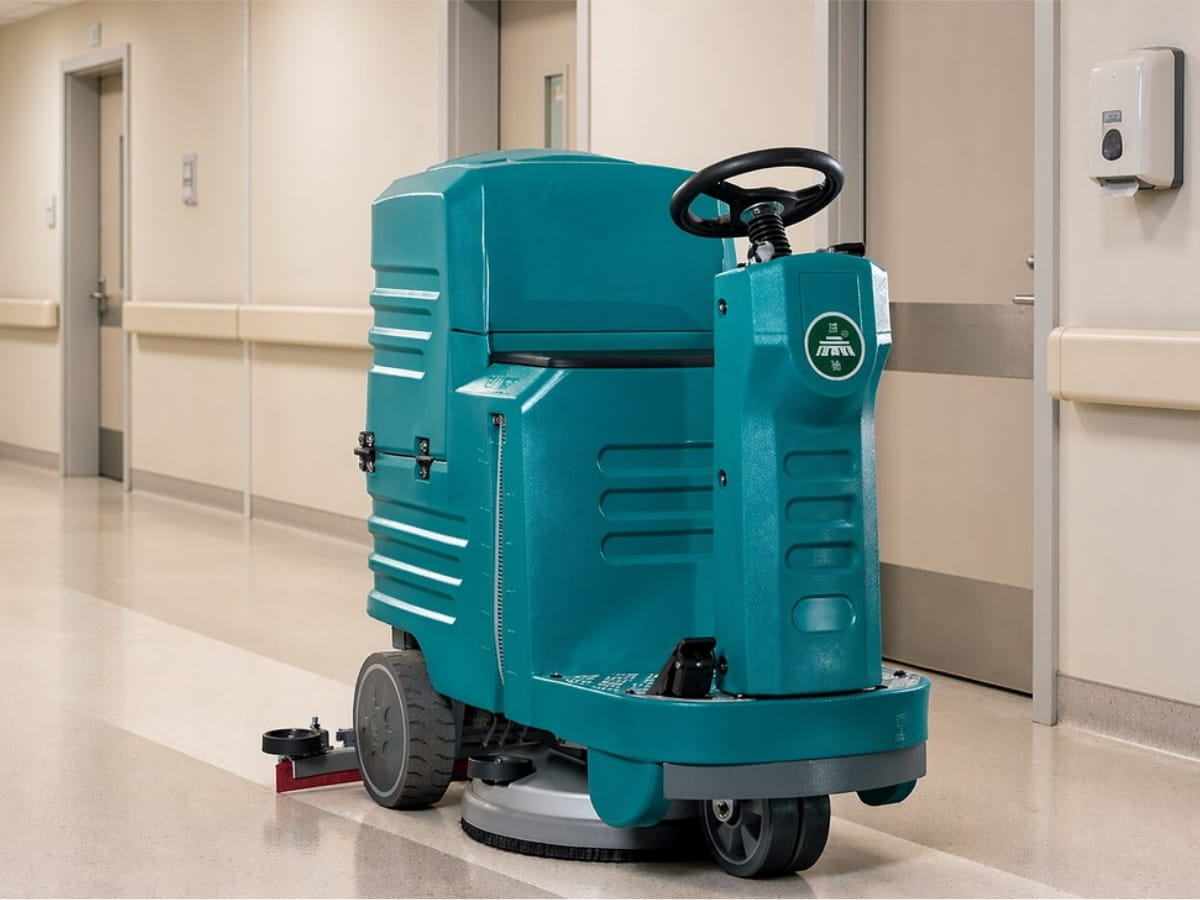
    Risk Zones Noise and Patients Infection Control Machine Selection FAQ Conclusion Contact Us Hospital floor cleaning sits in an awkward place. The floor has to look right for visitors, hold up to infection control scrutiny, and be cleaned in windows that keep shrinking as bed occupancy rises. The building also contains more than one kind of floor, and the mistake most facilities make is running one method across all of them. What follows is a working framework: how to tier the zones, what noise actually costs you, how to verify results, and which machine fits which part of the estate. Risk zones: OR, ICU, wards, public areas, corridors Start by mapping the estate into tiers. Everything downstream, frequency, method, equipment, documentation, follows from that map. Tier 1, critical. Operating theatres, ICU, isolation rooms, sterile processing, oncology day units. Highest consequence, smallest floor area, most documentation. Floors here are cleaned between cases and terminally at the end of a list, usually with dedicated equipment that never leaves the zone. Tier 2, clinical. Wards, emergency department, imaging, dialysis, physiotherapy. Mixed traffic, long opening hours, and a cleaning window that depends on the ward round. Patient rooms and bathrooms are usually done by hand; a machine takes the corridors and the day rooms. Tier 3, public and support. Main atrium, corridors, lifts, canteen, admin, plant rooms. Mechanised cleaning pays back fastest here: large square footage, easy access, and appearance is what visitors judge. Write the tier next to every room number in the cleaning schedule. Most hospital complaints come from a room that sat in the wrong tier, not from a cleaner doing a bad job. Noise limits and patient disruption Noise is the reason a hospital buys a battery scrubber and leaves a diesel machine in the yard. The numbers behind that decision are worth knowing before you write a specification. World Health Organization guidance puts recommended ward noise at 30–35 dB(A) overnight, and most hospitals exceed it before any cleaning equipment is switched on. There is almost no headroom. Both trusts I have walked with wrote the same line into the tender: quiet floor scrubber hospital noise target, 70 dB(A) at one metre. That rules out anything petrol or diesel driven and pushes you toward battery equipment with a well-designed squeegee. The dominant noise is rarely the brush motor. It is the squeegee. A blade running at the wrong angle squeals, and that squeal travels down a corridor and through a door in a way a steady motor hum does not. Two fixes handle most of it: replace blades before the edge hardens, and set the deck so the blade trails at the specified angle instead of being dragged flat. Then think about how the machine is used. Rattling a squeegee against a bed frame at 5am is a complaint regardless of decibels, and so is a reversing alarm. Route order, gentle start and stop, and working a ward from the far end back all reduce disruption more than any datasheet figure. Night and between-case workflows (table) Most hospital floor cleaning happens in three windows: between cases, at night in corridors, and in the early morning before clinics open. Mechanised cleaning belongs in the last two. Ward corridors are the natural home for a compact ride-on machine; nothing else covers that much floor before the breakfast trolleys appear. A machine like the JIECHI A5 65 L mini ride-on floor scrubber is 62 cm wide with a 530 mm cleaning deck and a 770 mm suction path, so it fits a standard ward doorway and leaves the floor dry behind it, which is what matters when a patient could be walking there within the hour. Workflow Window Method Theatre, between cases 15–25 min Manual, dedicated mop heads Theatre, terminal Night, after list Machine, deck lifted, edges by hand ICU and isolation rooms Per policy, daily Dedicated equipment, hand finish at edges Ward corridors 22:00–05:00 Compact ride-on scrubber Main atrium and public areas 05:00–07:00 Ride-on scrubber Two rules keep these windows workable. Finish wet work at least 30 minutes before a clinical area opens, and never park a machine in an escape route or a fire door recess overnight. Both findings undo a good cleaning record in one audit. Machine selection for healthcare Five specifications decide whether a healthcare floor cleaning machine works in your building or fights it. Cleaning and suction width. Cleaning width has to fit the narrowest doorway on the route with clearance to spare. Suction width should be wider than the cleaning deck, because the extra centimetres are what leave the floor dry. On the A5 that gap is 530 mm cleaning against 770 mm suction. Turning radius and weight. Ward corridors turn tightly, and a heavy machine cannot go in a patient lift. At 220 kg the A5 is a realistic lift and corridor machine. Water tank size against shift length. A 140 L machine will clean a main corridor run without a refill stop; a compact 65 L unit will not, which is fine if the route plan includes a fill point. Match the tank to the route, not to the brochure. For main corridors, atria and canteen floors, step up. The JIECHI A7 medium dual-brush ride-on floor scrubber runs an 860 mm twin-brush deck with a 1,100 mm suction path and 140 L / 150 L tanks at 5,500 m²/h, which turns a hospital's public circulation into a two-hour job instead of a full shift. FAQ Q1: Can a floor scrubber be used in an operating theatre?A1: Between cases, most theatres stay on manual cleaning with dedicated mop heads, because the floor area is small and the time window is short. A ride-on or walk-behind scrubber is used for the terminal clean out of hours, with edges and corners finished by hand and verification swabs taken afterwards. Q2: What noise level should a hospital floor scrubber be?A2: Aim for 70 dB(A) or lower at one metre for equipment working near patient areas. Battery machines get you there; what undoes it is a worn or badly angled squeegee blade, which produces a squeal far more disruptive than the motor. Q3: How often should hospital floors be cleaned?A3: It depends on the tier. Critical areas are cleaned between cases and terminally after each list. Clinical areas are cleaned daily, with corridors done nightly. Public and support areas usually run on a daily routine plus a periodic deep clean, with entrance zones on a higher frequency than either. Q4: Do you need a separate machine for isolation rooms?A4: Dedicated equipment is best practice where the budget allows, because it removes the decontamination step from the critical path. If a machine has to be shared, the protocol has to include a full wipe-down of deck, squeegee and castors on exit, logged against the room. Hospital floor cleaning works when the estate is tiered, the machines match the tier, and the result is verified instead of assumed. Get those three in place and the rest is scheduling. Start with the zone map and the noise figure. Those two decisions set your equipment list, 按and your night window before a single machine is ordered. Contact us for catalog & quotation Send us your corridor widths, floor areas, lift capacity and cleaning windows. We will recommend the right machine class for each tier of your estate. Tel: +1 2403149021 Email: kliu@jiechi.com
  • How Escalator Cleaning Machines Work: A Step-by-Step Guide
    Sep 23, 2026
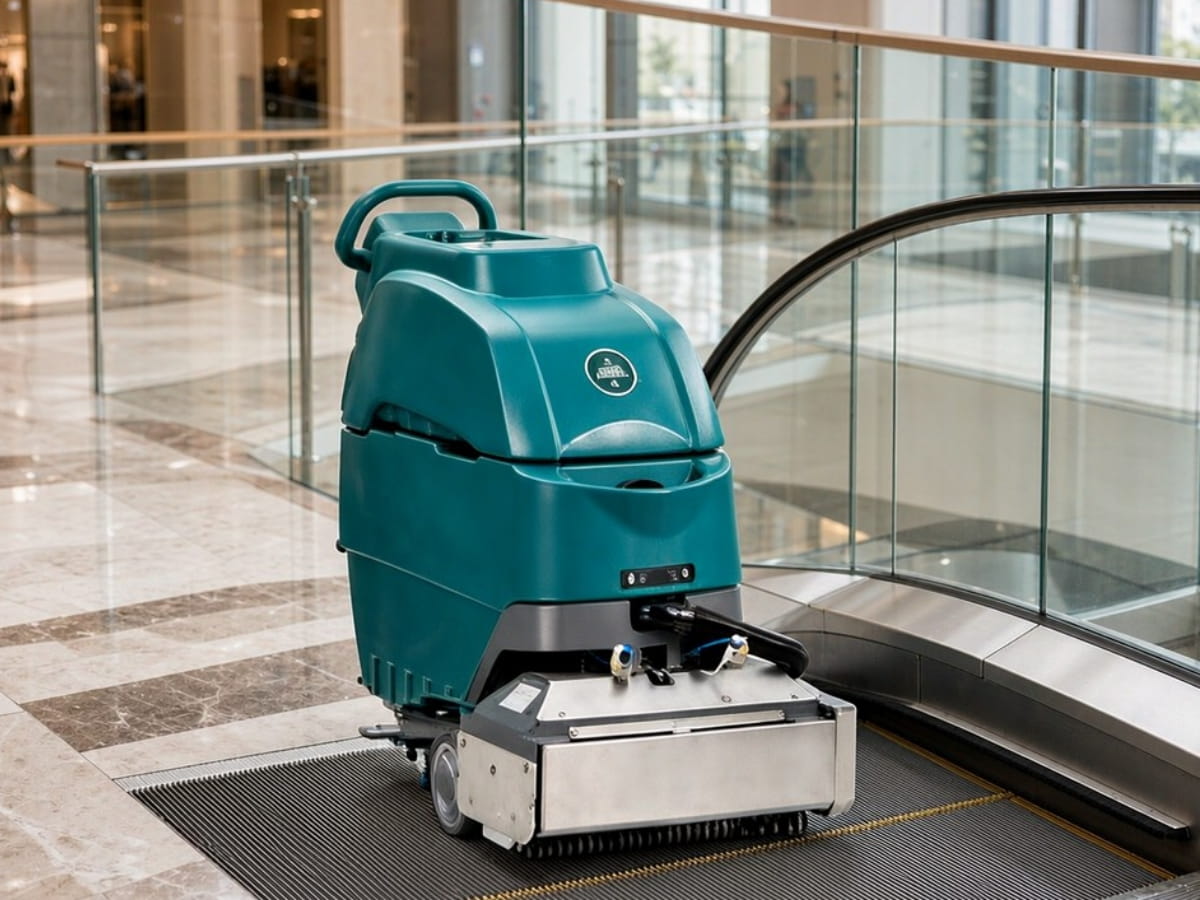
    Why Steps Need Their Own Machine The Cleaning Head Six-Step Cycle Wet vs Dry Pre-Start Inspection Compact vs High-Capacity FAQ Conclusion Contact Us Step treads are ribbed, and a mop rides over the ribs. A rotating brush is the only thing that reaches the bottom of the groove. Water is the hazard, not the dirt. Whatever you put on a step ends up in the pit, next to the step chain and the drive. Recovery matters more than scrubbing. A 2,400 W suction motor pulling across a 770 mm path is what keeps the tread dry behind the machine. One flight of a standard mall escalator takes 22 to 32 minutes end to end, set-up included. An escalator step is a lousy surface to clean. The tread is ribbed with grooves a few millimetres deep, the riser under it is curved, and both of them keep moving while you work. Everything that makes a mop effective on a flat floor stops working here. This guide sets out how escalator cleaning machines work, from the cleaning head up to the cycle an operator runs on site. Why escalator steps need a dedicated machine Few surfaces in a building collect as much dirt per square metre. Shoes carry grit in from the street, the ribs on the tread catch it, and the step then carries it down into the pit and comes back up for more. A mop rides across the top of those ribs. It shifts the surface film and leaves the packed material where it is. Clean that way every day for a year and the step reads as grey even on a morning when somebody cleaned it. Then there is the problem that rules out most methods. Anything you put on a step goes inside the escalator. Water runs off the tread, past the comb plate and into the pit, where the step chain, the drive motor and the controller live. Detergent, solvent, drips off a bucket, it all lands on machinery that was never meant to get wet. A floor scrubber does not solve it either. It is built for a flat floor that holds still, with no way to track a step travelling underneath it and no way to keep water out of the pit. A dedicated escalator step cleaning machine handles all three problems in one pass. It seats on the treads so it rides with the escalator, brushes the grooves while feeding a measured amount of solution, and pulls the dirty water straight back into a recovery tank. The cleaning head: brushes, water recovery and edge tracking Everything happens in the head, and the head is nothing like the deck of a floor scrubber. The brush. A cylindrical brush spans the step width and rotates against the direction of travel. Bristle length matters more than people expect. Too short and it skims the ribs. Too long and it folds over and stops cutting. On the Jiechi EL510 escalator cleaner the brush covers a 510 mm working width driven by a 900 W motor, which is enough to keep the bristles loaded instead of spinning free against the tread. The solution feed. Water goes down ahead of the brush through a manifold, not a flood. A full flight uses a few litres. What you want is a damp surface the brush can bite on, not a puddle looking for a way into the pit. Recovery. This is where the power goes. A 2,400 W suction motor pulls dirty water off the tread across a 770 mm path, deliberately wider than the brush so the step edges get picked up too. Everything that comes off the step goes into the recovery tank on the machine. Edge tracking. Guide wheels run against the skirt so the head holds position while the escalator moves. A head that drifts sideways clips the skirt panel and leaves a stripe of uncleaned tread down one side. The better units self-centre, which is what lets one operator run the machine instead of wrestling it. Six-step cleaning cycle (with time per step) The times below are for one flight of a standard commercial escalator, about 12 m of travel, with one operator. Longer flights scale close to linearly. Step What the operator does Time 1. Seat the machine Set on a run of steps, check guide wheels against the skirt, lock position 2-3 min 2. Dry pass Brush with no solution to knock loose grit out of the grooves 4-6 min 3. Scrub Low solution feed, brush works tread and riser face 6-8 min 4. Recover Suction across full step width, overlapping each pass by a third 4-6 min 5. Dry pass and handrail Final pass with brush dry, then wipe handrail and comb plate 3-5 min 6. Inspect and sign off Check pit for drips, check step edges, photo if the contract asks 2-3 min That comes to 22 to 32 minutes a flight. The first one of a shift runs longer because of set-up. After that, most of the time goes into walking between escalators. Step 2 is the one operators skip when they are behind, and it is the one that costs them. Brush wet over dry grit and you have made mud, which then sits in the groove and needs a second scrub to shift. Wet vs dry operation on running escalators Wet or dry comes down to what is on the steps and how much water the site will put up with. Wet is the default. An escalator cleaner machine applies a low volume of solution and recovers it straight away, and that is what shifts drink residue, grease carried up from a food court and the grey film along the walking line. A tread stays damp for seconds rather than minutes, so shoppers can ride behind you. Dry has its places. Metal steps in transit hubs, where water spotting shows badly. Sites with a leak history, where the maintenance team would rather nothing went near the pit. Touch-ups between full cleans, where you want the grit out and nothing else. Dropping the solution and recovery passes also cuts the cycle by roughly a third, which is worth knowing when you have six flights and one overnight window. What does not change either way is where the water decision gets made. On a machine, it is the manifold and the feed setting. On a mop, it is somebody's wrist, and that is not a control you want near an open pit. What the operator must inspect before starting Six checks, in this order, before the brush turns. Direction of travel and stop position. Confirm which way the escalator runs and where the emergency stop is. If the direction reverses mid-job, the seating changes with it. Comb plate and step alignment. Walk the flight first. A lifted or chipped comb plate will catch the brush and take bristles with it. Damaged cleats. One step with a broken rib can tear a brush and jam the head. Pit condition. Lift the cover and look for standing water. If there is water down there already, you have an escalator problem and cleaning is not the priority. Machine state. Solution tank filled, recovery tank empty, squeegee blades square, brush seated. On the EL510 that also means sorting the 220 V lead route first, since a cable across a moving step is a trip hazard for everyone riding. Barriers and signage. Even with full recovery the steps stay damp. Signage at both landings, barrier if the site is busy. Machine classes: compact vs high-capacity Two classes cover most sites, and the line between them is not really size. It is how many flights you have to finish in one shift. Compact units come in around 140 kg with a 510 mm working width, which is one step width on a standard escalator. One person can position and run one, and a flight takes the 22 to 32 minutes in the cycle above. Malls with four to eight escalators, hotels, supermarkets, office buildings, hospitals, this is the class that makes sense. The EL510 sits in it. High-capacity units exist for volume. Wider heads, larger tanks, longer runs between fills, often ride-on or towed for horizontal travelators. Airports and metro stations running 200 m travelators need this class, because a compact unit would spend the shift being repositioned rather than cleaning. Buying for one site, go compact. Quoting a transit contract, ask about travelator capability first, because a lot of escalator cleaning equipment is built for inclined steps only and will not handle a long horizontal run. FAQ Q1: Can the machine clean an escalator while it is still running?A1: Yes, that is the normal way to use it. The unit seats on the moving treads and rides with them, so the escalator stays in service and the flight is not lost for half an hour. Q2: How much water does a wet clean use on one flight?A2: A few litres, applied through a manifold rather than poured. The recovery side matters more than the volume, since a 2,400 W suction motor across a 770 mm path picks up almost all of what goes down. If you can see water sitting on the tread, the feed is set too high. Q3: Do travelators need a different machine?A3: Short horizontal travelators are fine on a compact unit. Long runs in airports and metro stations want a high-capacity machine with bigger tanks, because a compact unit will spend more time being moved and refilled than cleaning. Escalator cleaning comes down to two things. Getting a brush into the groove, and getting the water back out before it reaches the pit. A dedicated machine does both in one pass while the escalator keeps running, which is the part that matters inside trading hours. Work out how many flights you have per shift and pick the class from there. Brush condition, feed setting and squeegee wear are maintenance habits, not buying decisions. Contact us for catalog & quotation Send us your escalator count, step width and available cleaning window, and we will come back with a machine recommendation and a quote. Tel: +1 2403149021 Email: kliu@jiechi.com
  • How to Plan a Mall Cleaning Program for Escalators, Atriums and Food Courts
    Sep 23, 2026
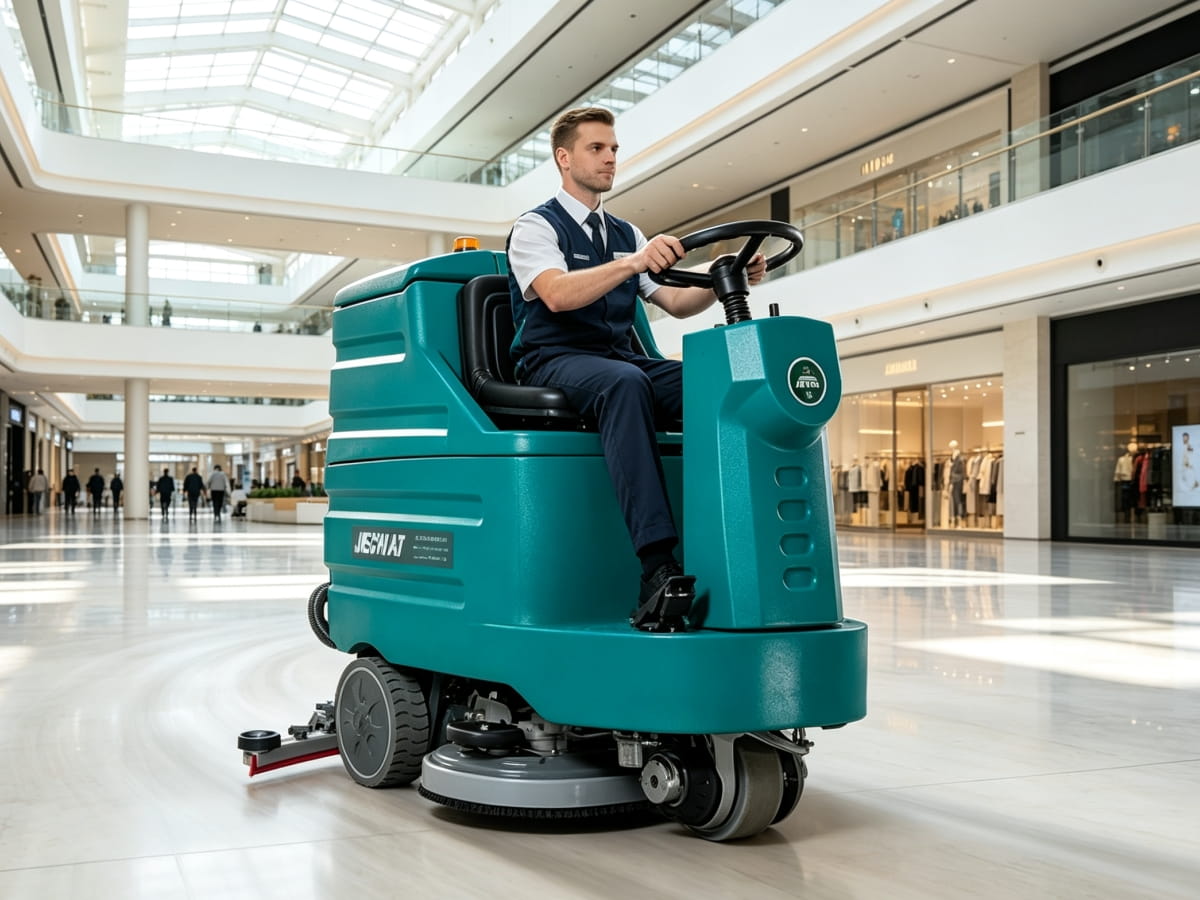
    Key Takeaways What's Hard About Mall Cleaning Zone-by-Zone Equipment Manual vs Mechanized Case Results FAQ Conclusion Contact Us Mops and buckets don't get escalator grooves, atrium scuff marks or food court grease clean. Machines do. One machine per zone: EL510 for escalators, A7 for atrium floors, A3 or A5 for food courts. Mechanical cleaning typically halves the cleaning labour bill, and floors are dry while the mall is still open. The three problems this fixes: dirt packed into escalator steps, dull atrium floors, and grease that keeps coming back. Malls are a harder cleaning job than offices or warehouses, and not for the reason people expect. They run 10 to 12 hours a day, shoppers walk across every square metre of them, and a large share of the floor is decorative rather than practical. Then there's the food court, putting oil on the floor all day. A mop takes care of surface dust and stops there. It doesn't reach the grit packed into escalator step grooves, it doesn't lift a scuff mark off polished tile, and it doesn't cut grease that has set on a food court floor. What does work is splitting the mall into zones and putting the right machine in each one. What's Actually Hard About Cleaning a Mall Every zone fails in its own way. The three complaints come up most often: Escalator grime. Sand, hair and fine dust pack into the step grooves and the handrail gap. A wipe moves the top layer around and leaves the rest where it sits. Atrium floors losing their finish. Foot traffic drags in sand and spills drinks, and dark scuff marks build up along the walking lines. Mopping leaves streaks and wet patches that people slip on. Food court grease. Spilled oil and food residue work down into the tile joints. Hand cleaning gets what's on the surface, so the smell is back by the next morning. Zone-by-Zone: Which Jiechi Machine Goes Where Don't buy one machine and try to make it fit everywhere. Split the mall into three zones (escalators, atrium walkways, food court) and match the machine to each. 1. Escalator & Travelator Area | Jiechi EL510 Escalator Cleaner       An escalator gets touched more than almost anything else in the building, and it's the one you can least afford to shut down. Cleaning it by hand during trading hours means working around shoppers and still missing the grooves. The Jiechi EL510 is built to run on an escalator that is still moving. It scrubs with very little water and recovers the dirty water as it goes, so nothing drips into the machinery underneath. It lifts trapped dust, old grime and bacteria out of the steps and handrails, with no leaks and nothing for the escalator hardware to worry about. In practice, you stop trading hygiene off against keeping the escalator running. 2. Atrium Public Walkways | Jiechi A7 Ride-On Scrubber       Atriums are large, open and busy. Two weeks of spills and scuff marks and the floor starts to look tired, which is a problem when the whole point of the space is to look upmarket. The Jiechi A7 ride-on scrubber is sized for floors like this. It scrubs, rinses and vacuums the water back up in a single pass, so the floor is dry right behind the machine. A wet atrium floor at 10 a.m. is a slip claim waiting to happen. The usual routine: a full pass daily during off-peak hours, then a deeper scrub once a week to lift the marks that have settled into the finish. One operator covers several thousand square metres in a shift, and the floor keeps its gloss. 3. Food Court Grease Zone | Jiechi A3 Walk-Behind & A5 Mini Ride-On Scrubber       The food court is the hardest part of the job. Stalls sit close together, there's a corner every few metres, and oil hits the floor every night. Which scrubber you buy decides how long the crew stays after closing. A3 or A5? A Quick Comparison for Food Courts Comparison Item Jiechi A3 Walk-behind Scrubber Jiechi A5 Mini Ride-on Scrubber Site Adaptability Fits between narrow stall rows and into corners Needs wide aisles to be worth using Cleaning Speed Better for spot work and detail degreasing Covers a big open floor far faster Operator Comfort You walk behind it, which gets tiring over a long shift Operator sits, so end-of-shift fatigue is much lower Investment Level Cheaper to buy, simple to maintain Costs more up front, keeps up with a large floor For most food courts, you end up needing both. The A3 goes into the gaps between stalls, handles spills as they happen, and does the detail degreasing. The A5 takes the main walkways and the open seating areas. If your stalls are small and packed together, make the A3 your main machine. If you have a large open dining area, the A5 is what takes hours off the night shift. Manual Cleaning vs Mechanized Cleaning Cleaning Item Traditional Manual Cleaning Jiechi Mechanized Cleaning Escalator groove cleaning Surface wipe only, the dirt stays where it is EL510 scrubs the grooves and pulls the dirt out Large atrium floor cleaning Slow, leaves streaks, floor stays wet A7 scrubs and dries in one pass, no streaks Food court grease removal Shallow clean, so grease and smell come back A3/A5 degrease properly, and it holds Impact on shopping Crews and buckets block the walkways Most work happens before the mall opens Case: A 12,000 m² Mall, Twelve Months In A 12,000 m² mall ran this zoned programme for a year. The numbers that moved: Escalator hygiene compliance: 72% → 99% Atrium cleaning efficiency: +60% Food court slip incidents and odour complaints: -68% Total cleaning labour cost: -52% FAQ Q1: Can we clean escalators while the mall is open?A1: Yes. The EL510 cleans with very little water and recovers all of it, so it works on an escalator that's still running. No shutdown, no leaks, and shoppers just walk around it. Q2: Should I choose A3 or A5 for my food court?A2: It comes down to layout. The A3 gets into narrow stall gaps and handles detail degreasing. The A5 covers wide aisles and big open seating areas. Most sites run both, because each machine leaves a gap the other one fills. Q3: How often should I clean atrium floors mechanically?A3: A daily pass with the A7 keeps the floor looking clean. Once a week, scrub deeper to take off the marks that have built up and protect the finish. Cleaning a mall properly is not a bigger version of sweeping and mopping. Split the site into zones and match the machine to each one (EL510 on the escalators, A7 across the atrium, A3 and A5 in the food court), and all three problems start to go away. Mechanical cleaning also makes the numbers behave. Hygiene scores stop drifting between shifts, the floor looks the way shoppers expect, and the cleaning budget comes down instead of creeping up year after year. Contact us for catalog & quotation Send us your floor plan and we'll come back with a machine list and a quote. Tel: +1 2403149021 Email: kliu@jiechi.com  
  • Food Factory Floor Cleaning: How To Maintain Hygiene And Safety Standards?
    Aug 24, 2026
    Food factory floors must be cleaned daily to meet HACCP, FDA, and local food-safety standards. The essentials: food-safe detergents, grease removal, bacterial control, slip-resistant surfaces, and scheduled deep cleaning. A dedicated floor scrubber makes compliance consistent and efficient.    Why Food Factory Floors Are Different   Food plants face challenges most facilities don't: grease and fat buildup, bacterial growth, strict audit requirements, and constant washdowns. Floors must look clean andpass microbial standards.     Daily Cleaning Essentials   Use food-safe detergentsapproved for food environments Remove grease and fat before they harden — schedule mid-shift cleaning in high-soil zones Rinse thoroughly— detergent residue can contaminate products Keep floors dry to prevent slip accidents and bacterial growth Choose the Right Equipment   A walk-behind floor scrubber for tile floors suits smaller processing areas; ride-on models cover large production halls. Key features for food plants:  Food-safe tanks and hoses  Easy-access recovery tank for daily rinsing  Low-foam detergent compatibility  Compact size for washdown areas    Prevent Cross-Contamination  Use color-coded brushes and equipmentby zone (raw, cooked, packaging)  Empty and sanitize recovery tanks after every shift  Dry floors completely — moisture breeds bacteria  Train staff on hygiene protocols, not just machine operation     Scheduled Deep Cleaning     Frequency Task Daily Scrub, rinse, sanitize, dry Weekly Deep clean drains and corners Monthly Strip and reseal floors if needed       FAQ Q: Can I use any floor scrubber in a food factory? A: No. Choose models with food-safe components, easy-clean tanks, and compatibility with food-grade detergents. Color-coded accessories help prevent cross-contamination.    Q: How often should food plant floors be deep cleaned? A: Daily mechanical cleaning is the baseline. Deep cleaning of drains, grout, and equipment bases should happen weekly, with full floor treatment monthly.     Conclusion   Maintaining hygiene and safety in a food factory comes down to the right routine and the right equipment. Jiechi's floor cleaning machine Factory range includes models suited to food-grade environments — trusted by 3,000+ industrial facilitiesand 100,000+ customersworldwide.     Contact Jiechi   🌐 Website:www.rceautofloorclean.com 📞 Phone:+1 2403149021 ✉️ Email:kliu@jiechi.com 💼 LinkedIn:Jiechi Cleaning Equipment 📘 Facebook:Jiechi Cleaning Equipment
  • 7 Signs Your Factory Needs A Professional Floor Cleaning Machine
    Aug 11, 2026
    If your factory floors are never truly clean, cleaning eats too many labor hours, or slip incidents keep happening, it's time to upgrade to a professional floor cleaning machine. Here are 7 clear signs that manual cleaning no longer works for your facility. Sign 1: Cleaning Takes Too Long If your crew spends hours mopping and the floor still isn't clean, you're wasting labor. A professional floor cleaning machine covers 10–20x more area per hour than a mop. Sign 2: Floors Stay Stained No Matter What Oil, grease, and tire marks that resist mopping are a clear signal. Scrubbers use brush pressure and detergent to remove embedded soil that mops simply spread around. Sign 3: Cleaning Labor Costs Keep Rising Labor is your biggest cleaning expense. One scrubber operator replaces 2–3 manual cleaners — and machines don't take breaks. Sign 4: Slip Accidents Keep Happening Wet floors from mopping are a top cause of workplace slips. Scrubbers scrub and vacuum dry in one pass, leaving floors dry and safe within minutes. Sign 5: Dust Affects Product Quality In manufacturing, airborne dust and tracked-in dirt contaminate products and machinery. Mechanized cleaning controls dust better and keeps production areas cleaner. Sign 6: Cleaning Results Vary Between Shifts If day and night shifts produce different cleaning quality, your process depends too much on individual effort. Machines deliver consistent results every pass. Sign 7: Your Old Equipment Keeps Breaking Down Frequent repairs on aging scrubbers cost more than replacing them. Newer models offer better batteries, stronger suction, and lower maintenance. FAQ Q: How do I justify buying a floor cleaning machine for my factory?A: Calculate current cleaning labor hours and cost, then compare with one machine + operator. Most factories see payback within 6–18 months. Q: What size machine does a mid-size factory need?A: A walk-behind scrubber suits floors under 5,000㎡. A ride-on model is better for 5,000㎡+ open production areas. Conclusion If any of these 7 signs sound familiar, your factory has outgrown manual cleaning. Jiechi offers a full range of walk-behind and ride-on floor scrubber machine Factory options designed for demanding production floors — trusted by 3,000+ industrial facilities and 100,000+ customers worldwide. Contact Jiechi ? Website: www.rceautofloorclean.com ? Phone: +1 2403149021 ✉️ Email: kliu@jiechi.com ? LinkedIn: Jiechi Cleaning Equipment ? Facebook: Jiechi Cleaning Equipment
  • Warehouse Floor Cleaning: Manual Cleaning vs Industrial Floor Scrubber
    Aug 05, 2026
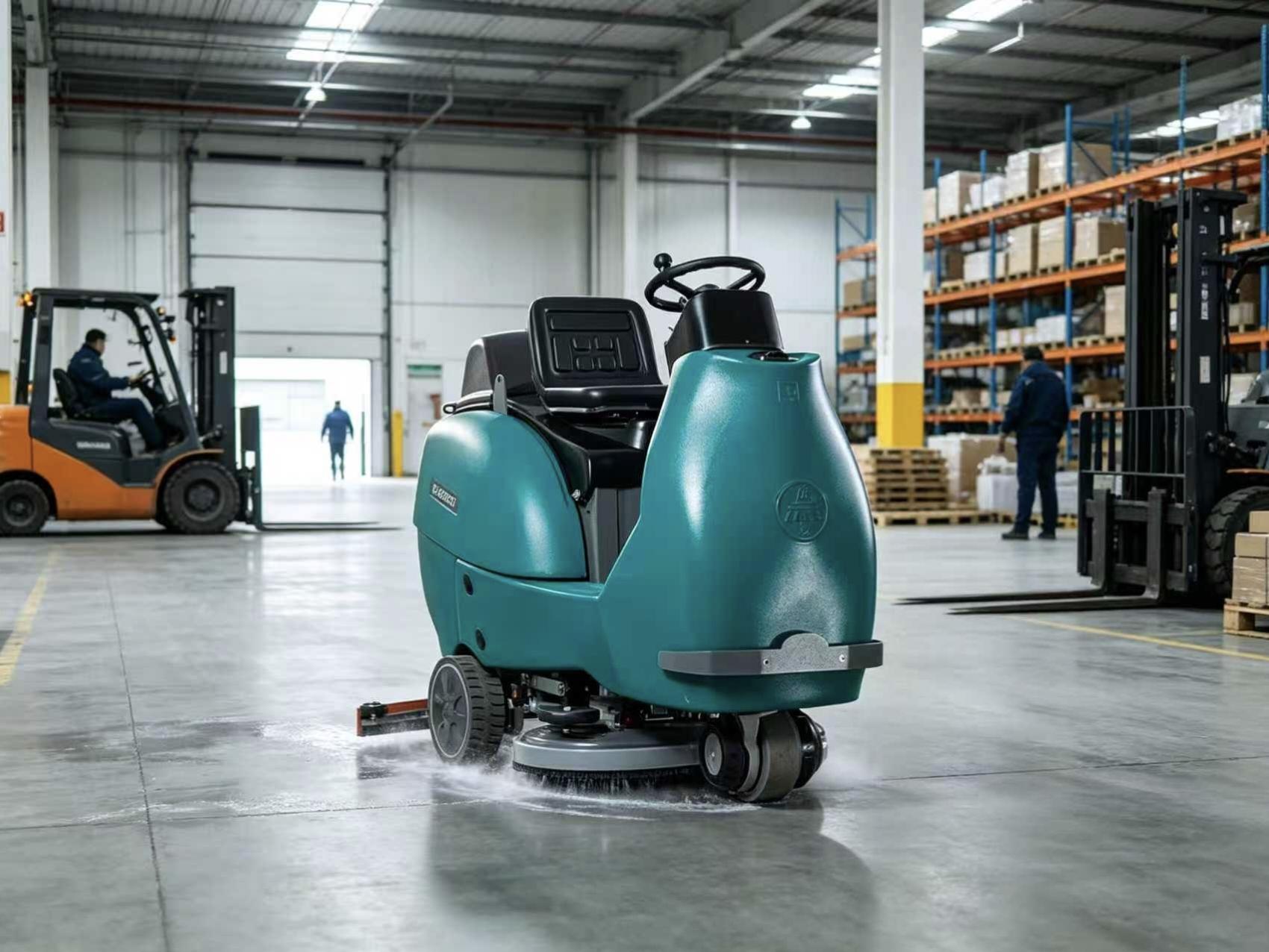
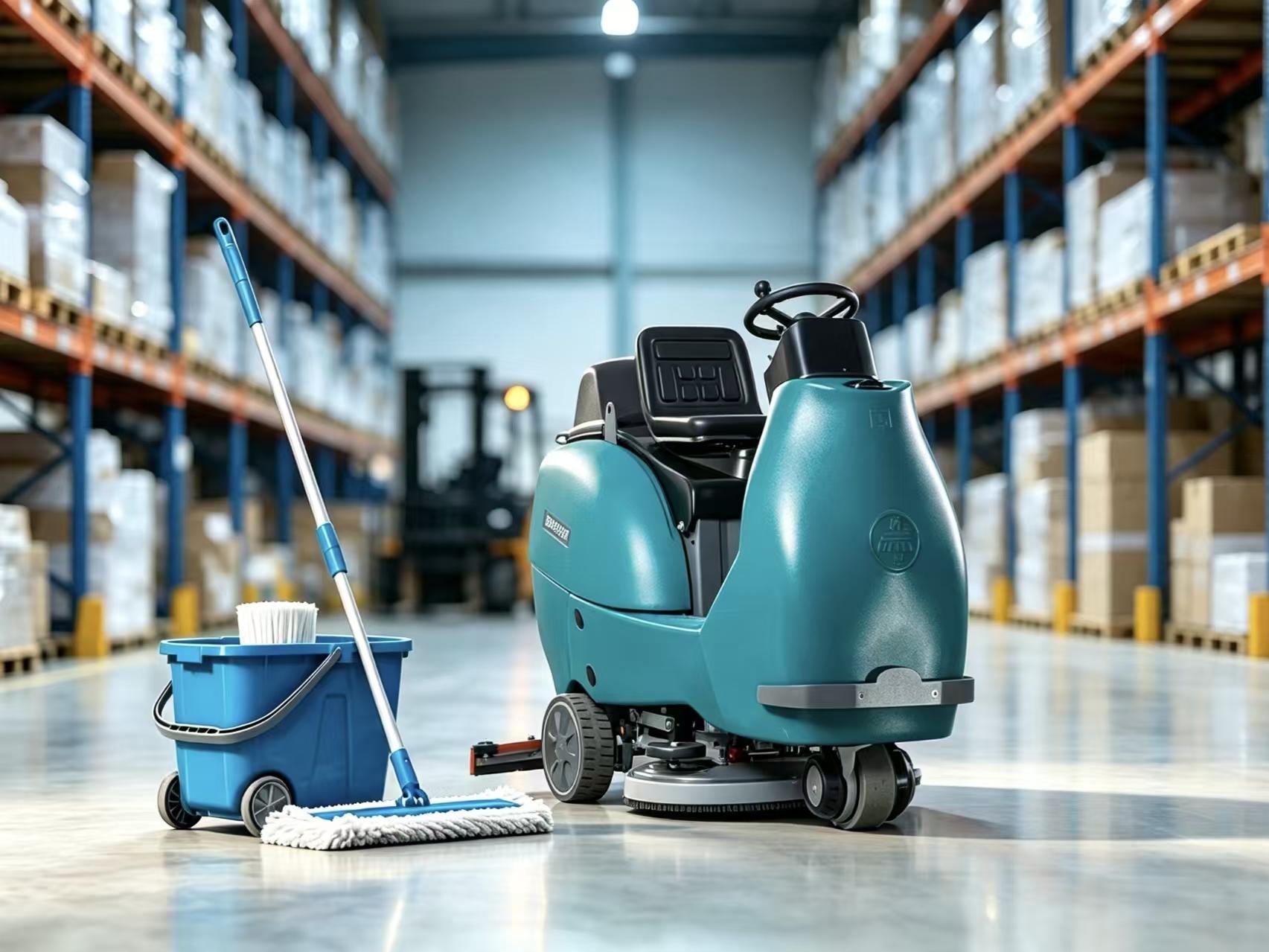
    Still mopping your large-scale warehouse with regular mops? Manual cleaning is time-consuming, labor-intensive and delivers inconsistent results. Industrial floor scrubbers stand as the optimal solution for efficient modern warehouse sanitation. This article breaks down all key differences between the two cleaning methods. - ⏱️ Speed — scrubbers clean 10–20x faster than manual mopping- ? Cost — payback on equipment typically within 6–18 months on labor savings- ? Consistency — machines apply even pressure; manual work varies by worker- ?️ Safety — scrubbers dry as they clean, reducing slip hazards- ? Labor — reallocate staff to picking, packing, and inventory Cleaning Speed A worker with a mop covers 200–300㎡/hour. A walk-behind scrubber covers 1,500–2,500㎡/hour. A ride-on scrubber covers 3,000–6,000㎡/hour. For a 10,000㎡ warehouse, manual cleaning takes 30+ hours; a ride-on scrubber finishes in under 3. Cost Comparison Cost Factor Manual Industrial Scrubber Labor (per shift) 2–3 workers 1 operator Equipment cost Mops & buckets One-time investment Consumables Frequent replacement Brushes, squeegees Water usage High, wasteful Controlled, efficient Payback period — 6–18 months Consistency & Quality Manual mopping leaves streaks, water spots, and missed corners. Operators tire as shifts progress, so quality drops. An industrial floor scrubber applies uniform brush pressure and vacuum pickup every pass — same result at 8am and 8pm. Safety & Drying Wet floors from mopping cause slips and slow down forklift traffic. Scrubbers scrub, rinse, and vacuum dry in one pass. Floors are dry within minutes, so operations continue safely. Labor Efficiency One machine operator replaces 2–3 manual cleaners. In a labor-shortage market, that's a major advantage. The freed staff can focus on warehouse operations instead of mopping. Larger facilities can pair a walk-behind for aisles with an industrial floor cleaning machines fleet for open areas. FAQ Q: How long does it take to pay back an industrial floor scrubber in a warehouse?A: Most warehouses recover the investment in 6–18 months through labor savings alone, depending on floor size and shift schedule. Q: Can a scrubber handle a warehouse with lots of pallets and racks?A: Yes. Compact walk-behind models navigate narrow aisles, while ride-on models cover open areas. Sweeper-scrubber combos handle loose debris like packing material. Conclusion For warehouse floors, the choice between manual cleaning and an industrial scrubber is clear: machines deliver faster, safer, more consistent results at lower long-term cost. Jiechi's range of walk-behind and ride-on scrubbers has helped 3,000+ industrial facilities and 100,000+ customers worldwide clean smarter.
  • How To Choose The Right Floor Scrubber For A Manufacturing Facility?
    Jul 28, 2026
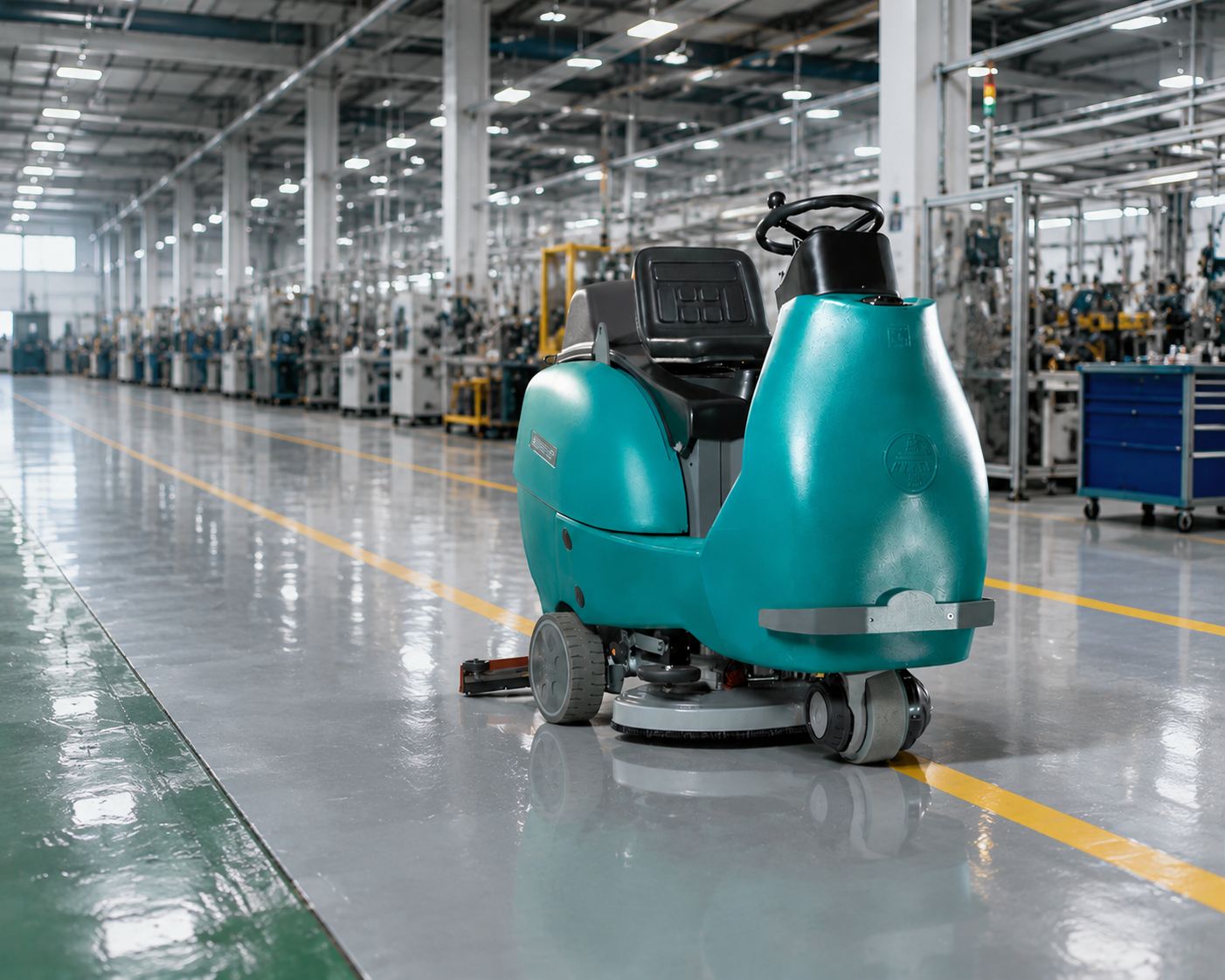
    Choosing the right floor scrubber for a manufacturing facility comes down to four factors: floor area, surface type, soil level, and shift schedule. Match machine size to your space, brush type to your floor, and battery type to your runtime needs. Key Takeaways- ? Floor area determines size — under 5,000㎡ → walk-behind; 5,000–15,000㎡ → small ride-on; over 15,000㎡ → large ride-on- ? Concrete needs aggressive brushes — epoxy floors need fine pads to avoid scratching- ?️ Heavy oil/grease requires dual-tank systems for detergent + rinse passes- ? Lithium batteries suit multi-shift factories; lead-acid works for single-shift- ? Look at total cost of ownership, not just purchase price Floor Area Under 5,000㎡: A walk behind floor scrubber is practical and cost-effective. 5,000–15,000㎡: A small ride-on (600–700mm scrubbing width) balances speed and maneuverability. Over 15,000㎡: A large ride-on (800mm+) maximizes productivity. Surface Type Smooth concrete needs medium-grit brushes. Epoxy or coated floors need fine pads — wrong pads cause scratches that trap dirt. For rough or pitted concrete, heavier brush down-pressure is essential. Soil Level Light dust → single-pass scrubbing works. Heavy oil, grease, or metal shavings → choose a machine with dual-tank system for detergent scrub + clean water rinse. For loose debris, consider a sweeper-scrubber combo. Battery & Runtime Single-shift (4–6 hours) → lead-acid is reliable and lower cost. Multi-shift or opportunity charging → lithium batteries charge faster, last longer, and need no water maintenance. A battery-powered walk-behind floor scrubber is a great entry point for smaller factories. Key Specs Checklist Factor What to Look For Scrubbing width Match to aisle width Tank capacity 2–3 fills per shift minimum Brush pressure Adjustable for different soils Water recovery Strong vacuum for fast drying Service access Easy brush/squeegee changes FAQ Q: Should I choose a walk-behind or ride-on scrubber for my factory?A: Walk-behind for tight spaces and areas under 5,000㎡. Ride-on for open floors over 5,000㎡ — operators clean faster with less fatigue. Q: What battery is best for a 24-hour manufacturing facility?A: Lithium. They charge in 2–3 hours, support opportunity charging during breaks, and last 2–3x longer than lead-acid in cycles. Conclusion The right floor scrubber for your manufacturing facility depends on your space, floors, dirt, and schedule. Jiechi offers a full range of walk-behind and ride-on industrial floor scrubber machines — from compact models for tight workshops to large units for production floors — backed by over 3,000 industrial facilities served and 100,000+ customers worldwide.
  • Why Factory Floors Become Dirty Again After Cleaning? 5 Common Mistakes You Should Avoid
    Jul 24, 2026
    Factory floors often look clean right after scrubbing but quickly become dirty again. The culprit isn't poor cleaning — it's common post-cleaning mistakes like using the wrong pads, skipping the rinse cycle, and neglecting squeegee maintenance. Fix these 5 errors and your floors will stay cleaner for longer. Key Takeaways- ? Wrong pad selection causes soil redeposition — use the right grit for your floor type- ? Skipping the rinse cycle leaves detergent residue that attracts dirt- ? Worn squeegees leave moisture that carries dirt back onto clean floors- ? Dirty recovery tanks reduce suction and leave a film on the surface- ⏱️ Rushing the drying time means foot traffic tracks dirt onto still-wet floors You've just finished scrubbing your factory floor. It looks spotless. But a few hours later, it's covered in dirt and tire marks again. Sound familiar? This frustrating cycle is more common than you think. Typically, the problem isn't your warehouse floor cleaning machine — it's the small mistakes made during or after the cleaning process. Here are five common reasons factory floors become dirty again after cleaning — and how to fix them. 1. Using the Wrong Pad or Brush for Your Floor Type The most common mistake is using a pad that's too aggressive or too mild for your specific floor surface — especially when operating a floor cleaning machine Factory operators rely on daily. What happens: An overly aggressive pad scratches concrete or epoxy coatings, creating micro-grooves where dirt embeds itself. A pad that's too mild doesn't remove embedded soil — it just spreads it around. The fix:- For smooth concrete: Use medium-grit (80–120) pads for daily cleaning- For epoxy or coated floors: Use fine-grit (150+) pads to avoid scratching- For heavy oil and grease: Start with a more aggressive pad, then follow with a finer pad- Always test a small area first when changing pad types 2. Leaving Detergent Residue on the Floor Cleaning solutions are designed to lift dirt. But if they aren't fully removed, the residue attracts new dirt almost immediately. What happens: Surfactants in cleaning detergents remain on the floor surface. This sticky film grabs dust, oil mist, and tire rubber from passing forklifts and foot traffic. The fix:- Use a two-step process: scrub with detergent, then rinse with clean water- Adjust your water flow — too little rinse water leaves detergent behind- For heavy soil areas, consider a second pass with clean water only- Use low-foam, easy-rinse formulations designed for automatic scrubbers 3. Worn or Damaged Squeegee Blades Your scrubbing machine for floors can only pick up dirty water if the squeegee is in good condition. A worn squeegee leaves a thin film of dirty water that dries into a visible haze. What happens: Hot concrete floors accelerate rubber wear. A blade with nicks, cracks, or hardening can't maintain proper contact. The result: streaks, water trails, and re-deposited dirt. The fix:- Inspect squeegee blades weekly — look for nicks, cracks, and hardening- Flip or replace blades when the edge loses its sharp profile- In summer (high heat), check blades every 2 weeks — rubber hardens faster- Adjust squeegee angle and down-pressure per the manufacturer's specs 4. Dirty Recovery Tanks and Vacuum Hoses Your scrubber can't pick up dirty water effectively if the recovery system is clogged or dirty. What happens: A dirty recovery tank reduces vacuum efficiency. Blocked hoses and clogged filters mean dirty water stays on the floor instead of being sucked into the tank. Bacteria and mold in the tank also produce odors that transfer back to the floor. The fix:- Empty and rinse the recovery tank after every shift- Check the vacuum hose for blockages — debris often collects at bends- Clean the float shut-off mechanism — a stuck float kills suction- Periodically flush the tank with clean water and a mild disinfectant 5. Not Allowing Sufficient Drying Time This is the simplest mistake and the most overlooked. Even a perfectly cleaned floor will show tire marks and footprints if traffic is allowed before the surface is fully dry. What happens: Foot and vehicle traffic on a damp floor redistributes residual moisture mixed with dirt from shoes and tires. The result looks like the floor wasn't cleaned at all. The fix:- Use a scrubber with efficient water recovery to minimize drying time- Block off cleaned areas for at least 15–30 minutes after scrubbing- In humid conditions, extend drying time or use floor drying fans- Schedule cleaning during off-peak hours when possible Quick Reference: Daily Cleaning Checklist Step Check ✅ Select correct pad for floor type   ✅ Pre-sweep or sweep loose debris   ✅ Use proper detergent dilution   ✅ Rinse with clean water   ✅ Inspect squeegee before starting   ✅ Empty and rinse recovery tank   ✅ Allow full drying time before reopening area   FAQ Q: What's the best way to remove detergent residue from factory floors?A: After scrubbing with detergent, make a final pass with clean water only. For automatic scrubbers, this means using the rinse cycle or switching to fresh water after the detergent pass. Models like Jiechi's ride-on scrubbers with dual-tank systems make this easy. Q: How often should I replace squeegee blades on industrial floor scrubbers?A: In normal conditions, every 4–6 weeks. In summer or on rough concrete surfaces, every 2–3 weeks. Flip the blade halfway through its life to extend service time. When you see streaks or water trails, it's time to replace. Conclusion: Small Fixes, Big Results Factory floors don't have to look dirty again hours after cleaning. By addressing these five common mistakes — choosing the right pad, rinsing thoroughly, maintaining squeegees, keeping recovery systems clean, and allowing drying time — you can extend the clean look of your floors and reduce the frequency of deep cleaning cycles. Whether you use a walk-behind or ride-on floor cleaning machine for industrial use, proper technique matters as much as the equipment itself. 
1 2 3 4 5 6 7

leave a message

leave a message
If you are interested in our products and want to know more details,please leave a message here,we will reply you as soon as we can.
submit

Home

Products

WhatsApp

contact