other

Warehouse Cleaning

Home

Warehouse Cleaning

  • ROI of Switching from Mopping to a Floor Scrubber: Worked Example
    Oct 20, 2026
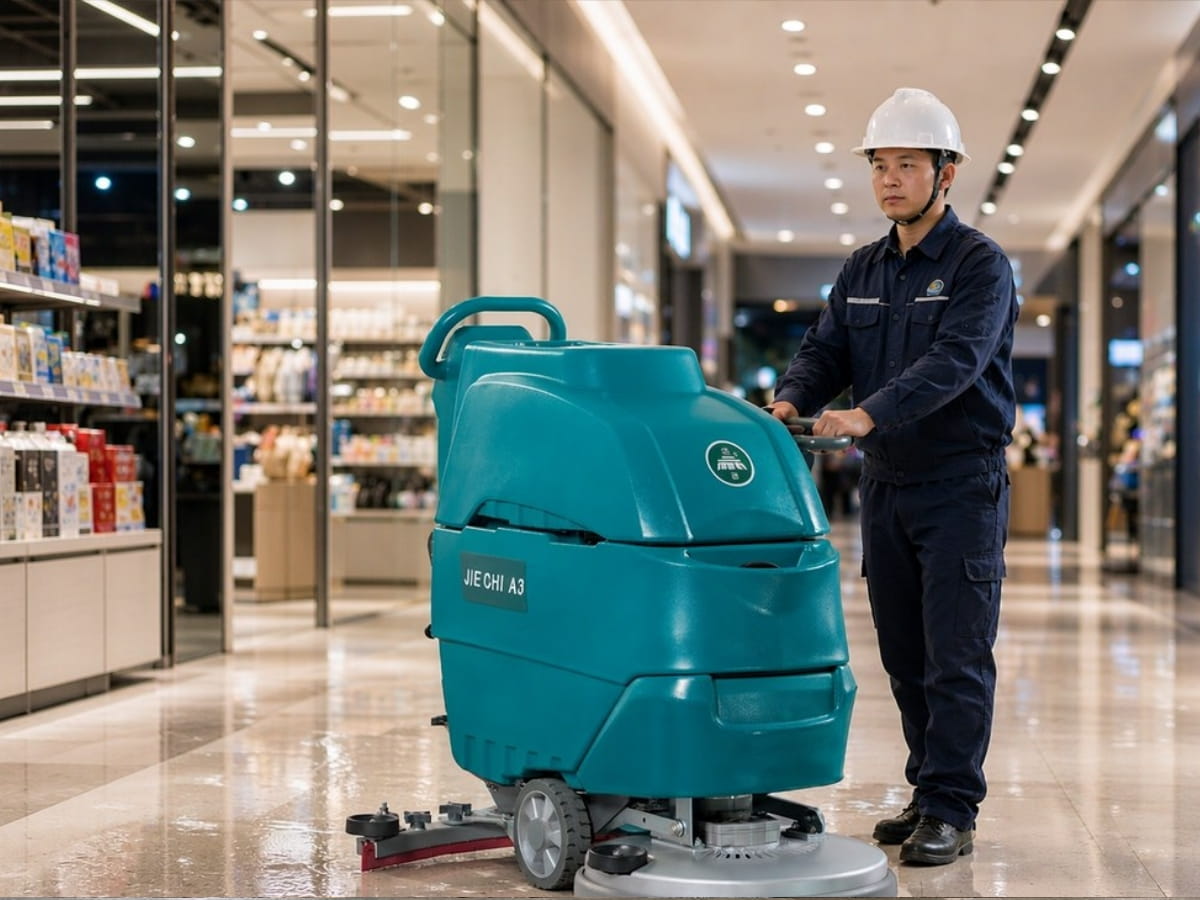
      Quick Answer The machine wins on hours, not on kit price. Budget manual mopping at roughly 5,000 sq ft per labour hour once bucket changes and edges are counted. Plan a 530 mm walk-behind at 12,000 to 13,000 sq ft per hour. On 40,000 sq ft cleaned nightly, that turns eight labour hours into about three and a half.   Baseline: what manual mopping really costs   Start where the mop actually is. A person wet mopping an open corridor covers ground quickly for about ten minutes, then slows: wring out, move the bucket, shift a chair, wait for the section to dry, redo the patch somebody walked across.   A genuine mop vs scrubber cost comparison counts every line: replacement mop heads, laundering where you use it, buckets and wringers, wet floor signs, detergent, two or three water changes a shift, and the minutes lost when a spill has to be boxed off and redone. Individually these are rounding errors. Across a year they are a budget line.   Nobody writes down consistency either. Hand pressure varies, dilution drifts, and by the fourth bucket the water is grey. The floor looks acceptable and tests badly, which is why complaints tend to arrive months before the cost review.   Effective rate: mop vs walk-behind vs ride-on   Rated coverage assumes clean, straight runs. Model against an effective rate, which is what your team delivers when the aisles are half full. Method Working path Planning rate Where it fits Wet mop and bucket About 0.5 m 400–500 m²/h (4,300–5,400 sq ft/h) Small rooms, washrooms, spot work Walk-behind scrubber 530-860 mm 1,500–4,200 m²/h (12,000–14,000 sq ft/h) Retail aisles, clinics, schools Ride-on scrubber 530–1060 mm 2,700–8,600 m²/h (21,000–30,000 sq ft/h) Open halls, logistics   Those planning rates drive most labour savings floor cleaning models, which is why timing your own shift beats quoting someone else's figure. Rate also matters less than fit: a machine that cannot turn in your tightest aisle gives back every minute it wins down the long one.   Redeployed hours vs reduced hours - the honest distinction   This is where most cases lose their audience. Hours freed by a machine do not all convert to cash. Some become detail work you were quietly skipping: edges, door tracks, and spill response nobody formally owned.   Split them into two lines. Reduced hours leave the payroll, redeployed hours improve the building. Put both in the table, because finance will find the difference if you do not.   A mechanised cleaning ROI figure should rest on the reduced column alone. Redeployed hours have value, but it is a quality argument, and blending the two is how a credibility problem starts.   Then apply your own labour rules. Minimum shift lengths, collective agreements and part-time contracts all decide how many hours can genuinely come off. Two hours saved nightly means little to someone on a three-hour minimum.   Worked 3-year example for a 50,000 sq ft site   Take a 50,000 sq ft site cleaned five nights a week. Not every square foot gets mopped, so it is the cleanable hard floor that matters. Every input below is a placeholder; swap in yours and the table recalculates.   Input Value used Where to get your own Cleanable hard floor 40,000 sq ft (3,700 m²) Drawings minus fixtures, racking and carpet Frequency 260 nights per year Current cleaning schedule Manual effective rate 450 m²/h Time one full shift Scrubber planning rate 1,200 m²/h plus 0.4 h detail Path width times walking pace Fully loaded labour rate $22 per hour Payroll plus on-costs   The arithmetic is short. Mopping takes 3,700 ÷ 450, about 8.2 hours a night. Scrubbing takes 3,700 ÷ 1,200, about 3.1 hours, plus 0.4 for edges: call it 3.5. That frees 4.7 hours a night. Assume 2.7 of those leave the payroll and 2.0 move into detail work that was not happening.   Line Year 1 Year 2 Year 3 Payroll hours removed 702 702 702 Labour value at $22/h $15,444 $15,444 $15,444 Machine amortised over five years ($7,500) −$1,500 −$1,500 −$1,500 Pads, brushes, squeegee blades, service −$1,200 −$1,200 −$1,200 Detergent, water and charging −$500 −$500 −$500 Purchase price, one-off −$7,500 — — Net cash effect $4,744 $12,244 $12,244   Three-year total of about $29,200 against a $7,500 machine, so payback lands inside year one. Add roughly 520 hours a year of detail work now getting done, worth $11,400 at the same rate if you were otherwise paying for it.   The shape matters more than the numbers. Move the labour rate and the result moves in a straight line; move the planning rate and it moves faster, because coverage drives every other line. A model that survives only when everything goes right does not survive.   Size the machine to the floor first. A walk-behind scrubber like the Jiechi A3 works a 530 mm brush path behind a 770 mm squeegee, carries 50 L solution and 55 L recovery, and rates 2,200 m²/h. At 155 kg it is light enough for one person to unload and heavy enough to track straight down an aisle.     Where the same area is split into rooms rather than long aisles, the operator should be sitting down. The Jiechi A5 keeps a 530 mm path on a 126 cm body, rates 2,700 m²/h, carries 65 L and 75 L, and turns inside a lift lobby without a second person spotting.   Quality and safety gains that do not show in the maths   Some of the value never reaches a spreadsheet, and it is usually what gets the decision over the line.   Gain What it protects Floor left almost dry behind the squeegee Slip exposure during and after the shift One detergent dilution all night Floor finish and grout, plus fewer early strips Repeatable result on every run Audit scores and inspection outcomes No wringer trolleys in public corridors Customer experience and insurance questions Less bending and wringing per shift Staff retention on a hard-to-fill roster   None of this pays this month's wages. It stops money going out later: a claim, a floor stripped a year early, or a failed audit.   From the field: what we ask for before quoting Jiechi has built floor cleaning machines since 2003 across two production bases totalling 60,000 m², and the enquiries that end in an order usually start with a timed shift rather than a price request. Send us the floor plan, the cleaning frequency and the night roster. We will run this same three-year table with your numbers and size the machine to it, even when that turns out smaller than the one you asked about. What size of site makes the switch worthwhile? Look at hours, not area. Once the nightly mop takes more than about four labour hours, a walk-behind usually pays for itself inside a year. Below that, it depends on your labour rate. What usually gets missed in the budget? Squeegee blades, brush and pad wear, a battery reserve after year three, and somewhere secure to charge and empty the machine. Send us your floor plan and roster Tell us the floor area, how often it is cleaned and how many hours it takes.  Tel: +1 2403149021  |  Email: kliu@jiechi.com
  • Scrubber-Sweeper Combination Machines: When One Machine Beats Two
    Oct 08, 2026
    Quick Answer Key Takeaways How It Works Two Passes Into One Site Conditions Payload & Shift Time Dual System Care Walk-behind vs Ride-on FAQ Conclusion Contact Us Quick Answer A scrubber sweeper combination machine sweeps dry debris into a hopper and scrubs the same strip of floor in one pass, so one operator replaces a two-machine, two-pass routine. It beats two machines when the floor carries both dust and stuck-on soil, and when the site is too small to justify a separate sweeper. Key Takeaways The hopper handles dry debris first, the brush deck and squeegee handle the wet work second, in the same travel direction. The saving is mostly operator hours and scheduling, not water or detergent. Mixed soil is the deciding factor. Floors with only dust suit a sweeper; floors with only film suit a scrubber. Dual systems mean two service routines. Skipping the sweeping side is how these machines get a bad reputation. The usual cleaning routine on a factory floor is two machines and two passes: a sweeper to get the grit up, then a scrubber once the loose material is gone. It works, and it costs two operators, two sets of consumables and a slot in the production calendar twice. A combination machine collapses that into one pass. Whether that is a genuine improvement depends on the soil, the aisle layout and how much of the shift is spent on things other than cleaning. Here is how to tell. How a combination machine works: sweeping then scrubbing The sequence matters, and it runs front to back. A cylindrical main brush lifts and throws. Unlike a disc brush that works flat against the floor, the roller brush on a combination unit turns against the direction of travel and flicks debris forward into a hopper. That is what lets it pick up a bolt or a wood offcut rather than pushing it around. The hopper collects dry. Debris goes into a separate container, kept dry and separate from the recovery tank. This is the part that makes the single-pass idea work at all: if grit went into the wet system it would settle in the tank and shorten the life of the suction motor. Solution goes down behind the debris pickup. With the loose material gone, the brush deck works on film and marks rather than grinding grit into the surface. The squeegee recovers immediately. Same pass, same direction, floor left dry behind the machine. An all in one scrubber sweeper is not a compromise between the two jobs; it runs them in the correct order, one behind the other. One practical limit worth knowing before you buy: the hopper handles debris up to a certain size, and beyond that the operator still needs a broom and a dustpan. Fine grit, sand, food residue, swarf and broken packaging are all inside the range. Pallet fragments and long offcuts are not. Where two passes become one The obvious saving is the second pass over the same floor. The real saving is usually somewhere else. Scheduling. Two machines need two windows, and in a plant running two shifts those windows are the hard part. One machine needs one window, which is often the difference between cleaning daily and cleaning when there is space in the calendar. Labour. One operator, one set of tank stops, one end-of-shift rinse. On a mid-size site that is commonly 60 to 90 minutes a day recovered. Fleet count. A combination floor machine replaces two assets in the register. Fewer machines means fewer batteries to manage, one parts list and one service contract.   Site conditions that suit combinations Use this table against your own floor before you decide. The pattern to look for is mixed soil, not heavy soil. Site condition Suits a combination? Why Dust plus tyre marks and spills Strong fit Both jobs are genuinely needed on every pass Mixed debris, small metal swarf, packaging Strong fit Roller brush lifts what a disc brush would push Fine dry dust only, no wet soil Poor fit The scrubbing half never earns its keep Heavy liquid or thick sludge Poor fit The hopper is the wrong container for the volume Very tight aisles under 1.2 m Check the width Combination decks are wider than a plain scrubber Long unbroken runs over 5,000 m² Ride-on class Operator fatigue becomes the limit, not the machine Payload, water capacity and shift time A combination machine carries three things instead of two: solution, recovered water and dry debris. All three fill up, and whichever fills first ends the run. On a walk-behind class unit that usually means a 95 L solution tank and 105 L recovery tank alongside a hopper of around 20 L. The hopper is the one that surprises people, because on a floor with genuine debris it fills long before the water does. Empty the hopper when it is a third full rather than waiting; a full hopper stops lifting and the main brush starts redepositing. From the field: what one ride-on covers in a shift The JIECHI M10 is published at 6,000 m²/h with a 280 L solution tank, 300 L recovery tank and 36V/220Ah. At a realistic 60% of that rate, four hours of running moves roughly 14,000 m² before tank stops. That is a planning figure from published specifications, not a measured result. Work backwards from the shift rather than forwards from the spec sheet. Decide how many hours the floor is available, subtract tank stops and hopper stops, and check the remaining time still covers the area. If it does not, the answer is a bigger machine, not a faster operator. It also helps to know where the water actually goes. Recovery capacity should be at least as large as solution capacity, because detergent, soil and the rinse water from the previous shift all add volume. A machine with a solution tank larger than its recovery tank will stop sooner than the spec sheet suggests. Maintenance of dual systems Empty and clean the hopper every shift. Left overnight, damp debris compacts and the following day the brush carries it instead of lifting it. Check the hopper seal at the same time. Inspect the roller brush for wrapped material. Strapping, film and wire bind around the cylinder and flatten the bristles in one section. It takes a minute to cut away and it changes how the machine picks up. Keep the squeegee and recovery side separate in your head. Blades, filters and the recovery tank need the same attention as on any scrubber. Treating the machine as a sweeper with a tank bolted on is the common failure. Watch brush pressure. Combination units run the main brush at a set pressure range, and worn bristles change what the machine does to the floor. Set it to the published range rather than guessing. Walk-behind vs ride-on combination classes Both classes exist for a reason, and the choice is mostly about area and aisle geometry rather than budget. Walk-behind suits up to roughly 4,000 m² per shift. It turns in tighter spaces, needs less storage, and one operator can load it into a van. An M series cleaning machine in this class, such as the JIECHI M16, carries 24V/200Ah, an 860 mm path, 4,200 m²/h and a 20 L hopper, which is the configuration that fits a small or mid-size plant with mixed debris. Ride-on suits long runs and continuous shifts. Above about 5,000 m² per shift, operator fatigue becomes the limiting factor, and a seated machine with a large tank set runs longer between stops. The trade-off is turning radius and machine weight, so check the tightest corner the route includes. If the site has both conditions, a long main hall and a tight packing area, the honest answer is often one of each rather than one machine trying to do both. Splitting the fleet also protects the schedule: when one unit is in for service, the floor still gets cleaned. Whichever class you land on, ask the supplier for the cleaning width. The width decides how long the job takes. Frequently Asked Questions Can a combination machine replace a sweeper and a scrubber entirely? On mixed-soil floors, yes for day-to-day work. Sites with heavy fine dust or heavy liquid usually still keep a dedicated machine for those areas. Does one pass clean as well as two? For typical factory soil, yes. The order is the same as a two-machine routine: dry debris up first, then solution, then recovery. What fills first, the hopper or the tanks? Usually the hopper on any floor with real debris. Empty it at a third full so the main brush keeps lifting. How much area suits a walk-behind combination? Up to roughly 4,000 m² per shift. Beyond that, operator fatigue makes a ride-on the better answer. Conclusion A scrubber sweeper combination machine wins when the floor carries dust and stuck-on soil at the same time and the site cannot spare two windows. Match the class to the area, empty the hopper early, and service both halves. Send us your floor area, aisle widths and debris type and we will tell you which class fits. Find the Right Combination Machine Tell us the floor area, aisle widths and what ends up on the floor. We will match a walk-behind or ride-on class to it. Tel: +1 2403149021  |  Email: kliu@jiechi.com  |  www.rceautofloorclean.com
  • Autonomous Floor Scrubbers: A Site Readiness Checklist
    Oct 06, 2026
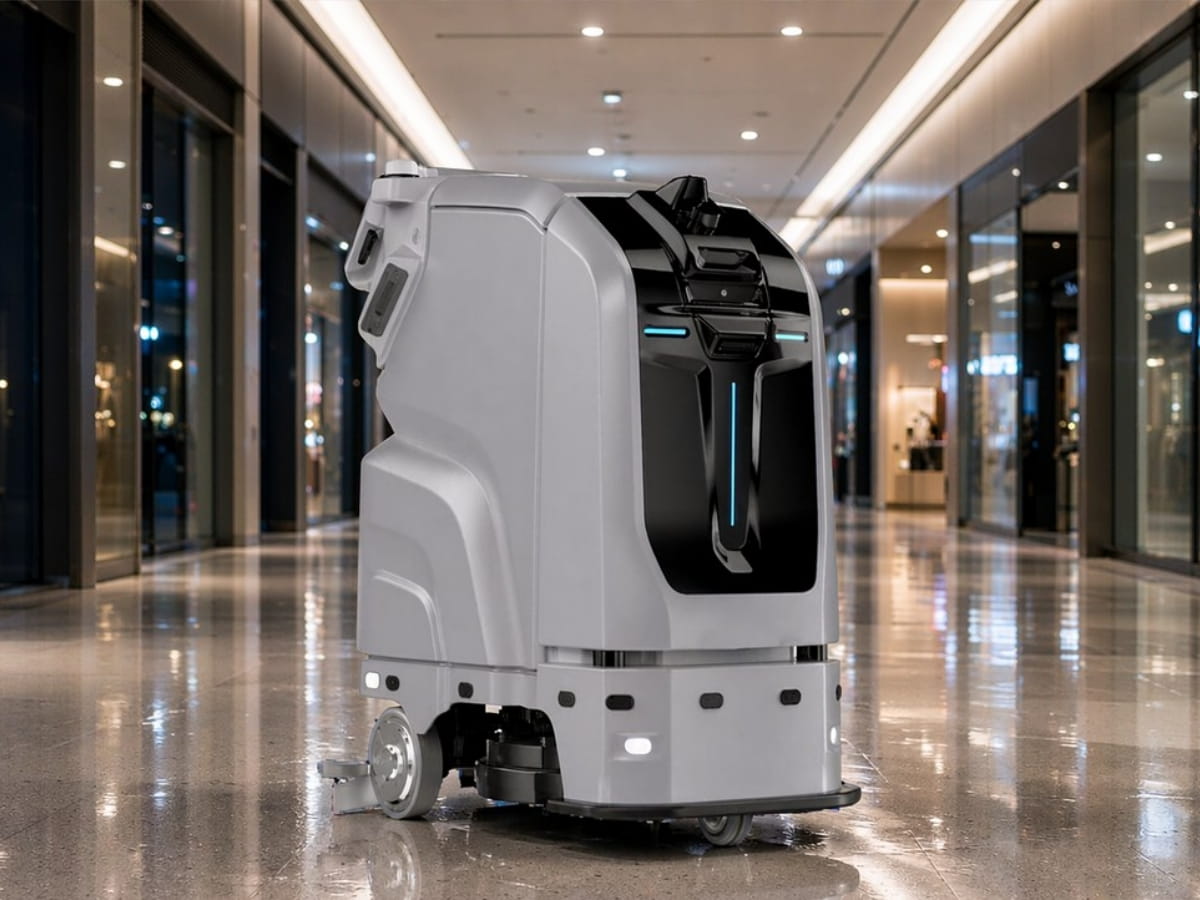
    Quick Answer Key Takeaways Floor & Lighting Wi-Fi & Docking Traffic & Lifts Staff Roles Rollout Failures FAQ Conclusion Contact Us An autonomous floor scrubber site readiness check covers five things before the machine arrives: floor gradient and surface condition, a mapped route with a fixed start point, Wi-Fi for task reports, a docking station with power and water so it charges, refills and drains itself, and a named operator for the daily checks. Miss one and the robotic floor cleaner deployment stalls in week two. Most stalled deployments are infrastructure failures: map quality, a disturbed docking point, no routine. Fill in the driverless scrubber checklist on site, not over email. The building tells you more in an hour than a spec sheet. Jobs change rather than disappear. Someone still cleans the squeegee and works the edges. The machine returns to its task start point when a job ends. Put that point at the workstation and it charges, refills and drains unattended. Autonomous scrubbers are past the novelty stage. Airports and shopping centres run them overnight, and the question has shifted from whether the machines work to whether the building is ready for one. Here is the checklist we go through before a machine ships. Floor, layout and lighting requirements Robots are fussier about floors than people are. A cleaner steps over a cracked joint; a machine tries to plan around it and sometimes decides it cannot. Gradient and joints. Gradeability is the hard number: the JC80 climbs 6%, so a steeper ramp is not a route and a step is a wall. Lifted tiles, open joints and cable covers stop a machine much as they stop a pallet truck. Fix the worst ten before delivery. Layout. Open floor pays best. Area coverage needs a regular open area over 3 × 3 m to plan a sensible path; anything narrower is taught as a follow-path route, down to about a metre wide. Glass and reflective surfaces. Navigation runs on vision plus laser, and glass is difficult for both. Floor-to-ceiling windows, balustrades, glass floor panels, overhangs and top-heavy objects get marked on the map rather than left to the sensors. For narrow corridors and routes under shelving, a compact unit such as the JIECHI JC10 mini smart floor cleaner measures 52 × 42 × 49 cm at 26 kg with a 350 mm path, and gets through gaps that stop a full-size machine. Wi-Fi, mapping and docking station needs Connectivity and navigation are the two items everybody assumes IT will sort out, and the two that hold deployments up longest. The network is for management. Being online is what lets you manage the machine remotely, receive task reports and have an engineer diagnose a fault without a visit. It is configured once in management mode: SSID and password exact. Mapping. Walk the machine through the area until the map is fully white, then save it. Three rules decide whether it stays usable: straight lines under 1 m/s, turns under 20°/s, and a closed loop, small circuit first, larger one second. Keep each map under 15,000 m². Start point. Pick somewhere the surroundings will not change within 10 m, with a wall as a reference and room to start, not the middle of a long corridor. It locates itself by a point on the map or a QR code on the wall. Codes suit complex sites: 30 to 150 cm high, 100 to 200 cm in front, never moved. Also on the map: air walls around glass, overhangs and escalators at 20 cm; solid walls along glass panels and racking at 7.5 cm; drop zones under glass panels shielded. Docking station. Two metres clear all round, no reflective material, and the station's emergency stop released before it charges. Park the machine about half a metre in front to deploy it, and redeploy if it shifts more than 20 cm. Set the task start point there too: the machine returns to it when a task ends, and a workstation fills the 70 L tank, empties the 50 L one and charges on the same visit. It can also be sent back from anywhere mid-task; if it reports lost positioning, drive it to within 1.5 m first. Traffic, lifts and door integration Anything crossing floors or passing through doors needs the building's cooperation, and that conversation goes better before the machine is on site. Lifts. Riding one needs the elevator control module, an option rather than standard, plus the lift area boxed on the map. Without it, keep the robot on one floor and clean the rest conventionally. Check the rated load with margin: 199 kg dry, before 70 L goes in. Doors and passages. The body is 1,160 × 580 × 1,210 mm and wants clearance, not an exact fit: 7.5 cm to walls and racking it cleans along, 20 cm to an air wall. Automatic doors have to hold long enough for a slow approach. Traffic. Find out when the area is busy and stay out of those hours, then group tasks to suit battery, tank size and output. Speed bumps can be marked as deceleration zones; the machine lifts its parts to cross. Clearing the route is still a person's job. For open floors, the JIECHI JC80 large intelligent driverless floor scrubber runs a 510 mm path behind an 810 mm squeegee at up to 2,040 m²/h, carries 70 L of solution and 50 L of recovery, and works at under 65 dB. It scrubs 3.5 hours or dust-mops 10 on a 25.6 V 100 Ah pack, and drives by hand too. From the field: what the published numbers work out to Rated at 2,040 m²/h with 3.5 hours of scrubbing per charge, one shift on the JC80 covers roughly 7,000 m² before it needs the station, and the 15,000 m² map limit means a large building runs two maps. Charging takes around 2 hours, and the workstation fills and empties the tanks on the same visit. Send us your floor plan and we will work it through. Staff roles after deployment The pitch says it replaces a shift. What happens is that the shift changes shape. Two logins, not interchangeable. Cleaners start and pause tasks and can drop into manual for a corner. Administrators map, edit, plan tasks and schedules, set cleaning strength and read reports. Most sites need one person comfortable in both. Before an automatic run: battery, clean and recovery water, dustbin; brush, squeegee and rubber strip clean; the right parts for the mode, dust-mop cloth or disinfection module; route clear. Key switch on, emergency stop out. Afterwards it is routine: rubber blade cleaned daily, the other cleaning parts weekly, filter screen cleared, blade checked for damage and squeegee checked for level. Water is not on that list. At a workstation the machine refills and drains itself, so the daily job is the parts and the floor. Skip it and the streaky floor gets blamed on the machine. The new work is supervision: reading the task report, answering what the machine flags, knowing when to take over. Sites that get value from a robot give it one named owner. Sites where everybody owns it park it in a corner. Common rollout failures and fixes The same problems turn up on most sites, and all are cheaper to plan around than to fix. 1. A poor map, not a poor machine. Open loops, ghost walls and unscanned areas cause position jumps and lost runs. Close the loops, rescan gaps, keep each map under 15,000 m². 2. The docking bay became storage. A shiny trolley beside it is just as bad. Two metres clear, nothing reflective, redeploy if it moves more than 20 cm. 3. The building changed after mapping. Sales floors get re-laid constantly. Re-map or edit: air walls for new glass, solid walls along new racking. 4. Obstacles left on the route. Pallets and cable runs stop a machine that cannot argue. Clear the path before starting, and use manual mode for the corner someone blocked. 5. Resume and return-to-station never switched on. A task that stops on low battery and never restarts is a settings problem, not a machine fault, and so is one that finishes and stays put. 6. The emergency stop used as a pause button. It drops positioning and costs you the run. Use the green pause key, or drop into manual and back. 7. Expecting edges, washrooms and stairs. Robots do open floor, not those. Keep a conventional scrubber for them. FAQ Q1: How do I know whether my site is ready for an autonomous floor scrubber?A1: Walk the route at the hour the machine would run. Check the gradient against 6%, joints and lifted tiles, whether glass and reflective surfaces are marked, and a station spot with 2 m clear, power, water and a drain. Q2: Does the machine need Wi-Fi?A2: For remote management, task reports and fault diagnosis, yes. It is configured once in management mode, and the SSID and password have to be exact. Q3: How long will it clean before it has to charge?A3: On the JC80, 3.5 hours of scrubbing or 10 hours of dust mopping per charge, and about 2 hours to charge. The station does it unattended and a workstation handles the tanks at the same time. Group tasks to suit battery and tank size, out of your busy hours. Q4: What does daily maintenance actually involve?A4: Clean the rubber blade daily and the other parts weekly, clear the filter screen, check blade and squeegee, and leave the machine at the station so it charges, refills and drains itself. Autonomy works on floors prepared for it. The machines are capable; the buildings usually are not. Survey first, build and edit the map second, set the workstation as the task start third, then name the person who owns the daily checks. Contact us for catalog & quotation Send us your floor plan, route areas, gradients and cleaning window. We will tell you which parts of your site are ready. Tel: +1 2403149021 Email: kliu@jiechi.com

  • Walk-Behind vs. Ride-On Floor Scrubbers: How to Choose the Right Fleet for Your Facility
    Jun 02, 2026
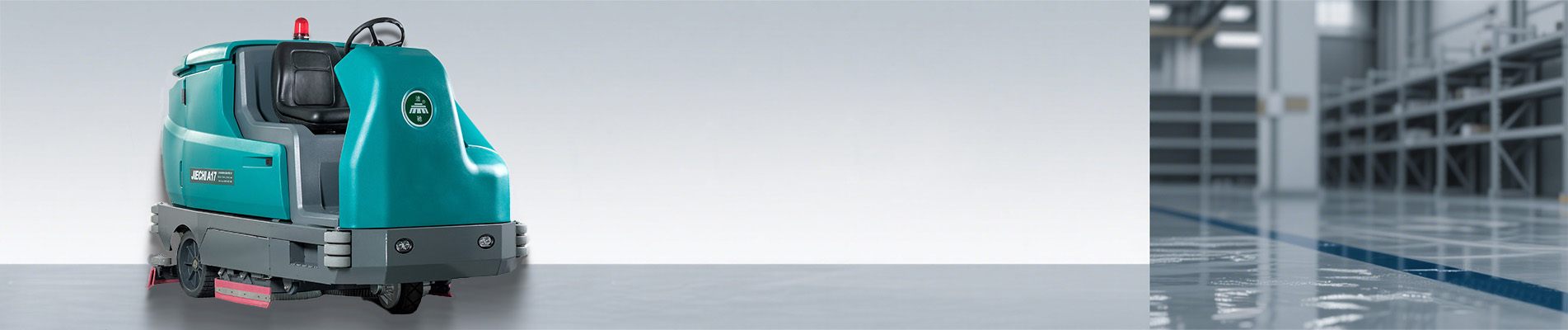
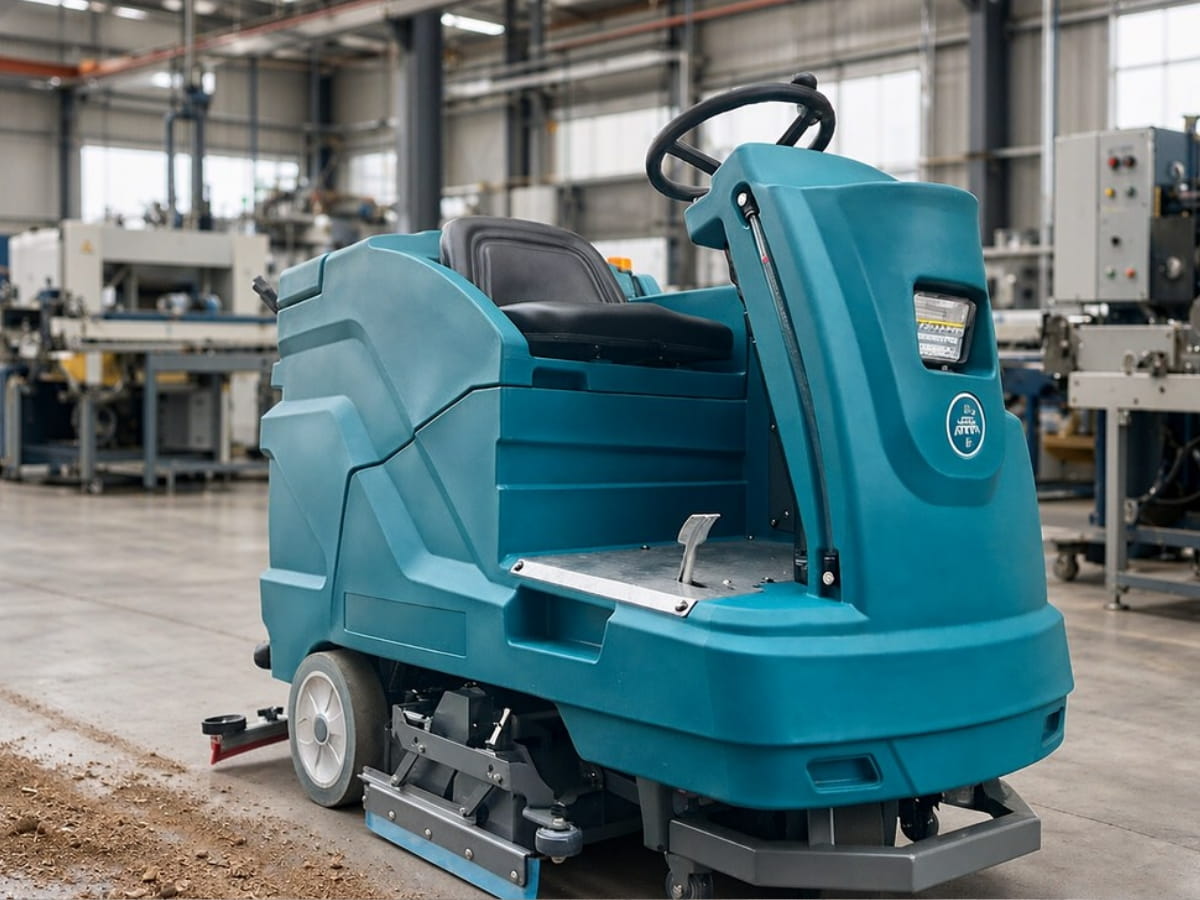
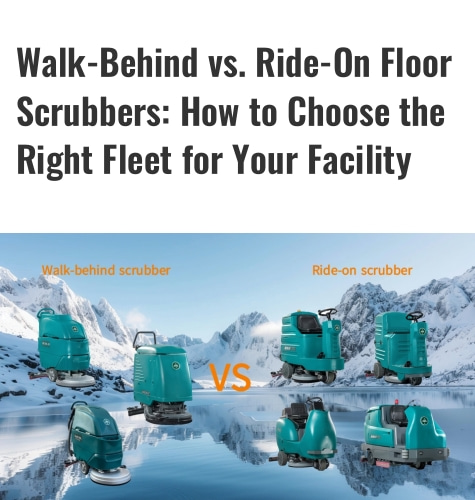
    In the fast-paced world of industrial and commercial facility management, maintaining spotless floors is no longer just about aesthetics—it’s about safety, compliance, and operational efficiency. If you are still relying on traditional mopping, or looking to upgrade your current cleaning fleet, you’ve likely arrived at a critical crossroads: Should you invest in a walk-behind or a ride-on floor scrubber?     As a leading global manufacturer of floor scrubbers and sweepers, Jiechi has helped thousands of factories, warehouses, hospitals, and shopping malls optimize their cleaning protocols. Here is a data-driven breakdown to help you make the smartest investment for your business.     1. The Walk-Behind Scrubber: Agility Meets Precision Walk-behind floor scrubbers (like the Jiechi BA530BT or the A3) are operated by a technician walking behind the machine. Best Suited For:   Tight and Congested Spaces: Narrow aisles, office hallways, and doorways. Smaller Footprints: Facilities under2,000㎡. Corner Cleaning: Superior maneuverability around tight corners and under obstacles.       2. The Ride-On Scrubber: Maximum Productivity for Large Scale Ride-on scrubbers (like the heavy-duty Jiechi A7, BA900BT, A10, A17) allow the operator to sit comfortably while driving the machine.     Best Suited For:   Expansive Areas: Large logistics warehouses, transport hubs, and manufacturing plants. High-Frequency Cleaning: Spaces larger than $3,000\text{ m}^2$ that require rapid turnaround times.   Labor Optimization: When you need to cover double the square footage with half the manpower.   The Jiechi Advantage: Jiechi ride-on models boast high-capacity solution tanks and extended battery life, drastically reducing the time spent on "dump and refill" stops.     The Decision Matrix: How to Choose? To make your decision easier, our engineering team has summarized the key metrics in the comparison table below: Feature Walk-Behind Scrubbers Ride-On Scrubbers Average Cleaning Speed 1,500 - 2,500 ㎡ 3,500 - 6,500+㎡ Maneuverability Exceptional (Turns on a dime) Moderate (Requires wider turning radius) Initial Investment Lower upfront cost Higher upfront cost (Offset by rapid ROI) Labor Efficiency Standard High (Reduces labor costs by up to 50%) Ideal Environments Retail stores, schools, hospitals Warehouses, airports, large factories     The Bottom Line: Calculate Your ROI When choosing between a walk-behind and a ride-on machine, look closely at your Total Cost of Ownership (TCO). While a ride-on scrubber requires a higher initial capital expenditure, it slashes labor hours dramatically. In large facilities, a ride-on machine often pays for itself within the first 6 months purely through labor savings. However, many modern facilities don't just choose one—they deploy a hybrid fleet. For example, utilizing a Jiechi A7 for the main warehouse floor and a Jiechi A1 or A3 for the narrow packing zones.
  • How Often Should You Sweep Your Warehouse Floor? A Practical Guide for Facility Managers
    May 20, 2026
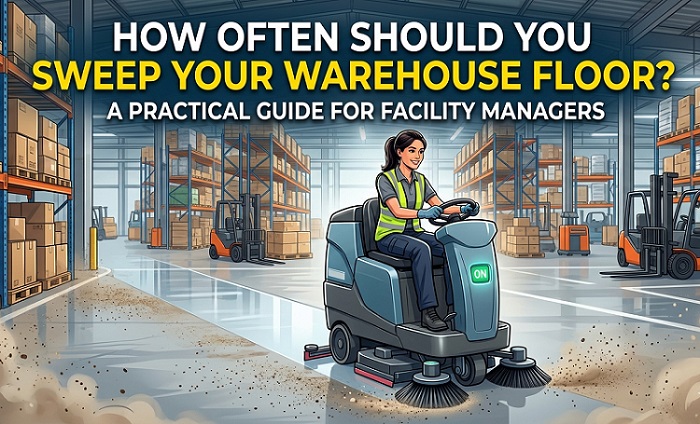
    Keeping a warehouse floor clean is about more than appearances — it directly impacts workplace safety, equipment longevity, and operational efficiency. But how often should you actually run a floor sweeper through your facility? The answer isn't one-size-fits-all. It depends on traffic volume, the type of debris your operation generates, and industry-specific requirements.   Why Regular Sweeping Matters Before diving into frequency, it's worth understanding why consistent sweeping is so important. A clean warehouse floor: Reduces slip and fall risks — Dust, debris, and loose particles create hidden hazards that can cause accidents. Protects equipment — Forklifts, pallet jacks, and other machinery operate less efficiently on dirty floors. Debris can damage tires, clog air filters, and accelerate wear on moving parts. Improves air quality — Fine dust particles that accumulate on floors become airborne when disturbed by traffic. Regular sweeping with a quality industrial floor sweeper equipped with a proper filtration system keeps dust levels under control. Extends floor life — Abrasive debris like gravel, metal shavings, and sand acts like sandpaper under foot and vehicle traffic, gradually wearing down floor coatings and concrete surfaces. Enhances professionalism — Clean facilities make a positive impression on clients, inspectors, and employees alike.   Sweeping Frequency by Facility Type Different types of warehouses have very different cleaning needs. Here's a practical breakdown: High-Traffic Distribution Centers (30,000+ sq ft) These facilities see constant forklift and foot traffic, with debris arriving daily via incoming shipments and outgoing orders. Sweeping should occur at least once per day, and in busier operations, twice daily — once mid-morning and once after the final shift. A ride-on floor sweeper is the most efficient choice here, as it can cover large areas quickly without taking operators away from other tasks for too long. Manufacturing and Production Facilities Workshops that generate metal shavings, wood dust, plastic pellets, or packaging waste need more frequent cleaning. Sweep at least 2–3 times per day, particularly around production lines and loading areas. Heavy debris should be cleaned up immediately to prevent it from being crushed into the floor by machinery. Light Commercial Warehouses (under 20,000 sq ft) Smaller facilities with lower traffic volumes can typically get by with sweeping every 2–3 days. A walk-behind floor sweeper is well-suited for this application, offering good results without the higher cost of a ride-on machine. Cold Storage and Food-Grade Facilities These environments have stricter hygiene requirements. Daily sweeping is mandatory, and many operators choose to sweep after each shift to prevent buildup of food particles that can attract pests. Look for a sweeper with a HEPA filtration system to capture fine dust without spreading contaminants. Outdoor Areas and Loading Docks Loading docks, parking lots, and exterior walkways collect leaves, gravel, and windblown debris. Sweep these areas 2–3 times per week, or more frequently if your location experiences seasonal debris like falling leaves or road salt in winter. Signs You Need to Sweep More Often No matter what schedule you set, pay attention to these warning signs that your current frequency isn't enough: Visible dust buildup on surfaces within hours of cleaning Employees tracking debris from one zone to another Complaints about slippery or dusty floors Frequent maintenance issues with forklifts or other equipment Poor results from indoor air quality monitoring If you notice any of these, increase your sweeping frequency — and consider whether your current floor sweeper is the right model for your debris load. Choosing the Right Floor Sweeper for Your Schedule Your sweeping frequency is only half the equation — your equipment needs to keep up. Here are a few tips: For daily or twice-daily sweeping in large facilities → Invest in a high-capacity ride-on sweeper with a large hopper. You'll minimize trips to empty debris and maximize cleaning time. For every-other-day sweeping in smaller spaces → A compact walk-behind sweeper offers flexibility and lower operating costs. For facilities with fine dust concerns → Choose a sweeper with advanced filtration, such as a dust control system or HEPA filter. Why Jiechi Floor Sweepers Are Built for the Job At Jiechi Cleaning, we design our floor sweepers for real-world industrial and commercial conditions. Whether you need a rugged ride-on model for a busy distribution center or a nimble walk-behind sweeper for a workshop, our machines deliver consistent performance shift after shift. Every Jiechi sweeper features: Efficient sweeping systems that handle everything from fine dust to bulky debris Reliable filtration to keep airborne particles under control Durable construction built to withstand daily use in demanding environments Easy maintenance with readily available spare parts Not Sure What Sweeping Frequency Is Right for You? Every facility is different, and the right schedule depends on your specific operations. Contact Jiechi today and our team can help you evaluate your cleaning needs — and recommend the right floor sweeper and maintenance routine to keep your warehouse safe, clean, and productive.
  • JIECHI BA850BT The Leader in Large-Area Cleaning with High Efficiency & Low Noise
    Apr 28, 2026
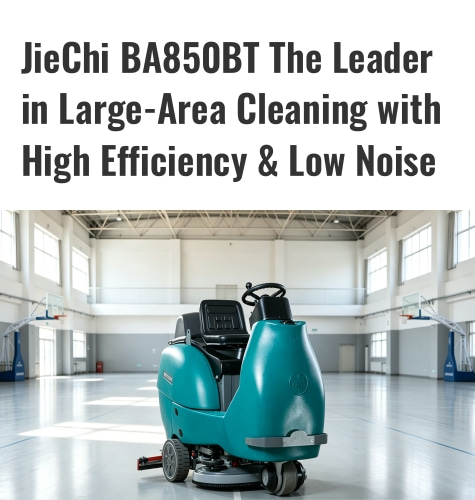
    Large-scale indoor cleaning scenarios demand higher-performance cleaning equipment. ⚠️Factory workshops struggle with heavy oil stains on floors;  ⚠️hospitals and schools enforce strict standards for hygiene cleanliness and noise control;  ⚠️underground parking lots and logistics warehouses feature vast floor areas where manual sweeping is time-consuming and labor-intensive.   The JieChi BA850BT Large-scale floor scrubber delivers a perfect solution to all these challenges.   JieChi BA850BT Core Advantages   850mm Ultra-wide Cleaning Path Equipped with an extra-large brush disc, it delivers extensive single-pass coverage, minimizing repeated cleaning strokes and drastically boosting efficiency in open areas such as corridors, workshops and parking lots, while cutting labor costs effectively.   180L Clean Water Tank + 195L Sewage Tank Dual large-capacity tanks reduce frequent water refills and sewage disposal, supporting long-duration continuous operation. Even for large-scale logistics warehouses spanning thousands of square meters, one-stop uninterrupted cleaning is achievable to avoid workflow disruptions.   Full-body Anti-collision Strips Protects the equipment from impact damage and prevents scratches on floors, walls and surrounding facilities.   Ultra-quiet Operation Design The suction motor is embedded in a sound-absorbing system with premium noise-dampening materials, ensuring extremely low operating noise.   Applicable Scenarios   Shopping Malls & Supermarkets Efficiently cleans tile and marble floors with instant washing and drying performance, ensuring pedestrian safety and maintaining a neat, tidy shopping environment. Factory Workshops & Industrial Plants Effectively removes oil stains, metal scraps and industrial dust. Compatible with cement floors, epoxy flooring, wear-resistant floors and more, it helps factories meet sanitation standards and ensure safe production. Hospitals, Schools & Office Buildings The low-noise design eliminates noise disturbance, with dust-free and residue-free cleaning results. It meets the stringent hygiene requirements of medical, educational and commercial office spaces for a healthy and sanitary environment. Underground Parking Lots The wide cleaning coverage greatly improves operational efficiency, easily removing dust, sediment and tire marks to prevent dust accumulation and keep parking areas well-maintained. Logistics Warehouses & Distribution Centers Long battery life and large tank capacity fully meet large-area cleaning demands, supporting high-efficiency daily sanitation without disrupting warehousing operations and cargo turnover. Hotel Lobbies & Exhibition Centers Leaves floors spotless and completely dry after cleaning, elevating overall venue hygiene and brand image.     Ideal for property management supervisors, factory administrative teams, shopping mall operators, and facility managers of hospitals and schools, the JieChi BA850BT stands as the top choice for daily large-area indoor cleaning and post-construction site cleanup. It enables full-scenario, high-efficiency, and low-consumption cleaning operations, helping create a cleaner, quieter, and safer working and public environment.

leave a message

leave a message
If you are interested in our products and want to know more details,please leave a message here,we will reply you as soon as we can.
submit

Home

Products

WhatsApp

contact