other

Janitorial Equipment

Home

Janitorial Equipment

  • Automotive Plant and Dealership Floor Care: Oil, Tyre Marks and Showroom Finish
    Oct 15, 2026
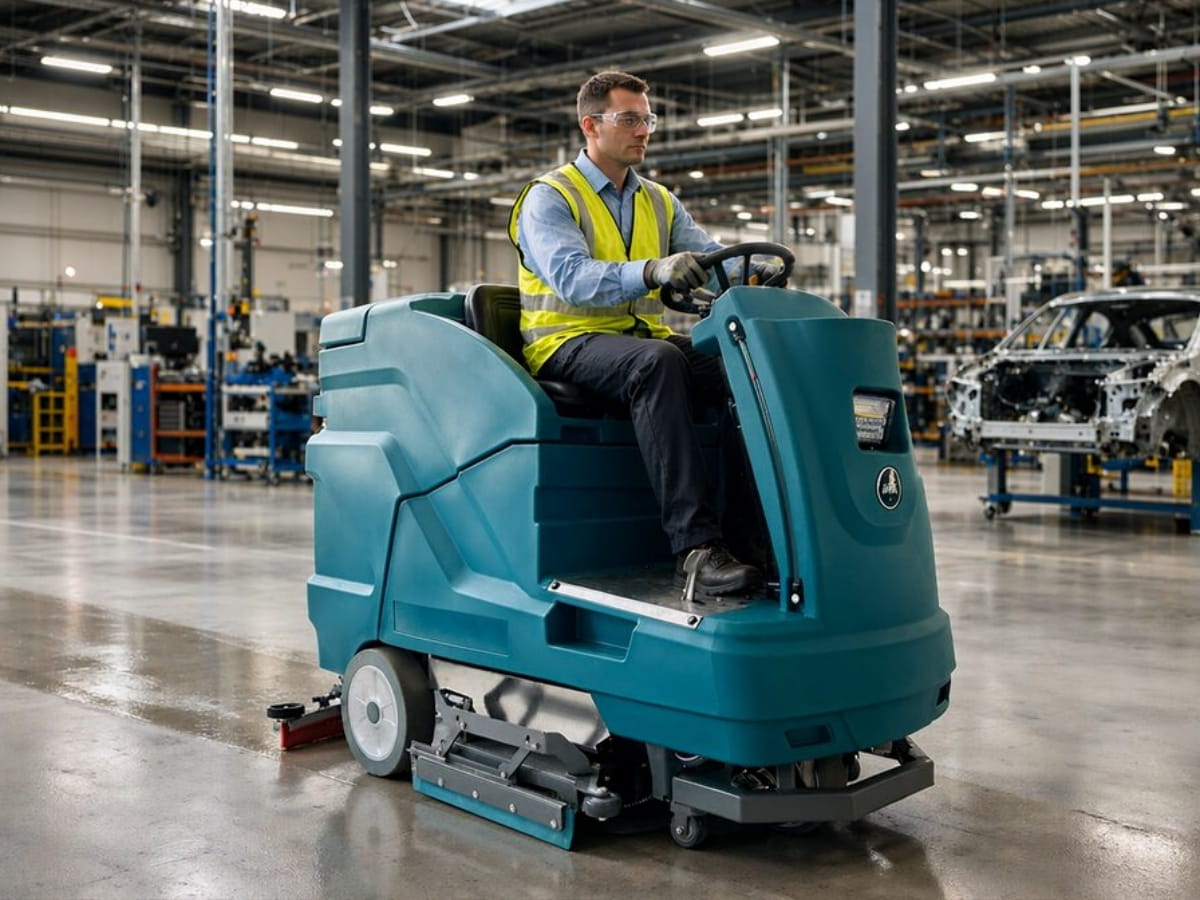
      Automotive dealership floor cleaning comes down to treating three zones as three jobs. Absorb oil before you scrub it, take tyre marks off with pads and dwell rather than pressure, and put the showroom on a burnishing schedule instead of waiting for it to look dull. Do that and the floor stops being the thing customers notice. Three zones, three standards. One routine across workshop, bay and showroom fails two of them. Fresh oil is an absorbent job first. Water spreads the film and makes the next hour worse. Tyre marks sit on the coating, not in it. Pad choice and dwell decide what comes off. Three different floors: workshop, service bay, showroom   A dealership is three floor problems sharing one roof. The workshop takes engine oil, coolant and metal fines. The service bay takes hot tyre marks, jack drips and brake dust. The showroom has to look as good as the cars on it. Zone What lands on it Typical floor What clean means Workshop Engine oil, coolant, metal fines Bare or sealed concrete No slip film, no oily odour Service bay Tyre marks, hydraulic drips, brake dust Epoxy or polyurethane-coated concrete Marks gone, coating intact Showroom Foot traffic, dust, water spotting Polished concrete, terrazzo or tile Even gloss, no haze or swirls   Area decides machine width in the workshop. A 4,000 to 7,000 m² workshop with bays down both sides is ride-on territory, and the wider you can scrub in one pass the fewer hours you spend in traffic. The JIECHI A8/A10 industrial ride-on scrubber comes in two widths, 860 mm on the A8 and 1,060 mm on the A10, with rated coverage of 6,500 and 7,000 m²/h.   Oil and coolant spill response   The first thirty seconds decide whether this is a five-minute job or a half-day one. Oil is a film, and water spreads a film, so reach for absorbent before the hose.   Contain, then pick up dry. Cones around the edge, absorbent granules or a sock, then sweep or vacuum the loaded absorbent. Anything removed now is liquid you never have to recover. Walk the perimeter before you start so nobody tracks it into the showroom.   Degrease with dwell. Apply at the label rate and give it the full contact time. Cutting dwell short is why floors look clean wet and greasy dry.   Scrub, recover, rinse. Scrub and recover in the same pass, then a rinse pass with clean water. Detergent residue becomes a hazy film that grabs the next spill.   Coolant behaves differently. It is largely water-miscible, so it dilutes and recovers easily, but it carries fine metal that settles in the recovery tank. Empty and rinse the tank rather than leaving it overnight. An oil stain concrete floor is a different problem from a spill. Once oil has soaked into bare concrete it keeps wicking back, so the stain returns. Sealing the floor is what ends that cycle.   Recovery capacity limits you here, not brush power. The A8/A10 carries a 280 L solution tank and a 300 L recovery tank, and the recovery side being larger is the point: you pick up more than you lay down when rinsing degreaser off a big floor. If you want one single machine for both garbage collection and floor cleaning, choose the M10. This is a sweep‑scrub integrated machine that delivers both functions. It shares the same tank capacity as the A10, yet comes with different functions.   Tyre mark removal without damaging coatings   A tyre mark is not dirt. It is rubber and plasticiser transferred by a hot tyre under load, and it sits on top of the coating rather than in it. On a sound coating most marks come off with the right pad and enough dwell.     Go softer than you think. Aggressive stripping pads take the mark and the gloss in one pass, and the repair is a re-coat rather than a re-clean. Start with a red or white pad and a neutral cleaner, and move up a grade only where a mark refuses to shift.   Slow passes and extra dwell beat extra pressure. Pressure on a coated floor is what leaves the dull patch you then have to polish back.   Test first. Pick an inconspicuous corner, run three passes, dry it and look at it in customer lighting. If the sheen has changed, change the method before you work a visible lane.   Find out what you are cleaning. Epoxy, polyurethane and acrylic sealers tolerate different chemistry, and the coating data sheet gives you a pH ceiling. If nobody knows what is down, treat the floor as the most delicate of the possibilities.   Showroom gloss: polishing schedule   Gloss is easier to keep than to restore. A light burnish two or three times a week keeps the surface reflective and hides the micro-scratching daily traffic puts into it. Waiting until the floor looks dull means restoring, not maintaining.     Car showroom floor polishing also happens around customers, which rules out trailing a mains cable across the floor. The JIECHI BA2510BT battery polisher runs on 36 V / 100 Ah with a 530 mm working width and 2,200 rpm, rated at 2,800 m²/h, so a typical showroom is a short job.   Machine and chemistry combination   Most floor complaints trace back to a mismatch, not a bad product. Strong degreaser in the showroom leaves residue that dulls the gloss; neutral cleaner in the workshop never touches the oil, so the dose goes up and the floor gets stickier.   FAQ How often should car showroom floor polishing be done? Two or three times a week for a burnish, daily for dust removal. Increase it on the main walkway, reduce it on the perimeter. Can one machine handle the whole dealership? A ride-on scrubber covers the workshop and most of the service bay. The showroom needs a burnisher. What is the safest way to treat an oil stain on a concrete floor? Absorb the free liquid first, degrease, scrub and recover, then rinse. Should workshop floor cleaning use hot water? Warm solution helps on heavy grease, but dwell time and the right degreaser matter more. Check machine and coating limits first. Plan your dealership floor programme Send us your workshop, bay and showroom areas plus floor types. We will size the scrubber, polisher and vacuum. Tel: +1 2403149021  |  Email: kliu@jiechi.com
  • Floors in commercial kitchens and canteens: how to deal with grease, slip risk and fast turnaround?
    Oct 10, 2026
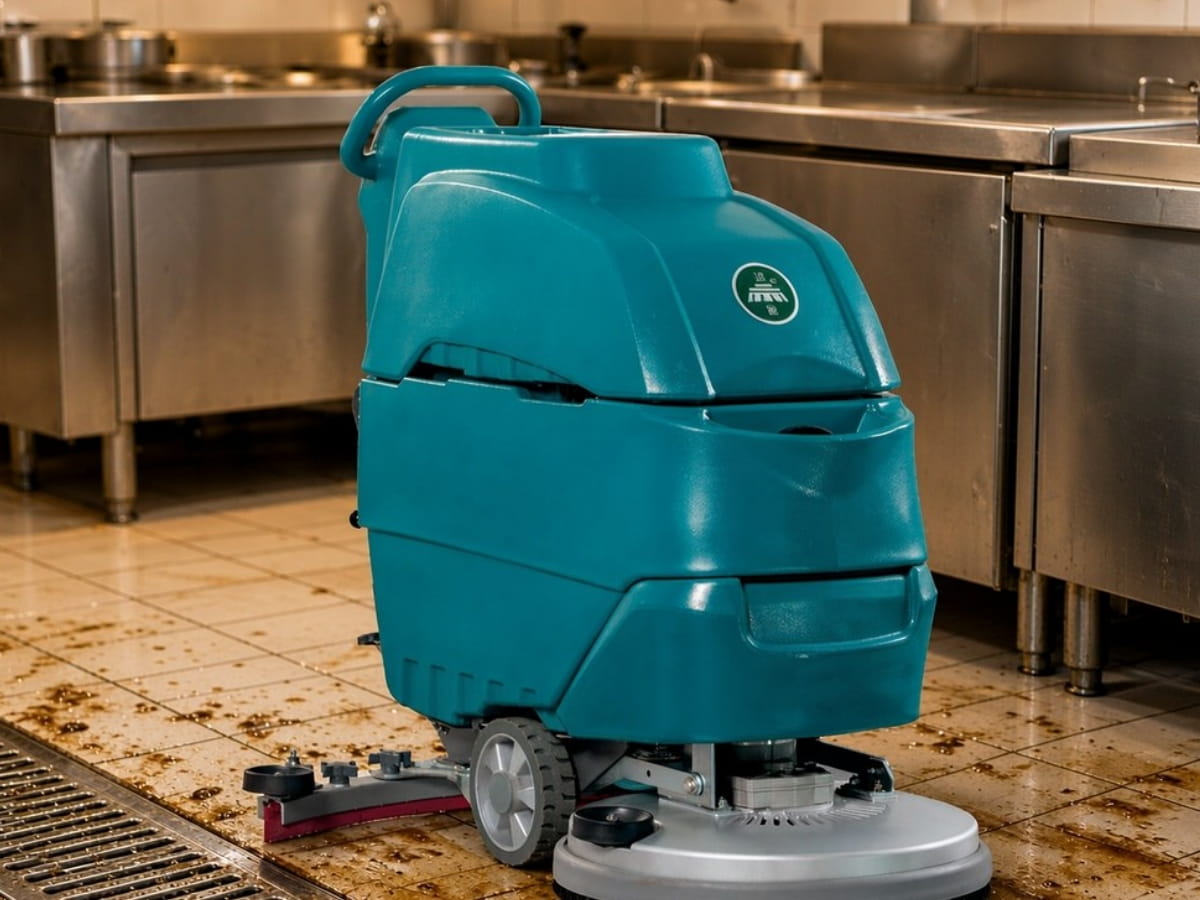
      Key Takeaways Grease is a chemistry problem first. Detergent may be used as appropriate. However, once detergent is added to the clean water tank, anti-foaming agent must be added to the waste water tank. Machine footprint decides whether the plan survives contact with a real kitchen. Degreasing sequence that actually works Kitchen and food service work sits near the top of slip-claim statistics in most countries, Kitchen and canteen floors fail in a specific way. They look acceptable from the doorway and turn slippery two steps past the fryer, where a thin grease film has been mopped rather than removed. Dry pick-up first: food scraps, wrappers and anything solid go up before any water touches them, or you end up pushing a slurry around. Then apply degreaser at the dilution the label states, not stronger. Stronger does not clean faster and it leaves its own residue.  Cleaning between service periods A kitchen floor cannot wait for closing time. Grease from a lunch service is a slip risk by mid-afternoon, and a full degrease cannot run while the line is firing. The answer is short, defined cleans fitted into the gaps the service already has. Window Time Priority task Tool Mid-morning lull 15–20 min Spot degrease fryer zone Deck brush + squeegee Between lunch and dinner 30–45 min Full scrub of kitchen floor Compact scrubber dryer After close 60–90 min Full degreasing sequence + drains Scrubber + wet vacuum Weekly Half shift Equipment bases, corners, grates Detail tools Post the table at the pot wash. A between-service clean that depends on someone noticing the floor is a clean that happens on the day somebody slips instead. Machines small enough for tight kitchens Most cleaning machines are built for lobbies, not for a galley kitchen with two metres between the range and the wall. A canteen cleaning machine has to turn in the aisle, pass through a standard door, and leave the floor dry enough to walk on when service restarts. A compact scrubber such as the JIECHI A3 walk-behind scrubber or its self-propelled sister model, the A3D, answers that. They share the same core platform, which makes the choice between them a working-condition decision rather than a specification fight. Item JIECHI A3 JIECHI A3D Drive Operator-pushed Self-propelled Battery 24 V / 100 Ah 24 V / 100 Ah Brush / suction width 530 mm / 770 mm 530 mm / 770 mm Rated output 2,200 m²/h 2,400 m²/h Tanks, fresh / recovery 50 L / 55 L 50 L / 55 L Brush / vacuum motor 550 W / 550 W 550 W / 550 W Size / weight 127×55×109 cm, 155 kg 127×55×109 cm, 165 kg   From the field: sizing the between-services scrub Take a kitchen plus canteen floor of around 400 m². At the A3's rated 2,200 m²/h the pass is 11 minutes on paper; at a realistic 60 per cent coverage around tables and equipment it is closer to 18 to 20 minutes, which fits the lunch-to-dinner window. Shanghai Jiechi builds both versions on the same platform, so spares, brushes and training carry across the fleet. FAQ Which one should a small kitchen buy, the A3 or the A3D? For one compact kitchen the A3 usually covers it: push operation plus adjustable brush pressure for baked-on grease. Move to the A3D for long pot-wash-to-canteen routes, tight aisles, or the built-in high-pressure jet for stubborn spots. What should the floor look like after a correct clean? Matte and dry, with no sheen under the kitchen lights. A glossy tile floor in a kitchen is a warning sign, not a result; that shine is usually the residue the routine failed to rinse away.   Equip Your Kitchen And Canteen Tell us the floor area, the tightest aisle and your service windows. We will match a compact scrubber and slurry vacuum to the routine. Tel: +1 2403149021  |  Email: kliu@jiechi.com  |  www.rceautofloorclean.com
  • Scrubber-Sweeper Combination Machines: When One Machine Beats Two
    Oct 08, 2026
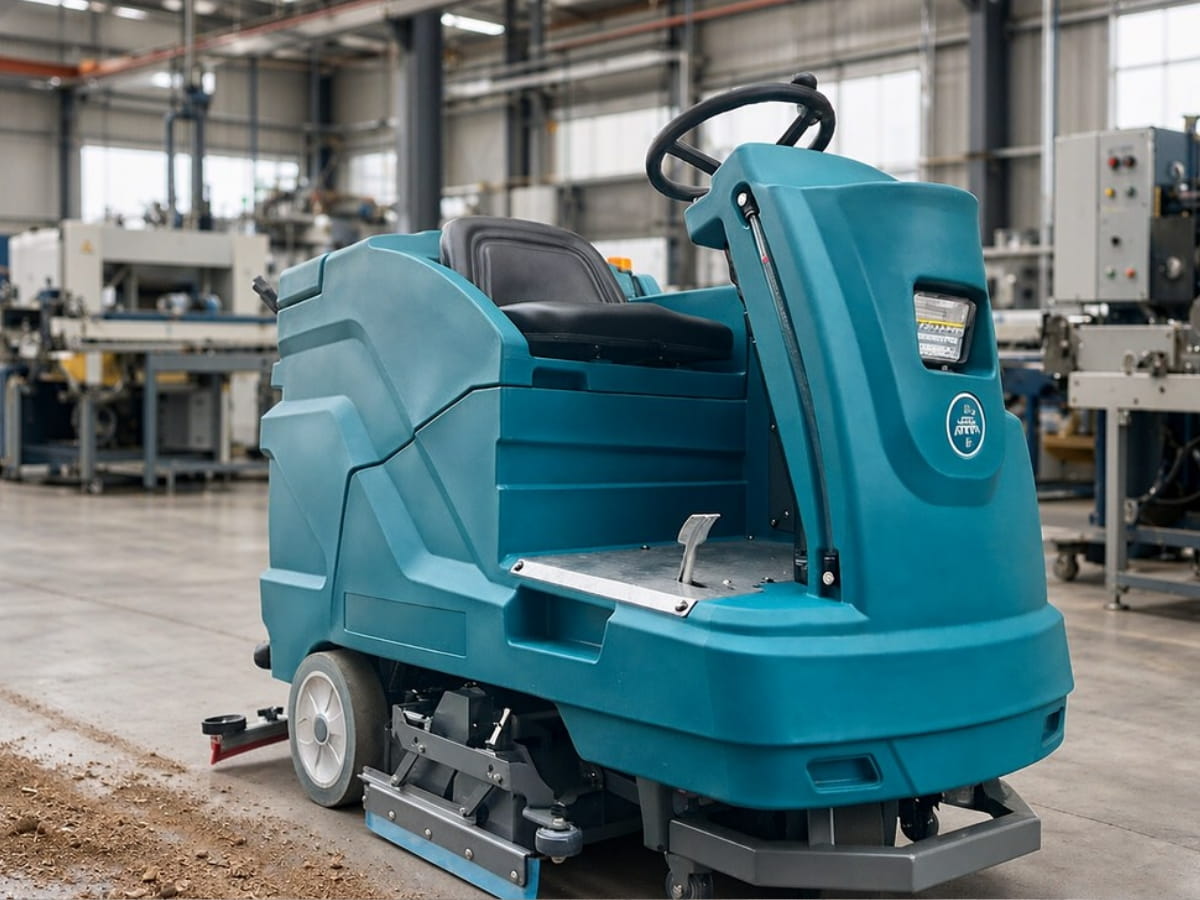
    Quick Answer Key Takeaways How It Works Two Passes Into One Site Conditions Payload & Shift Time Dual System Care Walk-behind vs Ride-on FAQ Conclusion Contact Us Quick Answer A scrubber sweeper combination machine sweeps dry debris into a hopper and scrubs the same strip of floor in one pass, so one operator replaces a two-machine, two-pass routine. It beats two machines when the floor carries both dust and stuck-on soil, and when the site is too small to justify a separate sweeper. Key Takeaways The hopper handles dry debris first, the brush deck and squeegee handle the wet work second, in the same travel direction. The saving is mostly operator hours and scheduling, not water or detergent. Mixed soil is the deciding factor. Floors with only dust suit a sweeper; floors with only film suit a scrubber. Dual systems mean two service routines. Skipping the sweeping side is how these machines get a bad reputation. The usual cleaning routine on a factory floor is two machines and two passes: a sweeper to get the grit up, then a scrubber once the loose material is gone. It works, and it costs two operators, two sets of consumables and a slot in the production calendar twice. A combination machine collapses that into one pass. Whether that is a genuine improvement depends on the soil, the aisle layout and how much of the shift is spent on things other than cleaning. Here is how to tell. How a combination machine works: sweeping then scrubbing The sequence matters, and it runs front to back. A cylindrical main brush lifts and throws. Unlike a disc brush that works flat against the floor, the roller brush on a combination unit turns against the direction of travel and flicks debris forward into a hopper. That is what lets it pick up a bolt or a wood offcut rather than pushing it around. The hopper collects dry. Debris goes into a separate container, kept dry and separate from the recovery tank. This is the part that makes the single-pass idea work at all: if grit went into the wet system it would settle in the tank and shorten the life of the suction motor. Solution goes down behind the debris pickup. With the loose material gone, the brush deck works on film and marks rather than grinding grit into the surface. The squeegee recovers immediately. Same pass, same direction, floor left dry behind the machine. An all in one scrubber sweeper is not a compromise between the two jobs; it runs them in the correct order, one behind the other. One practical limit worth knowing before you buy: the hopper handles debris up to a certain size, and beyond that the operator still needs a broom and a dustpan. Fine grit, sand, food residue, swarf and broken packaging are all inside the range. Pallet fragments and long offcuts are not. Where two passes become one The obvious saving is the second pass over the same floor. The real saving is usually somewhere else. Scheduling. Two machines need two windows, and in a plant running two shifts those windows are the hard part. One machine needs one window, which is often the difference between cleaning daily and cleaning when there is space in the calendar. Labour. One operator, one set of tank stops, one end-of-shift rinse. On a mid-size site that is commonly 60 to 90 minutes a day recovered. Fleet count. A combination floor machine replaces two assets in the register. Fewer machines means fewer batteries to manage, one parts list and one service contract.   Site conditions that suit combinations Use this table against your own floor before you decide. The pattern to look for is mixed soil, not heavy soil. Site condition Suits a combination? Why Dust plus tyre marks and spills Strong fit Both jobs are genuinely needed on every pass Mixed debris, small metal swarf, packaging Strong fit Roller brush lifts what a disc brush would push Fine dry dust only, no wet soil Poor fit The scrubbing half never earns its keep Heavy liquid or thick sludge Poor fit The hopper is the wrong container for the volume Very tight aisles under 1.2 m Check the width Combination decks are wider than a plain scrubber Long unbroken runs over 5,000 m² Ride-on class Operator fatigue becomes the limit, not the machine Payload, water capacity and shift time A combination machine carries three things instead of two: solution, recovered water and dry debris. All three fill up, and whichever fills first ends the run. On a walk-behind class unit that usually means a 95 L solution tank and 105 L recovery tank alongside a hopper of around 20 L. The hopper is the one that surprises people, because on a floor with genuine debris it fills long before the water does. Empty the hopper when it is a third full rather than waiting; a full hopper stops lifting and the main brush starts redepositing. From the field: what one ride-on covers in a shift The JIECHI M10 is published at 6,000 m²/h with a 280 L solution tank, 300 L recovery tank and 36V/220Ah. At a realistic 60% of that rate, four hours of running moves roughly 14,000 m² before tank stops. That is a planning figure from published specifications, not a measured result. Work backwards from the shift rather than forwards from the spec sheet. Decide how many hours the floor is available, subtract tank stops and hopper stops, and check the remaining time still covers the area. If it does not, the answer is a bigger machine, not a faster operator. It also helps to know where the water actually goes. Recovery capacity should be at least as large as solution capacity, because detergent, soil and the rinse water from the previous shift all add volume. A machine with a solution tank larger than its recovery tank will stop sooner than the spec sheet suggests. Maintenance of dual systems Empty and clean the hopper every shift. Left overnight, damp debris compacts and the following day the brush carries it instead of lifting it. Check the hopper seal at the same time. Inspect the roller brush for wrapped material. Strapping, film and wire bind around the cylinder and flatten the bristles in one section. It takes a minute to cut away and it changes how the machine picks up. Keep the squeegee and recovery side separate in your head. Blades, filters and the recovery tank need the same attention as on any scrubber. Treating the machine as a sweeper with a tank bolted on is the common failure. Watch brush pressure. Combination units run the main brush at a set pressure range, and worn bristles change what the machine does to the floor. Set it to the published range rather than guessing. Walk-behind vs ride-on combination classes Both classes exist for a reason, and the choice is mostly about area and aisle geometry rather than budget. Walk-behind suits up to roughly 4,000 m² per shift. It turns in tighter spaces, needs less storage, and one operator can load it into a van. An M series cleaning machine in this class, such as the JIECHI M16, carries 24V/200Ah, an 860 mm path, 4,200 m²/h and a 20 L hopper, which is the configuration that fits a small or mid-size plant with mixed debris. Ride-on suits long runs and continuous shifts. Above about 5,000 m² per shift, operator fatigue becomes the limiting factor, and a seated machine with a large tank set runs longer between stops. The trade-off is turning radius and machine weight, so check the tightest corner the route includes. If the site has both conditions, a long main hall and a tight packing area, the honest answer is often one of each rather than one machine trying to do both. Splitting the fleet also protects the schedule: when one unit is in for service, the floor still gets cleaned. Whichever class you land on, ask the supplier for the cleaning width. The width decides how long the job takes. Frequently Asked Questions Can a combination machine replace a sweeper and a scrubber entirely? On mixed-soil floors, yes for day-to-day work. Sites with heavy fine dust or heavy liquid usually still keep a dedicated machine for those areas. Does one pass clean as well as two? For typical factory soil, yes. The order is the same as a two-machine routine: dry debris up first, then solution, then recovery. What fills first, the hopper or the tanks? Usually the hopper on any floor with real debris. Empty it at a third full so the main brush keeps lifting. How much area suits a walk-behind combination? Up to roughly 4,000 m² per shift. Beyond that, operator fatigue makes a ride-on the better answer. Conclusion A scrubber sweeper combination machine wins when the floor carries dust and stuck-on soil at the same time and the site cannot spare two windows. Match the class to the area, empty the hopper early, and service both halves. Send us your floor area, aisle widths and debris type and we will tell you which class fits. Find the Right Combination Machine Tell us the floor area, aisle widths and what ends up on the floor. We will match a walk-behind or ride-on class to it. Tel: +1 2403149021  |  Email: kliu@jiechi.com  |  www.rceautofloorclean.com

leave a message

leave a message
If you are interested in our products and want to know more details,please leave a message here,we will reply you as soon as we can.
submit

Home

Products

WhatsApp

contact