How Escalator Cleaning Machines Work: A Step-by-Step Guide
Sep 23, 2026
Why Steps Need Their Own Machine The Cleaning Head Six-Step Cycle Wet vs Dry Pre-Start Inspection Compact vs High-Capacity FAQ Conclusion Contact Us
Step treads are ribbed, and a mop rides over the ribs. A rotating brush is the only thing that reaches the bottom of the groove.
Water is the hazard, not the dirt. Whatever you put on a step ends up in the pit, next to the step chain and the drive.
Recovery matters more than scrubbing. A 2,400 W suction motor pulling across a 770 mm path is what keeps the tread dry behind the machine.
One flight of a standard mall escalator takes 22 to 32 minutes end to end, set-up included.
An escalator step is a lousy surface to clean. The tread is ribbed with grooves a few millimetres deep, the riser under it is curved, and both of them keep moving while you work. Everything that makes a mop effective on a flat floor stops working here.
This guide sets out how escalator cleaning machines work, from the cleaning head up to the cycle an operator runs on site.
Why escalator steps need a dedicated machine
Few surfaces in a building collect as much dirt per square metre. Shoes carry grit in from the street, the ribs on the tread catch it, and the step then carries it down into the pit and comes back up for more.
A mop rides across the top of those ribs. It shifts the surface film and leaves the packed material where it is. Clean that way every day for a year and the step reads as grey even on a morning when somebody cleaned it.
Then there is the problem that rules out most methods. Anything you put on a step goes inside the escalator. Water runs off the tread, past the comb plate and into the pit, where the step chain, the drive motor and the controller live. Detergent, solvent, drips off a bucket, it all lands on machinery that was never meant to get wet.
A floor scrubber does not solve it either. It is built for a flat floor that holds still, with no way to track a step travelling underneath it and no way to keep water out of the pit.
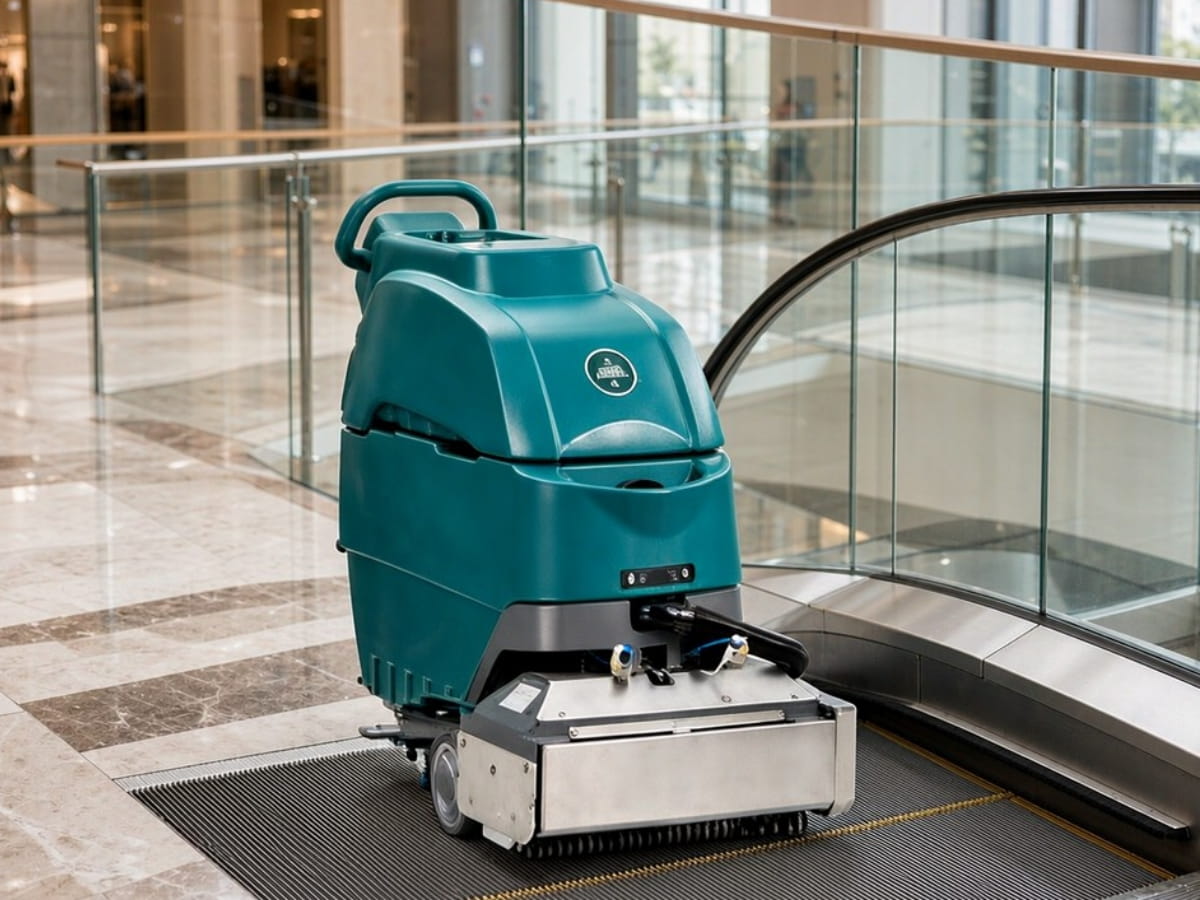
A dedicated escalator step cleaning machine handles all three problems in one pass. It seats on the treads so it rides with the escalator, brushes the grooves while feeding a measured amount of solution, and pulls the dirty water straight back into a recovery tank.
The cleaning head: brushes, water recovery and edge tracking
Everything happens in the head, and the head is nothing like the deck of a floor scrubber.
The brush. A cylindrical brush spans the step width and rotates against the direction of travel. Bristle length matters more than people expect. Too short and it skims the ribs. Too long and it folds over and stops cutting. On the Jiechi EL510 escalator cleaner the brush covers a 510 mm working width driven by a 900 W motor, which is enough to keep the bristles loaded instead of spinning free against the tread.
The solution feed. Water goes down ahead of the brush through a manifold, not a flood. A full flight uses a few litres. What you want is a damp surface the brush can bite on, not a puddle looking for a way into the pit.
Recovery. This is where the power goes. A 2,400 W suction motor pulls dirty water off the tread across a 770 mm path, deliberately wider than the brush so the step edges get picked up too. Everything that comes off the step goes into the recovery tank on the machine.
Edge tracking. Guide wheels run against the skirt so the head holds position while the escalator moves. A head that drifts sideways clips the skirt panel and leaves a stripe of uncleaned tread down one side. The better units self-centre, which is what lets one operator run the machine instead of wrestling it.
Six-step cleaning cycle (with time per step)
The times below are for one flight of a standard commercial escalator, about 12 m of travel, with one operator. Longer flights scale close to linearly.
Step
What the operator does
Time
1. Seat the machine
Set on a run of steps, check guide wheels against the skirt, lock position
2-3 min
2. Dry pass
Brush with no solution to knock loose grit out of the grooves
4-6 min
3. Scrub
Low solution feed, brush works tread and riser face
6-8 min
4. Recover
Suction across full step width, overlapping each pass by a third
4-6 min
5. Dry pass and handrail
Final pass with brush dry, then wipe handrail and comb plate
3-5 min
6. Inspect and sign off
Check pit for drips, check step edges, photo if the contract asks
2-3 min
That comes to 22 to 32 minutes a flight. The first one of a shift runs longer because of set-up. After that, most of the time goes into walking between escalators.
Step 2 is the one operators skip when they are behind, and it is the one that costs them. Brush wet over dry grit and you have made mud, which then sits in the groove and needs a second scrub to shift.
Wet vs dry operation on running escalators
Wet or dry comes down to what is on the steps and how much water the site will put up with.
Wet is the default. An escalator cleaner machine applies a low volume of solution and recovers it straight away, and that is what shifts drink residue, grease carried up from a food court and the grey film along the walking line. A tread stays damp for seconds rather than minutes, so shoppers can ride behind you.
Dry has its places. Metal steps in transit hubs, where water spotting shows badly. Sites with a leak history, where the maintenance team would rather nothing went near the pit. Touch-ups between full cleans, where you want the grit out and nothing else.
Dropping the solution and recovery passes also cuts the cycle by roughly a third, which is worth knowing when you have six flights and one overnight window.
What does not change either way is where the water decision gets made. On a machine, it is the manifold and the feed setting. On a mop, it is somebody's wrist, and that is not a control you want near an open pit.
What the operator must inspect before starting
Six checks, in this order, before the brush turns.
Direction of travel and stop position. Confirm which way the escalator runs and where the emergency stop is. If the direction reverses mid-job, the seating changes with it.
Comb plate and step alignment. Walk the flight first. A lifted or chipped comb plate will catch the brush and take bristles with it.
Damaged cleats. One step with a broken rib can tear a brush and jam the head.
Pit condition. Lift the cover and look for standing water. If there is water down there already, you have an escalator problem and cleaning is not the priority.
Machine state. Solution tank filled, recovery tank empty, squeegee blades square, brush seated. On the EL510 that also means sorting the 220 V lead route first, since a cable across a moving step is a trip hazard for everyone riding.
Barriers and signage. Even with full recovery the steps stay damp. Signage at both landings, barrier if the site is busy.
Machine classes: compact vs high-capacity
Two classes cover most sites, and the line between them is not really size. It is how many flights you have to finish in one shift.
Compact units come in around 140 kg with a 510 mm working width, which is one step width on a standard escalator. One person can position and run one, and a flight takes the 22 to 32 minutes in the cycle above. Malls with four to eight escalators, hotels, supermarkets, office buildings, hospitals, this is the class that makes sense. The EL510 sits in it.
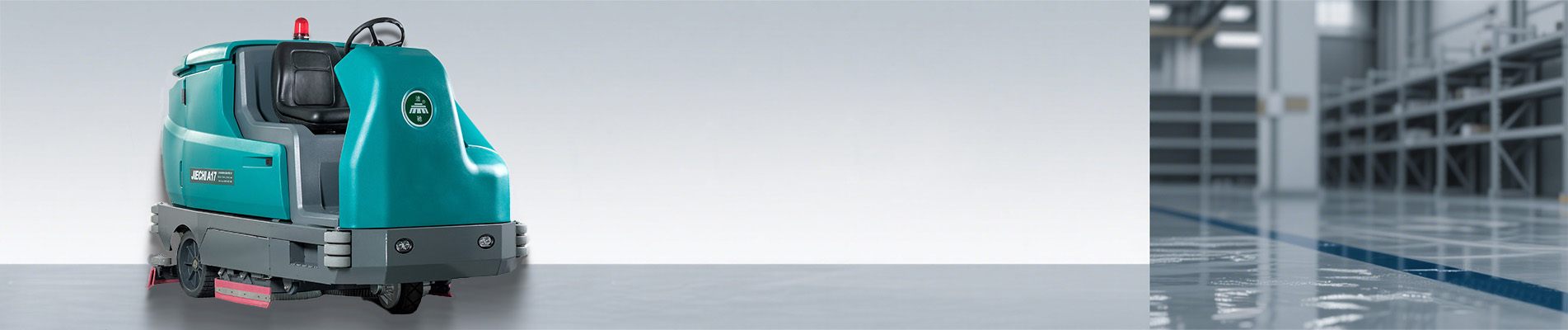
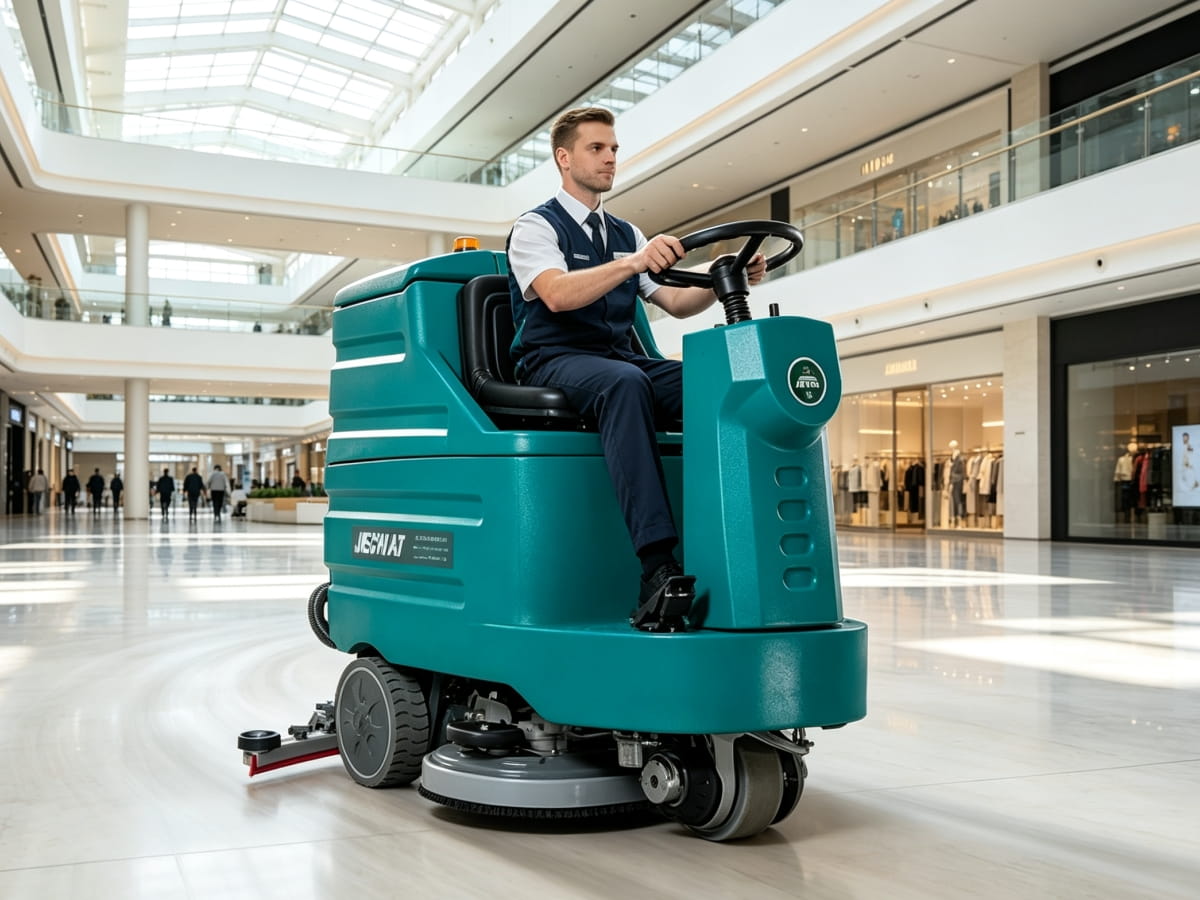
High-capacity units exist for volume. Wider heads, larger tanks, longer runs between fills, often ride-on or towed for horizontal travelators. Airports and metro stations running 200 m travelators need this class, because a compact unit would spend the shift being repositioned rather than cleaning.
Buying for one site, go compact. Quoting a transit contract, ask about travelator capability first, because a lot of escalator cleaning equipment is built for inclined steps only and will not handle a long horizontal run.
FAQ
Q1: Can the machine clean an escalator while it is still running?A1: Yes, that is the normal way to use it. The unit seats on the moving treads and rides with them, so the escalator stays in service and the flight is not lost for half an hour.
Q2: How much water does a wet clean use on one flight?A2: A few litres, applied through a manifold rather than poured. The recovery side matters more than the volume, since a 2,400 W suction motor across a 770 mm path picks up almost all of what goes down. If you can see water sitting on the tread, the feed is set too high.
Q3: Do travelators need a different machine?A3: Short horizontal travelators are fine on a compact unit. Long runs in airports and metro stations want a high-capacity machine with bigger tanks, because a compact unit will spend more time being moved and refilled than cleaning.
Escalator cleaning comes down to two things. Getting a brush into the groove, and getting the water back out before it reaches the pit. A dedicated machine does both in one pass while the escalator keeps running, which is the part that matters inside trading hours.
Work out how many flights you have per shift and pick the class from there. Brush condition, feed setting and squeegee wear are maintenance habits, not buying decisions.
Contact us for catalog & quotation
Send us your escalator count, step width and available cleaning window, and we will come back with a machine recommendation and a quote.
Tel: +1 2403149021
Email: kliu@jiechi.com

 Phone: +1 2403149021
 Mail: kliu@jiechi.com



 Phone:+1 2403149021
 Email:kliu@jiechi.com



 English


