other

factory floor cleaning

Home

factory floor cleaning

  • How to Keep Printing and Packaging Factory Floors Clean: A Practical Cleaning Guide
    Oct 30, 2026
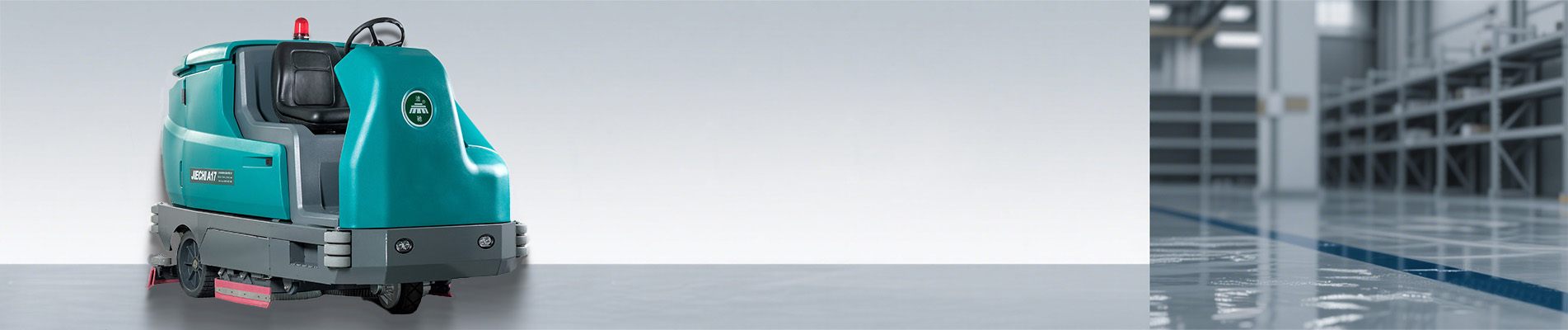
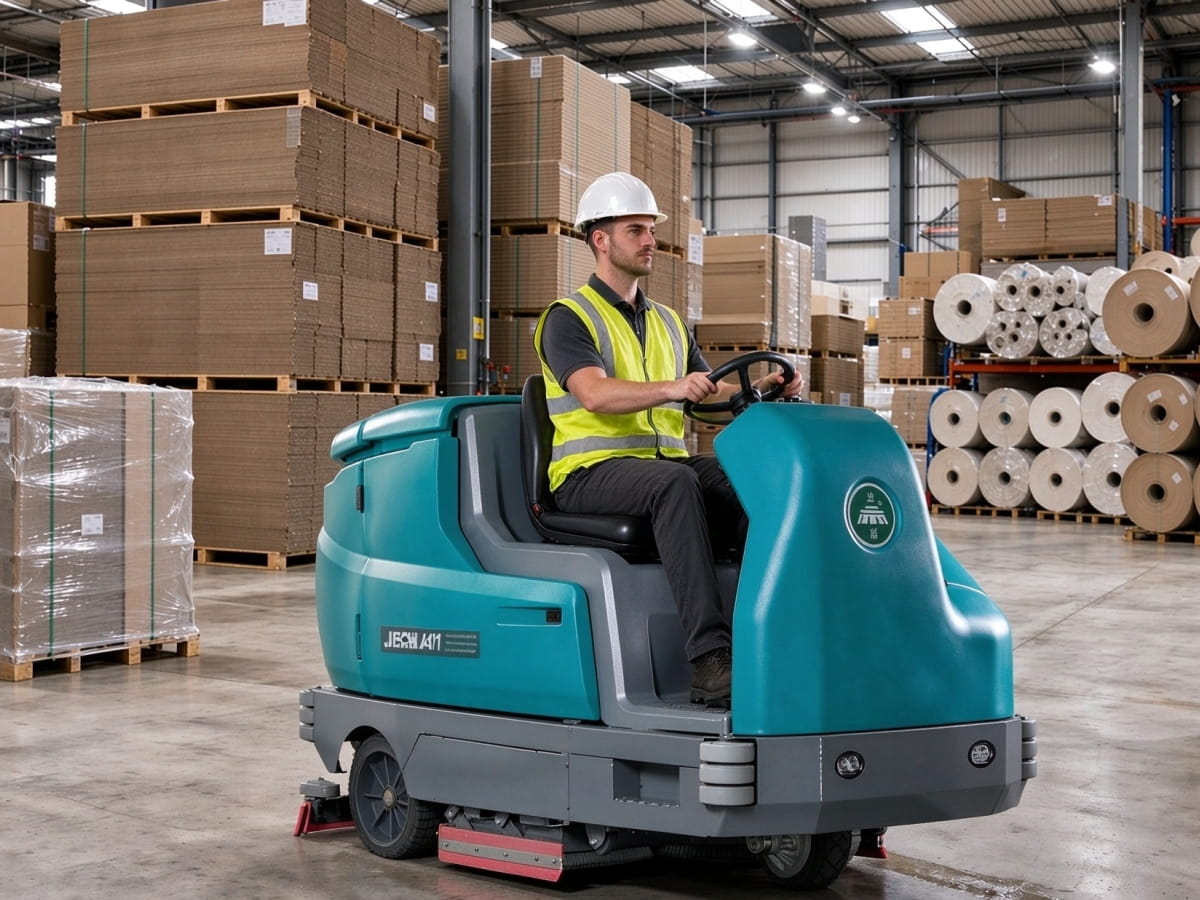
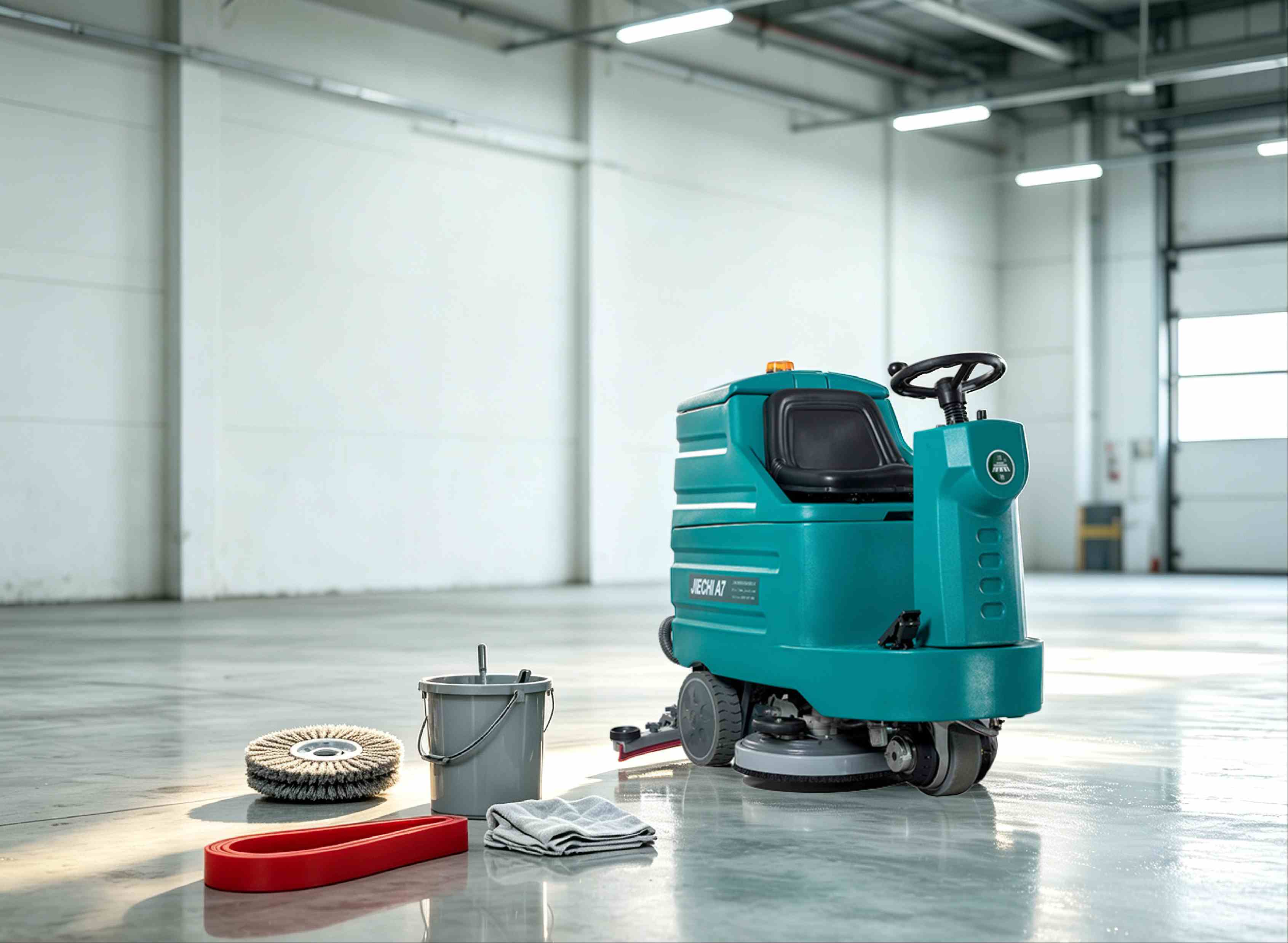
      A printing plant does not have one floor problem. It has four or five, sitting within shouting distance, and the operator who runs a single scrubber across all of them ends up with a film on the floor and a complaint list from production.     Machine split: press hall, corrugator, converting   The three areas want different machines. The reason is aisle geometry, not soil.   Press hall. Rolls, trolleys and press units sit close together, so what matters is footprint and turning. A mid-size ride-on at 860 mm scrub width and a 1,100 mm suction width fits the gaps and still covers the open run along the presses. Our A7 ride-on scrubber is rated at 5,500 m²/h with 140 L clean and 150 L recovery, which is roughly three press bays on one tank. It turns on the spot, which is what you need at the end of a press line.   Corrugator and paper store. Open floor and heavy dust. Run lengths are long and the floor is clear, so a larger machine earns its place here.   Converting and despatch. Pallet stacks change every shift. A large machine waits to pass; it only pays off in the open despatch lane.   Area Scrub width Rate Tanks Press hall (A7) 860 mm / 1,100 mm suction 5,500 m²/h 140 L / 150 L Despatch, paper store (A17) 1,060 mm / 1,400 mm suction 8,600 m²/h 300 L / 350 L   The A17 runs a 36V/460Ah pack and is quoted at 7–8 hours on one charge. That is a full shift with the charging done overnight, not a mid-shift swap. At 1,525 kg it also wants a floor slab you have checked, not assumed.   Step-by-step daily cleaning routine   Sequence matters more than effort.   1. Dry through first. Run a dry sweep from the cleanest end toward the press hall. Paper dust goes in the bin, not the recovery tank. On a corrugator line this step can run the length of the line and back.   2. Spot-treat at the source. Ink at the press feet, adhesive at the gluer. Scrape the bulk, apply degreaser, give it the dwell time on the label, then scrub. Ten minutes here saves a full-hall scrub.   3. Scrub clean end to dirty end. Aisles last, not first, or you drag press-hall water back through the clean zone.   4. Watch the recovery water. When it turns grey-black, stop and dump before the next aisle. A full tank does not suction, and a machine that is not suctioning is just spreading.   5. Squeegee check before the last pass. One nick in the rubber leaves a line across a whole aisle, and it will still be there in the morning.     Slip risk, dust and worker safety   Two safety issues come straight from the floor here: slip on damp sealed concrete, and dust in the air during dry sweeping.   Sealed concrete becomes genuinely slippery when damp. That is why the scrubber should leave the floor as dry as it can, and why the squeegee and suction motor deserve more attention than the brush. A pass that looks clean but leaves a sheen is a hazard.   Dry sweeping a corrugator line lifts paper dust into the air, where it settles on wet ink and machine guards. A damp pass or a scrub-sweep with a hopper does the job without the cloud.   FAQ Can a floor scrubber remove dried ink from a press hall floor? Fresh mist, yes, with a degreaser and short dwell. Ink bonded into a sealer needs mechanical action first. Brush pressure alone will not do it. Why does the floor look worse after scrubbing? Usually dirty recovery water or a worn squeegee. Both leave a film that dries as haze. Dump the tank when it turns grey and check the squeegee edge before the final pass. What size scrubber fits a press hall? Around 860 mm scrub width with a 1,100 mm suction path, on a machine that can turn on the spot. Measure the narrowest gap between a press and the nearest roll or trolley before you shortlist anything. Printing plant floor cleaning is three jobs in one building. Sweep dry before anything gets wet, treat ink and adhesive at the source, and size the machine to the aisle rather than the square metres. A7 for the press hall, A17 for the open despatch floor, and a Sunday shutdown for everything the daily pass cannot reach. That combination keeps the floor dry, the squeegee honest and the incident log short. Size a machine for your plant Send us your floor plan, aisle widths and the soils you fight most. We will come back with the scrub width that fits . Tel: +1 2403149021  |  Email: kliu@jiechi.com
  • Factory Floor Cleaning Program for Audit Readiness: ISO, 5S and Customer Visits
    Oct 17, 2026
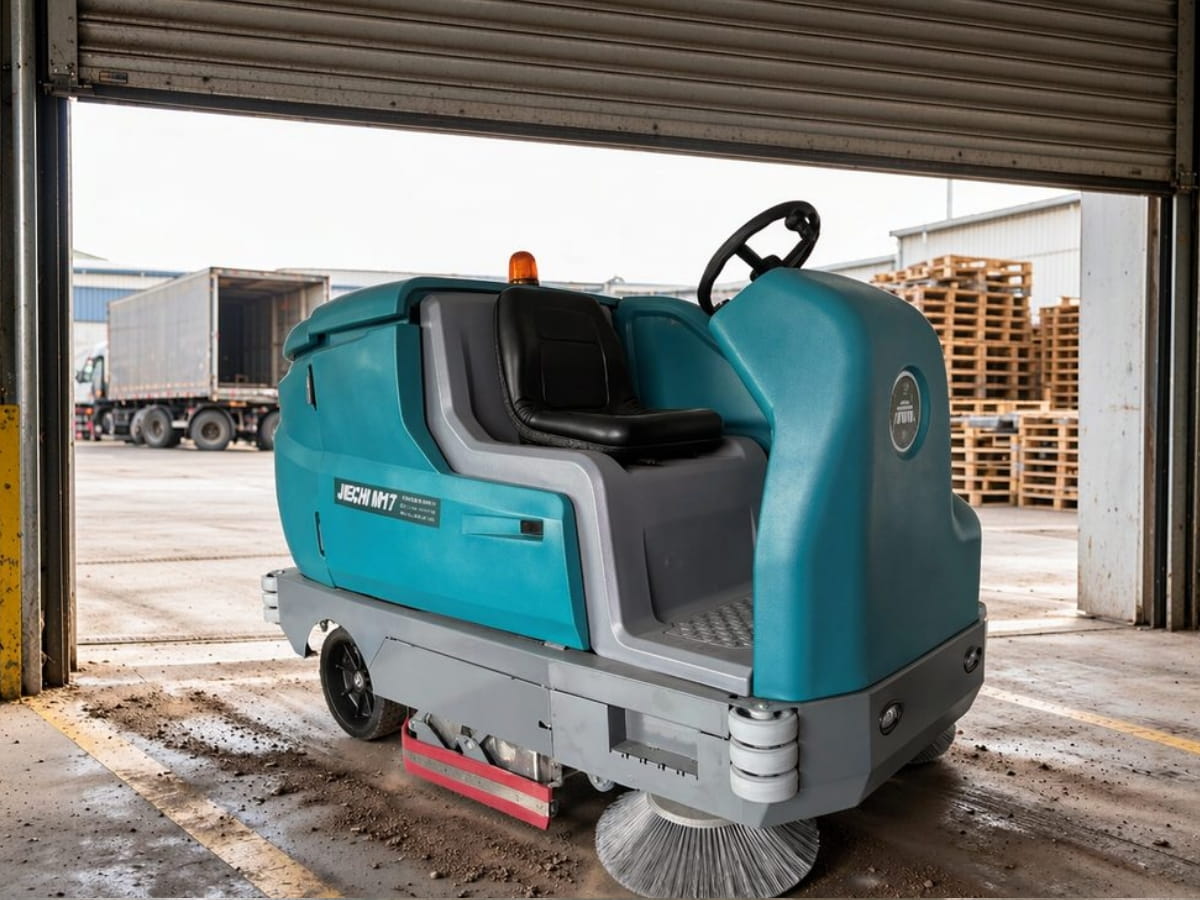
     What auditors look at on the floor   ISO 9001:2015 treats the environment your processes run in as something you must determine and manage, cleanliness included. In a machine shop that means oil under a lathe, swarf in an aisle, water tracked in from the dock. Inspectors turn it into plain questions: how often, who checks, where is it written down. That is ISO 9001 floor cleaning in practice.   What 5S adds. 5S gives you a vocabulary the auditor already knows. Shine is the cleaning step, but Standardize and Sustain are the ones that get tested, because they are about a written standard followed by somebody other than its author. On 5S factory floors, that usually shows up as a board in the aisle with the week's sign-off on it.   Zone map: production, warehouse, walkways, loading   One program for the entire site is why cleaning plans fall apart at audit. Soil, traffic and risk differ by zone, so the task list has to differ too. Draw it on a print of your layout and give each zone an owner.   Production. Coolant mist, hydraulic oil, metal fines, plastic dust. The hard part is the perimeter: the machine base, the cable tray shadow, the space behind the chip conveyor. Cleaning here has to reach the edge without pushing fines into a drain.   Warehouse. Tyre marks, pallet dust, and the polished patch where a forklift brakes at the end of a run. Aisles are long and open, which is where wide ride-on machines earn their keep, provided they can turn at the end without a shuffle.   Walkways. Foot traffic, handover points and door entries. This is what a visiting customer sees first, and it is usually the zone with no owner. Marked lanes make the standard visible and give you a boundary to point at.   Loading. Grit, diesel soot, rainwater, the odd broken pallet. The dock door line is where the outside arrives. A mat and a sweep routine there cuts the soil load on every zone inside, and it is the cheapest decision on this list.   Cleaning without stopping production Production will not pause for the floor, so the program has to fit the gaps that exist: changeovers, breaks, shift handover and the hours after last shift. Battery machines help here for a reason that has nothing to do with power. No mains cable means no trip hazard strung across a walkway, which is a finding on its own, and no lead to drag around a running line.   Work the site in slices. Clean one aisle at a time, dry it before traffic returns, and plan the route around the turning circle rather than straight-line speed. A route needing three-point turns in a two-metre aisle takes twice as long as the spec suggests.   Drying time decides whether the task survives. A squeegee in good condition and sensible brush pressure leave a floor that takes foot traffic in minutes. If the floor is still wet when the next shift walks in, the task gets dropped within a fortnight, whatever the sheet says.   From the field: what actually decides the machine Jiechi has built scrubbers and sweepers since 2003 across two bases totalling 60,000 m². When a plant layout lands with us, the useful questions are almost never about total area. They are about where soil collects, which aisles take traffic, and when the floor is free of people and pallets. Those three answers set the machine class and the pass pattern. We size to the window you have, not to the number on a brochure. Machine choice by zone Buy to the zone, not to the biggest area on the plan. One large machine for everything ends up too wide for the production aisle and too slow to turn in the warehouse. Zone Machine class What to look for Production Ride-on scrubber, dual brush 850 to 1,000 mm scrub width, tight turn radius, low noise for changeover work Warehouse Ride-on scrubber or combination unit Long run time, tanks over 200 L, good transport speed Walkways Compact walk-behind Under 800 mm, useful edge cleaning, quiet enough for daytime Loading Sweeper-scrubber combination Debris hopper, suction path over 1.2 m, dust control on dry days   For the two biggest zones, an industrial ride-on scrubber with dual brush carries the middle of the plant: 860 mm on the A8 and 1,015 mm on the A10, with 280 L of solution and 300 L of recovery on a 36V/220Ah pack, rated at 6,500 and 7,000 m²/h. Two brush motors give the pressure to lift cured coolant film a single brush skates over.   Where the floor is half outside, grit has to be swept before it can be washed. The large ride-on sweeper-scrubber M17 does both in one pass, rated at 8,600 m²/h with a 1,400 mm suction path, 300 L solution and 350 L recovery on 36V/460Ah. It is the machine for the dock approach, not the aisle beside line three.   Whatever you shortlist, ask for the demonstration on your floor, in your narrowest aisle, at the hour you would really clean. A machine that only performs in an empty warehouse will not last a month.   FAQ How often should a factory floor be machine scrubbed? Daily in production aisles and walkways, weekly in loading bays, plus a deep clean at each planned shutdown. Set it by how fast soil returns. What records does an audit expect for floor cleaning? Enough to follow one date backwards: task, zone, frequency, who signed it and what was used. Photos from fixed viewpoints once a week are usually enough. Who should own the cleaning program? One named person per zone, not a department. Where cleaning belongs to everybody, nothing gets signed. Can we clean while the line is running? Yes, in slices. Battery machines remove the cable hazard, a good squeegee returns the floor to traffic in minutes, and the route should avoid the busiest aisle at peak times. Build your zone map with us Send us your layout, floor area and production windows. We will map the zones and size a machine to each one. Tel: +1 2403149021  |  Email: kliu@jiechi.com

  • Why Factory Floors Become Dirty Again After Cleaning? 5 Common Mistakes You Should Avoid
    Jul 24, 2026
    Factory floors often look clean right after scrubbing but quickly become dirty again. The culprit isn't poor cleaning — it's common post-cleaning mistakes like using the wrong pads, skipping the rinse cycle, and neglecting squeegee maintenance. Fix these 5 errors and your floors will stay cleaner for longer. Key Takeaways- ? Wrong pad selection causes soil redeposition — use the right grit for your floor type- ? Skipping the rinse cycle leaves detergent residue that attracts dirt- ? Worn squeegees leave moisture that carries dirt back onto clean floors- ? Dirty recovery tanks reduce suction and leave a film on the surface- ⏱️ Rushing the drying time means foot traffic tracks dirt onto still-wet floors You've just finished scrubbing your factory floor. It looks spotless. But a few hours later, it's covered in dirt and tire marks again. Sound familiar? This frustrating cycle is more common than you think. Typically, the problem isn't your warehouse floor cleaning machine — it's the small mistakes made during or after the cleaning process. Here are five common reasons factory floors become dirty again after cleaning — and how to fix them. 1. Using the Wrong Pad or Brush for Your Floor Type The most common mistake is using a pad that's too aggressive or too mild for your specific floor surface — especially when operating a floor cleaning machine Factory operators rely on daily. What happens: An overly aggressive pad scratches concrete or epoxy coatings, creating micro-grooves where dirt embeds itself. A pad that's too mild doesn't remove embedded soil — it just spreads it around. The fix:- For smooth concrete: Use medium-grit (80–120) pads for daily cleaning- For epoxy or coated floors: Use fine-grit (150+) pads to avoid scratching- For heavy oil and grease: Start with a more aggressive pad, then follow with a finer pad- Always test a small area first when changing pad types 2. Leaving Detergent Residue on the Floor Cleaning solutions are designed to lift dirt. But if they aren't fully removed, the residue attracts new dirt almost immediately. What happens: Surfactants in cleaning detergents remain on the floor surface. This sticky film grabs dust, oil mist, and tire rubber from passing forklifts and foot traffic. The fix:- Use a two-step process: scrub with detergent, then rinse with clean water- Adjust your water flow — too little rinse water leaves detergent behind- For heavy soil areas, consider a second pass with clean water only- Use low-foam, easy-rinse formulations designed for automatic scrubbers 3. Worn or Damaged Squeegee Blades Your scrubbing machine for floors can only pick up dirty water if the squeegee is in good condition. A worn squeegee leaves a thin film of dirty water that dries into a visible haze. What happens: Hot concrete floors accelerate rubber wear. A blade with nicks, cracks, or hardening can't maintain proper contact. The result: streaks, water trails, and re-deposited dirt. The fix:- Inspect squeegee blades weekly — look for nicks, cracks, and hardening- Flip or replace blades when the edge loses its sharp profile- In summer (high heat), check blades every 2 weeks — rubber hardens faster- Adjust squeegee angle and down-pressure per the manufacturer's specs 4. Dirty Recovery Tanks and Vacuum Hoses Your scrubber can't pick up dirty water effectively if the recovery system is clogged or dirty. What happens: A dirty recovery tank reduces vacuum efficiency. Blocked hoses and clogged filters mean dirty water stays on the floor instead of being sucked into the tank. Bacteria and mold in the tank also produce odors that transfer back to the floor. The fix:- Empty and rinse the recovery tank after every shift- Check the vacuum hose for blockages — debris often collects at bends- Clean the float shut-off mechanism — a stuck float kills suction- Periodically flush the tank with clean water and a mild disinfectant 5. Not Allowing Sufficient Drying Time This is the simplest mistake and the most overlooked. Even a perfectly cleaned floor will show tire marks and footprints if traffic is allowed before the surface is fully dry. What happens: Foot and vehicle traffic on a damp floor redistributes residual moisture mixed with dirt from shoes and tires. The result looks like the floor wasn't cleaned at all. The fix:- Use a scrubber with efficient water recovery to minimize drying time- Block off cleaned areas for at least 15–30 minutes after scrubbing- In humid conditions, extend drying time or use floor drying fans- Schedule cleaning during off-peak hours when possible Quick Reference: Daily Cleaning Checklist Step Check ✅ Select correct pad for floor type   ✅ Pre-sweep or sweep loose debris   ✅ Use proper detergent dilution   ✅ Rinse with clean water   ✅ Inspect squeegee before starting   ✅ Empty and rinse recovery tank   ✅ Allow full drying time before reopening area   FAQ Q: What's the best way to remove detergent residue from factory floors?A: After scrubbing with detergent, make a final pass with clean water only. For automatic scrubbers, this means using the rinse cycle or switching to fresh water after the detergent pass. Models like Jiechi's ride-on scrubbers with dual-tank systems make this easy. Q: How often should I replace squeegee blades on industrial floor scrubbers?A: In normal conditions, every 4–6 weeks. In summer or on rough concrete surfaces, every 2–3 weeks. Flip the blade halfway through its life to extend service time. When you see streaks or water trails, it's time to replace. Conclusion: Small Fixes, Big Results Factory floors don't have to look dirty again hours after cleaning. By addressing these five common mistakes — choosing the right pad, rinsing thoroughly, maintaining squeegees, keeping recovery systems clean, and allowing drying time — you can extend the clean look of your floors and reduce the frequency of deep cleaning cycles. Whether you use a walk-behind or ride-on floor cleaning machine for industrial use, proper technique matters as much as the equipment itself. 

leave a message

leave a message
If you are interested in our products and want to know more details,please leave a message here,we will reply you as soon as we can.
submit

Home

Products

WhatsApp

contact