other

Road Sweeper

Home

Road Sweeper

  • Lithium Road Sweepers D9 vs Diesel S9 : Operating Cost and Access Compared
    Oct 13, 2026
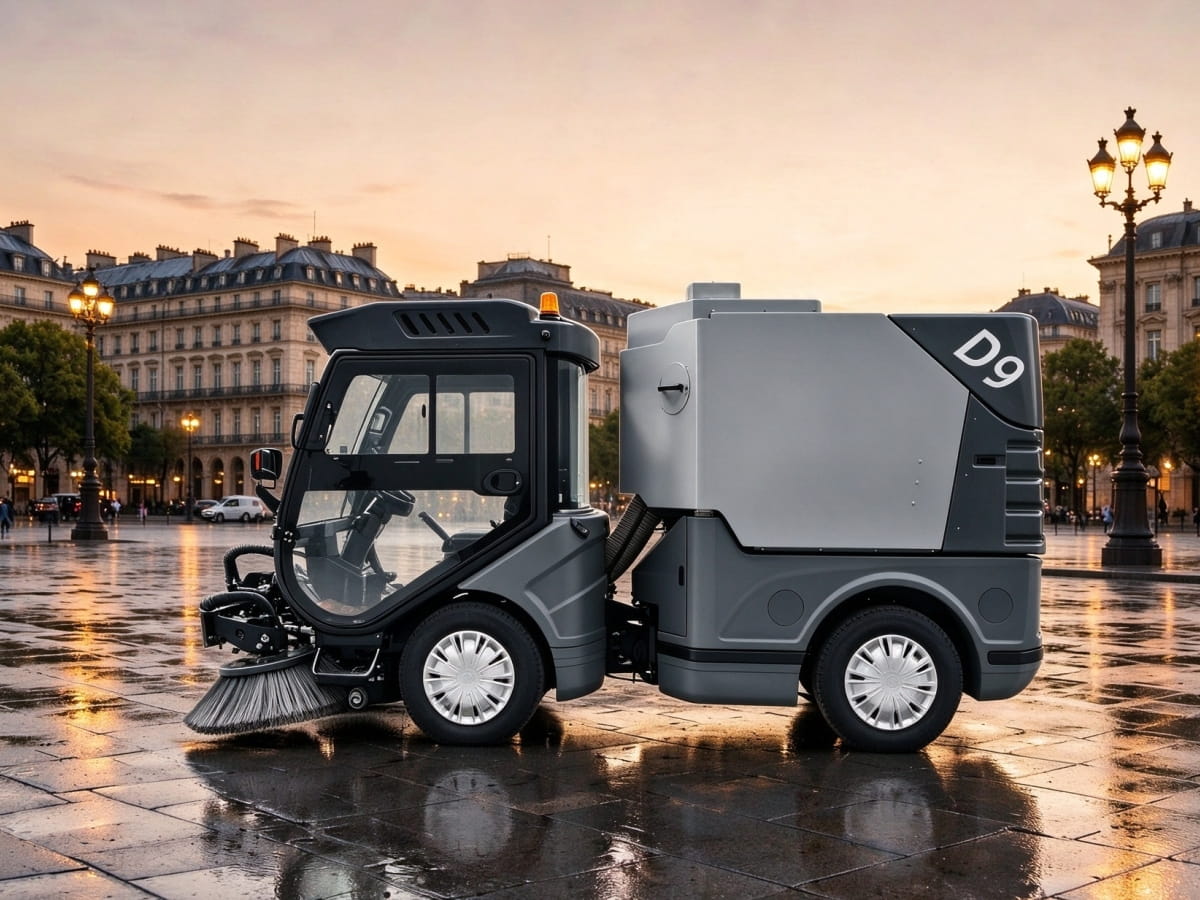
    Quick Answer Choosing the right sanitation vehicle takes many factors into account. A lithium road sweeper vs diesel decision usually turns on two numbers. Diesel costs about $33 per eight-hour shift at 3.2 L/h. A 48 kWh lithium sweeper recharges for roughly $7. Lithium also wins on night routes and emission-zone access. Diesel still wins where there is no charging window.  Key Takeaways Energy is the biggest swing: roughly $33 of diesel per shift against roughly $7 of electricity. Low-emission zones and night routes are access questions. They decide more tenders than fuel does. Diesel keeps the edge on remote routes, sub-zero starts, snow duty and double shifts without charging. The tender sets routes, hours and noise limits, and the machine has to fit all three. Energy cost per shift compared   Jiechi's S9 multifunctional sanitation vehicle is rated at 3.2 L/h. Over an eight-hour shift that is 25.6 L, and its 70 L tank needs a top-up before a second shift.     Lithium is simpler again. The JC-D9 lithium battery road sweeper carries a 307.2 V, 48 kWh lithium iron phosphate pack. Budget around 53 kWh at the meter once charging losses are counted.   Line item Diesel (S9) Lithium (JC-D9) Energy per 8 h shift 25.6 L diesel 48 kWh + charging loss Unit price assumed $1.30 / L $0.14 / kWh Cost per shift ~$33 ~$7 Cost per year (250 shifts) ~$8,300 ~$1,850 Annual difference baseline ~$6,450 lower   Two things move that gap. Night tariffs can halve the electricity line, and route intensity matters: a diesel engine idling at a transfer station still burns fuel, an electric driveline does not.    Service intervals and consumables   Fuel is the loud cost. Service is the quiet one.   A diesel sweeper carries a full engine schedule: oil and filter, fuel and air filters, coolant, belts, plus hydraulic oil for the hopper and brush circuits. The S9 runs a Perkins 404EA-22 four-cylinder, so all of that applies.   A lithium machine deletes most of that list: no engine oil, no fuel or air filter, no exhaust aftertreatment. What stays is common to both: brush wear, hopper seals, suction hoses, tyres and the water spray system.   Service item Diesel Lithium Engine oil and filter Required Not applicable Fuel and air filters Required Not applicable Coolant and drive belts Required Not applicable Exhaust and aftertreatment Required Not applicable Hydraulic oil and checks Required Required Brushes, seals, hoses, tyres Required Required Traction pack health check 12 V starter battery only Cell balance, insulation resistance  Access to low-emission zones and night work   This is where the argument stops being about money.     City centres across Europe, and a growing list of Asian and Latin American metros, restrict diesel either through a low-emission zone or through the tender text itself. A diesel unit may be exempted in one scheme and barred in another, so read the actual wording of the zone you bid into.   Noise is the second access question. Jiechi publishes 69 dB(A) for the JC-D9, and that is what lets you run a night route past hotels or a hospital perimeter without building a complaint file. The operating noise of the S9 fuel sanitation vehicle is higher.   An emission zone sweeper also changes how you plan the shift. Quiet machines can start at 04:00 rather than 07:00, so the route finishes before traffic builds, and that is worth more to a city than the fuel saving. Payload, run time and terrain limits   Be honest about the route before you pick a driveline.   On volume the two are close. The S9 carries a 1.6 m³ hopper with one-touch hydraulic self-dumping; the JC-D9 carries a 1,850 L aluminium waste bin. Water tells a similar story: 320 L with sewage recirculation against 380 L. Sweeping width is adjustable on each, 1.4–2.2 m on the S9 and 1.6–2.2 m on the JC-D9.   Run time is where they separate. The JC-D9 is rated at 8 hours of sweeping endurance on a charge. The S9's 70 L tank at 3.2 L/h covers a long shift too, and refuelling takes minutes where recharging does not. A 16-hour double shift is honestly diesel territory. Working speed differs too: 12 km/h on the JC-D9 against a 24 km/h maximum on the S9, which matters on long transfer runs. Which fleet mix suits a city contract   Almost nobody goes all-electric in one purchasing round. The practical answer is a split.   Put lithium on dense centre routes, pedestrian zones, plazas, parks, stadiums and exhibition grounds, plus any night shift and anything inside an emission zone. The JC-D9 was drawn for that list, with a panoramic glass cab, integrated HVAC and an enclosed negative-pressure body that keeps dust inside the machine.   Keep diesel on peripheral routes and any shift pattern that cannot guarantee a charging window. The S9 multifunctional diesel sanitation vehicle is built for it.   FAQ What is the electric road sweeper cost per shift compared with diesel? At mid-range commercial rates, about $7 of electricity for a 48 kWh pack against about $33 of diesel at 3.2 L/h over eight hours. Your tariff and pump price decide the real gap. Can one lithium sweeper cover a double shift? Usually not without a charging window. Plan one machine per shift, or specify opportunity charging during the driver break, and confirm the pack warranty covers the extra cycles. Conclusion The lithium road sweeper D9 vs diesel S9 argument is settled on cost and access, not capability. Lithium wins the energy line and opens night and emission-zone routes. Diesel keeps remote routes, and double shifts. Map routes against run time and charging first, then let the tender decide. Talk to Jiechi about your fleet Send us your route list, shift pattern and depot charging capacity. We will size the lithium and diesel split and price both. Tel: +1 2403149021  |  Email: kliu@jiechi.com

  • Electric Street Sweepers for Municipal Contracts: Specifications That Matter
    Sep 30, 2026
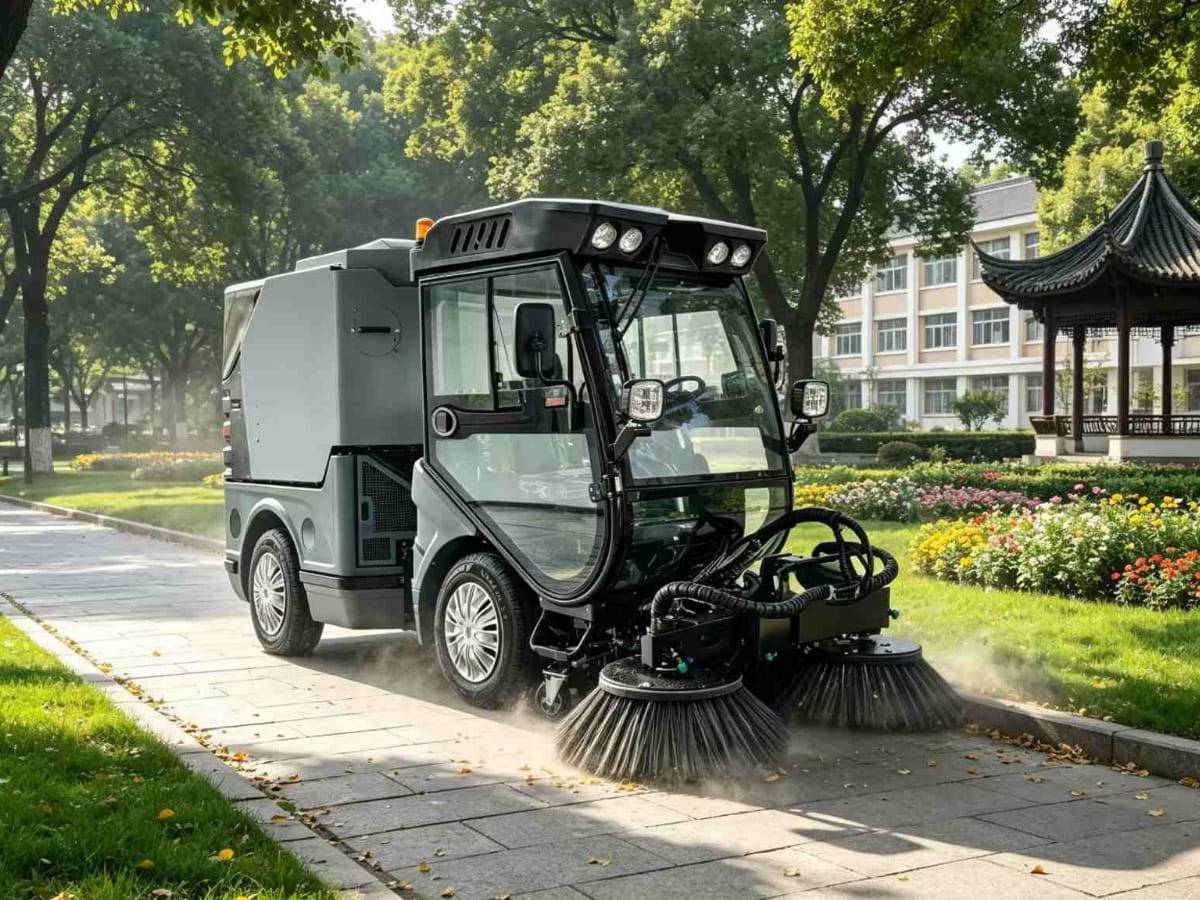
    Compact vs Truck-Mounted Width, Hopper and Tank Sidewalks and Cycle Lanes Operator and Routes FAQ Conclusion Contact Us Public works contracts do not reward clever engineering. They reward a machine that turns up, sweeps the legal width, and still has charge at the end of the shift. This guide is for the people on both sides of that paperwork. If you are writing or answering a spec for an electric street sweeper for municipal work, here is what the numbers on a datasheet actually control, and where a compact battery machine beats the depot truck. Where compact electric sweepers beat truck-mounted units A truck-mounted mechanical sweeper is a good tool for a three-lane arterial road: big hopper, 3 m or more in one pass, and it reaches the far end of a district at traffic speed. What it cannot do is enter a pedestrianised street 2.4 m wide between bollards. That gap is where compact electric machines earn their place in municipal sweeping equipment. A ride-on unit sweeps 1.2 m to 2.2 m, takes one operator instead of two, and shares space with pedestrians at walking pace. No diesel exhaust in a market hall, no engine noise outside a bedroom window at five in the morning. The cost picture matters too. A truck-mounted unit needs a licensed driver, a second operative on the rear brushes and a yard to park in. A battery machine runs a footway round, dumps the hopper and goes back out on the same charge, at under a third of the hourly cost. Where trucks still win: dual carriageways, storm clean-up, and anywhere debris runs into tonnes rather than bags. Sweeping width, hopper and water tank sizing Three numbers decide how much ground an electric street sweeper covers in a shift. Take sweeping width first, and check whether the quoted figure includes the side brushes. A machine quoting 1,200 mm deployed might be 900 mm raised, which matters when squeezing between parked cars. The JIECHI S1 small-size electric street sweeper runs 1,200 mm to 1,486 mm with its twin side brushes down; its 600 W main brush pulls grit off a kerb edge rather than flicking it sideways. Width times working speed gives a theoretical area rate. The S1 is rated at 14,000 m²/h; halve it for a realistic figure and it still covers a footway route that would take a crew with barrows all morning. For municipal work the hopper is the real limiter. A small dust box will have the machine standing at the tip by mid-morning in leaf fall. The JC-D9 lithium battery road sweeper carries a 1,850 L dust tank and a 380 L water tank feeding a 14 MPa pump: enough for dust suppression across an 8-hour shift. Its 1.6 m to 2.2 m sweeping width suits link roads and bus lanes rather than narrow footways. Rule of thumb: under about 25 km of footway per shift, a small street sweeper machine in the 1.2 m class is plenty. Above that, move up a size. Sidewalk, pedestrian zone and cycle lane performance A machine that works well on a depot apron can be a menace on a shared footway. Three behaviours separate a sweeper built for civic space from one built for a warehouse. Brush throw. Side brushes spin outward to reach against a kerb. On a footway that same motion throws grit at shins and shop windows. Look for adjustable brush pressure or a low-throw setting, and check which way the brushes rotate. Turning circle. Cycle lanes are usually 1.5 m to 2 m. You need to sweep the whole lane in one pass, then turn out at the end without climbing onto the island. Turning radius matters more than top speed here. Speed control. Pedestrian zones are usually limited to 6 to 12 km/h. A machine with a 30 km/h top speed and a coarse throttle is exhausting to hold at 8 km/h for two hours. Proportional control makes the route feel half as long. Worth testing before you buy: sweeping along a wall, around a tree pit, past a bus shelter. That is where the awkward debris lives, and where a badly set up machine leaves a stripe down a clean pavement. Operator comfort and route planning Sweeping is a long, slow job in bad weather. Comfort decides whether a route gets finished properly on a wet Tuesday. Cab or canopy. An open machine is fine for three seasons and grim in the fourth. A cab with a heater costs more and returns it in retained staff. Controls and visibility. Single-hand steering with the brush levers on the same side, a clear view down to the kerb, and a seat you can adjust without tools. Vibration through the wheel shows up in sickness records years later. Split the district into linear stretches and nodes. Linear stretches get swept at a steady working speed. Nodes are bus stops, market squares, park gates and takeaway frontages, where the debris load is ten times the average. Plan the nodes first and fill the linear work around them. FAQ Q1: How wide should a municipal electric street sweeper be?A1: Match the narrowest place on the route, not the widest. If the route includes a pedestrianised street with bollards, measure the gap. Most compact units sweep 1.2 m to 1.5 m brushes down. Q2: Can a compact sweeper replace a truck-mounted unit completely?A2: On footways, cycle lanes and pedestrian zones, yes. On arterial roads and after storm gritting, no. Most authorities run both and split the network by width and debris volume. Q3: How quiet is an electric sweeper really?A3: A lithium ride-on sweeper runs around 69 dB(A), roughly a busy conversation. A diesel truck-mounted sweeper is far louder, which is why battery machines can work residential streets before seven in the morning. A municipal sweeping contract is won or lost on three numbers: how wide the machine sweeps, how much it carries before it has to tip, and how long it runs with the brushes down. Contact us for catalog & quotation Send us your route types, the narrowest access point and your shift length. We will recommend the right class of machine and quote it with the specification filled in. Tel: +1 2403149021 Email: kliu@jiechi.com

leave a message

leave a message
If you are interested in our products and want to know more details,please leave a message here,we will reply you as soon as we can.
submit

Home

Products

WhatsApp

contact