other

blogs

Home

blogs

  • Summer Floor Scrubber Maintenance Guide: 5 Essential Tips to Keep Your Machine Running at Peak Performance
    Jul 21, 2026
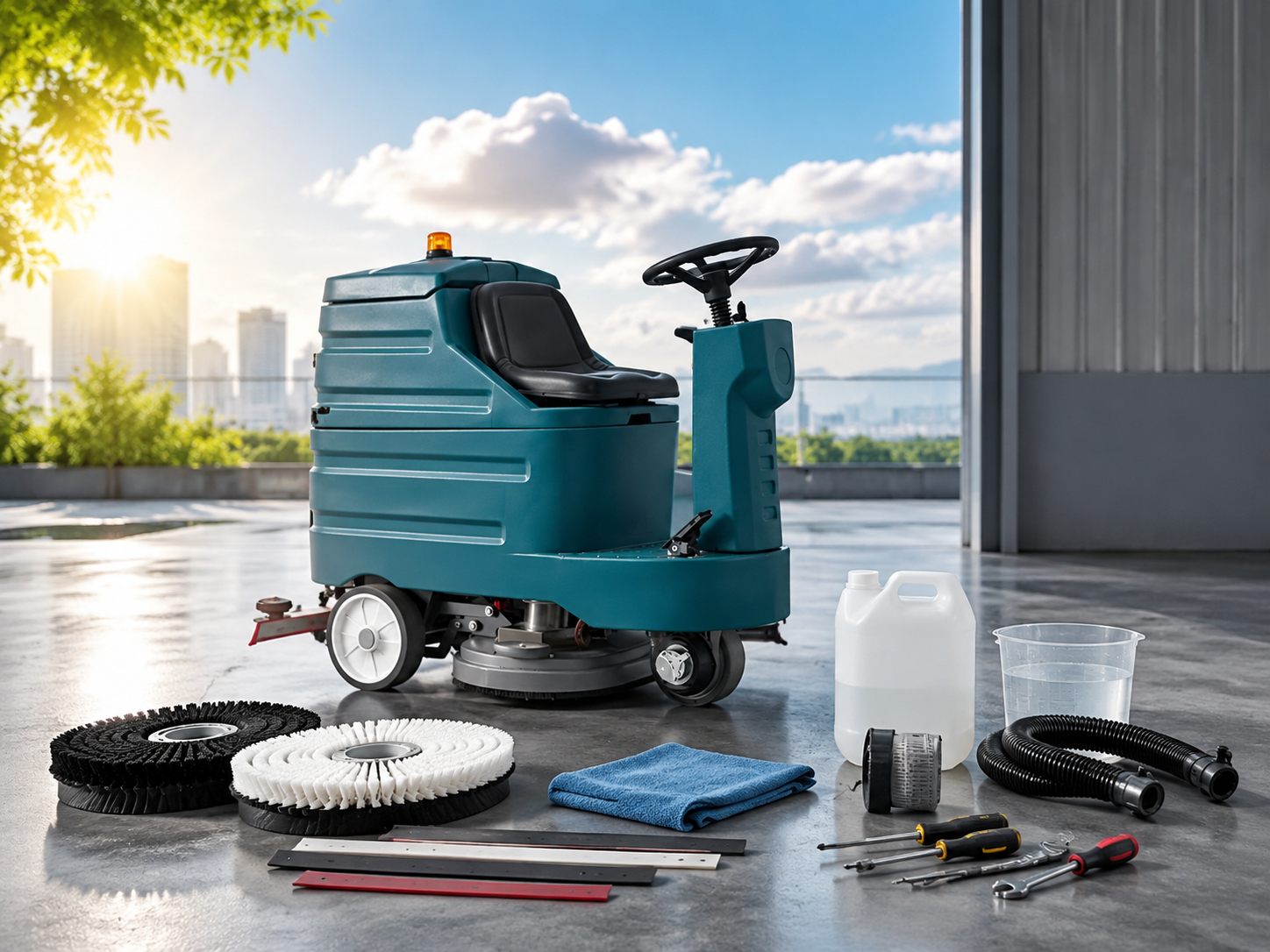
    As summer temperatures rise, cleaning demands in factories, shopping malls, commercial properties, and warehouses often increase. High heat, humidity, and long hours of continuous operation place extra stress on key components of floor scrubbers — including the battery system, water recovery system, and cleaning assemblies. Without proper maintenance, equipment performance declines. You may see reduced runtime, weaker water pickup, and lower cleaning efficiency. To help users improve equipment reliability and reduce downtime, Jiechi has prepared this summer maintenance guide covering essential care tips to keep your scrubber for floor cleaning running at peak performance.   1. Battery Maintenance: Maintain Stable Runtime The battery is the power source of every floor scrubber. In high-temperature environments, increased battery temperature affects both charging and discharging efficiency. Long-term exposure to excessive heat can also accelerate battery aging. Recommended maintenance tips:✅ Avoid leaving the machine under direct sunlight for extended periods✅ Park the equipment in a cool, well-ventilated area after operation✅ Avoid charging immediately after heavy-duty cleaning when the battery is still hot✅ Regularly check battery connections and terminals for looseness or oxidation For Jiechi floor scrubbers equipped with lithium battery systems, proper usage and heat management — including on commercial floor scrubber machine models — help maintain stable performance and improve overall operating efficiency.   2. Water Recovery System Maintenance: Ensure Fast Floor Drying Cleaning performance depends not only on scrubbing power but also on how well the water recovery system works. During hot weather, residual wastewater in the recovery tank can quickly develop unpleasant odors. Dirt buildup inside the recovery hose can also reduce suction. Daily maintenance tips:✅ Empty the recovery tank after each use✅ Rinse the inside of the recovery tank regularly✅ Check the suction hose for blockages✅ Inspect squeegee blades for wear and damage Jiechi floor scrubbers use efficient water recovery systems for quick floor drying. Properly maintaining suction components improves safety and ensures consistent results.   3. Brush System Inspection: Maintain Cleaning Performance In high-frequency environments like factories, warehouses, and parking garages, brushes face constant exposure to dust, oil stains, and debris. This can cause accelerated wear or entanglement. Regularly check:✅ Brush wear condition✅ Brush height and cleaning effectiveness✅ Whether plastic strips, cables, or packaging materials are wrapped around the brush✅ Whether the brush is securely installed A heavily worn brush reduces cleaning performance and increases machine workload. Regular inspection and timely replacement of consumables — including the commercial floor scrubber brush deck — are essential for maintaining the best cleaning results.   4. Water System Cleaning: Prevent Uneven Water Flow During summer, increased dust and oil contamination can affect the clean water system. Common issues include clogged filters and uneven water distribution. Key maintenance points:✅ Clean the clean water filter regularly✅ Check whether spray nozzles are blocked✅ Use clean water sources to reduce impurities entering the system✅ Drain the water system before long-term storage Keeping the water system clean ensures consistent water supply to the brush assembly and improves overall cleaning efficiency.   5. Proper Storage: Reduce Equipment Wear Many equipment problems don't happen during operation — they result from improper storage. After finishing work: ✅ Empty both the clean water tank and recovery tank ✅ Remove dust and dirt from the machine surface ✅ Lift the brush deck and squeegee assembly ✅ Store the equipment in a dry, shaded environment ✅ Regularly check machine operating conditions Proper storage reduces component aging and keeps the machine ready for reliable operation. Smart Maintenance Delivers Long-Term Value During the summer season, floor scrubbers often handle longer working hours and higher cleaning frequencies. Regular maintenance of the battery, water recovery system, brush system, water circuit, and storage conditions can reduce equipment failures, minimize downtime, and improve overall cleaning efficiency. For professional environments such as factories, commercial properties, shopping malls, and warehouses, stable equipment performance depends on both correct operation and scientific maintenance. Whether you use a walk-behind or ride-on floor scrubber machine, these summer care tips apply. Jiechi is committed to providing reliable cleaning equipment and professional support — helping businesses achieve more efficient, safer, and smarter cleaning management.
  • 92% of Shoppers Abandon Unclean Stores — How Malls Should Upgrade Their Cleaning Strategy
    Jul 14, 2026
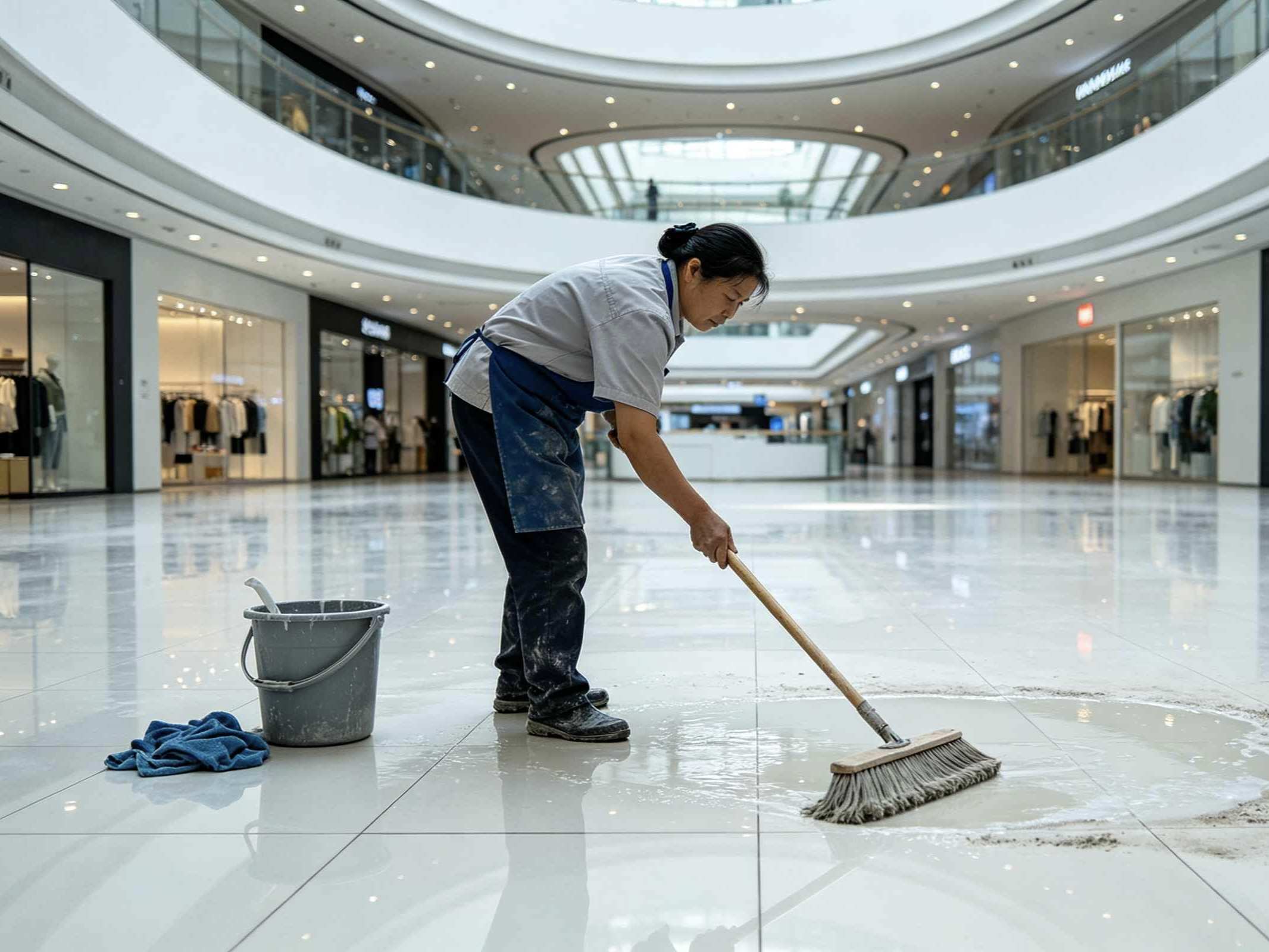
    92% of consumers say they won't return to a store with poor cleanliness. 88% worry about their health in an unclean shopping environment. And 66% prefer to see frequent cleaning operations while they shop — visible cleanliness builds trust. Large commercial complexes come with unique challenges: vast floor areas, high foot traffic, and diverse zones — entrance halls, parking lots, escalators, corridors, office spaces, and food courts. Floors collect mud, grease, and food debris throughout the day. Traditional manual mopping leaves behind water streaks and wet, slippery surfaces that not only look bad but create real safety risks. The bottom line? Cleaning quality directly affects foot traffic and revenue. Old-school manual cleaning can no longer keep pace: ❌ Low efficiency, high labor costs, hard to manage❌ No consistent standard — quality varies shift to shift❌ Complex zones overwhelm manual cleaning crews As a direct manufacturer of cleaning equipment, Jiechi helps mall and property managers reduce costs, improve quality, and boost operational efficiency. Zone-by-Zone Cleaning Solutions Large Hard Floors (Halls & Atriums) For large interior hard floors, match the machine size to the area. Ride-on scrubber for floor cleaning like the A17, A10, and A7 handle scrubbing, water pickup, and drying in a single pass — eliminating standing water and allowing malls to maintain a spotless look during business hours. Corridors & Walkways Compact models like the BA530BT walk-behind floor scrubber for tiles, A1 and A3 push-type scrubbers, or the A5 ride-on scrubber quickly remove food-court grease and rain-borne grime. They scrub and dry instantly — perfect for daytime cleaning without disturbing shoppers. Compact size fits service elevators for multi-floor use. Basement Parking & Service Passages The A7 and BA900BT ride-on scrubber dryers deliver the power and runtime needed for large, tough underground areas. High-Debris Areas When loose debris (litter, gravel, packaging) is a problem, sweeper-scrubber combos like the M20, M17, and M10 handle both sweeping and scrubbing in one pass — an all-in-one ride-on scrubber and sweeper eliminating duplicate labor and reducing dust. Outdoor Perimeter & Parking The BA2100 ride on sweeper quickly handles leaves, sand, gravel, packaging waste, and industrial dust — far more efficient than manual sweeping. Escalators The EL510 escalator cleaner features an auto-guidance system that fits all escalator types. It integrates water supply, brushing, and drying in one pass — improving cleaning quality while reducing labor difficulty. Good mall cleaning isn't about adding more staff. It's about deploying the right equipment for each zone. Jiechi's All-in-One ride on Cleaning Equipment and complete service ecosystem includes: Site analysis — evaluate your mall's specific cleaning needs Equipment recommendations — match the right machine to each zone Operation training — ensure your team uses equipment effectively After-sales support — keep your machines running reliably With over 3,000 malls, commercial complexes, and industrial parks served, and 100,000+ customers worldwide, Jiechi helps property managers reduce cleaning stress and improve on-site efficiency.
  • Why "Clean Enough" Is Killing Your Factory's Long-Term Efficiency
    Jul 07, 2026
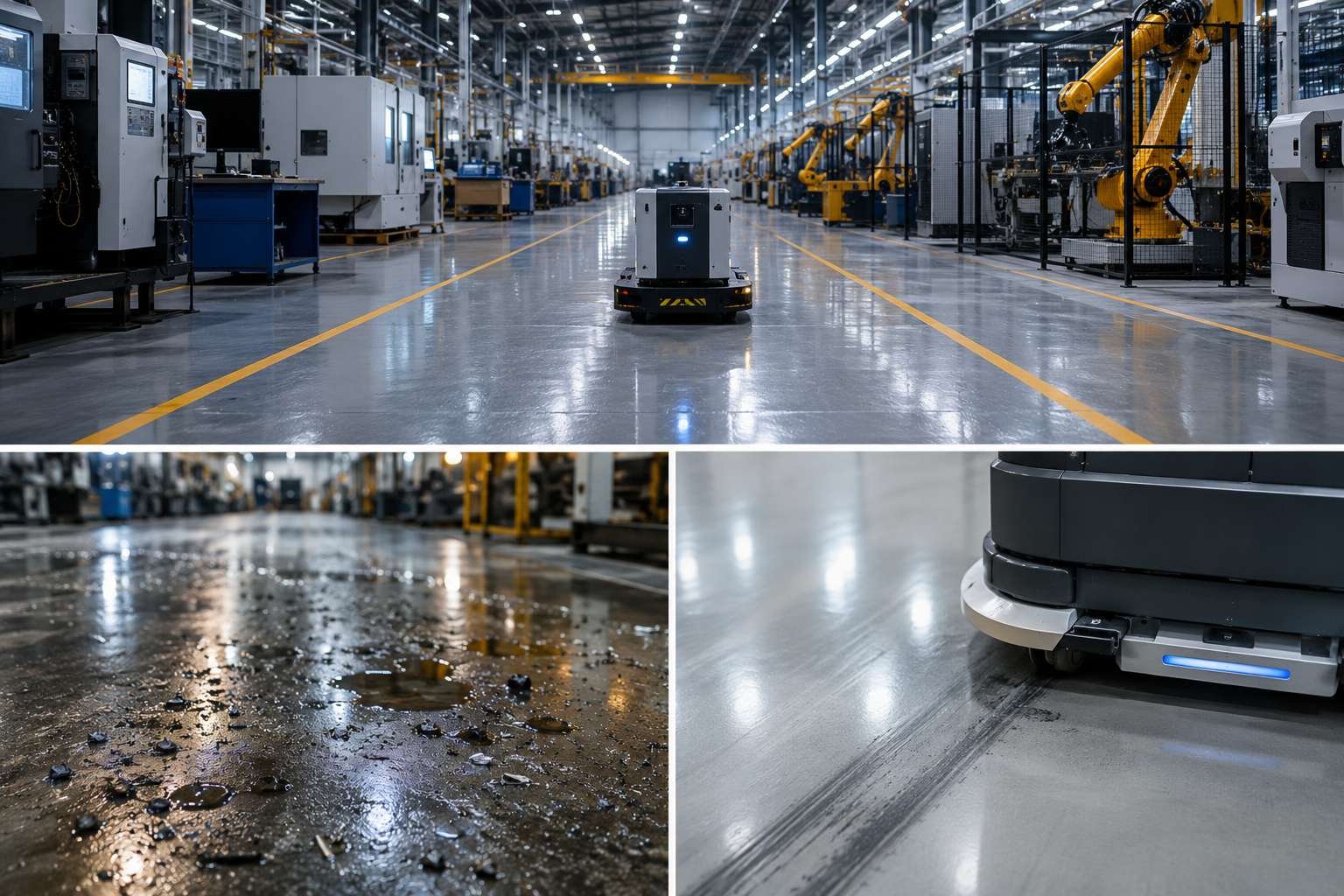
    Most factory managers share one quiet mindset.They don't aim for perfect floors.They aim for clean enough.Clean enough for production to run.Clean enough to pass daily inspections.Clean enough to avoid obvious safety hazards. On the surface, this logic makes sense.But in manufacturing, "good enough" is one of the slowest, most expensive operational mistakes a facility can make.Because "clean enough" creates invisible drift.Small issues stay unaddressed.Over weeks and months, they accumulate into larger problems that hurt safety, productivity, and equipment lifespans. "Clean Enough" Is How Operational Standards Slowly Decline Factory standards never collapse in one day.They erode gradually.A small oil stain that gets ignored today becomes a permanent patch tomorrow.Debris that is "fine for now" slowly builds into cluttered walkways.Dust that nobody bothers to remove begins circulating into machines and electrical panels. Each individual issue feels negligible.So teams keep choosing "clean enough."But operational discipline is like a baseline.Once you accept minor exceptions, the baseline shifts downward.Soon, what was once unacceptable becomes normal.That's how factories slowly lose consistency — even when no single crisis ever occurs. In Smart Factories, "Clean Enough" Is Never Enough Manual work can tolerate inconsistency.Humans can adapt to dusty floors, minor spills, or scattered debris.Automation cannot. AGVs and AMRs operate based on fixed parameters.They rely on consistent traction, clear routes, and predictable floor conditions.When your standard is only "clean enough": Sensors collect more dust, causing inaccurate navigation Minor floor residue creates subtle friction issues Hidden debris triggers unplanned stops Slight uneven contamination accumulates and shortens machine life Human workers can compensate for messy environments.Automation exposes every inconsistency.The moment your factory adopts smart equipment, your definition of clean must evolve — from visual cleanliness to operational consistency. The Hidden Cost of Settling for "Good Enough" Companies track obvious costs: downtime, material waste, labor overtime.But they rarely track the cost of inconsistent cleanliness.These costs live in the gaps: Frequent sensor calibration Premature wear on robotics components Unplanned forklift slowdowns Extra labor spent correcting messy work zones Lower pass rates during customer and third-party audits Higher probability of slips, trips, and near-miss incidents None of these appear as major line items.But they compound every single shift.Over a year, "clean enough" easily costs facilities tens of thousands in hidden operational loss. Consistency Is Cheaper Than Correction Many facilities resist standardized cleaning because they see it as "extra work."They believe occasional cleaning saves time and labor.The opposite is true. Reactive cleaning always costs more than preventive cleaning.When you only clean when problems appear: You clean inefficiently You clean under pressure You clean after damage is already done When you maintain consistent floor conditions — supported by reliable equipment from a trusted floor cleaning machine Factory — you: Prevent equipment wear before it starts Eliminate most safety risks in advance Keep workflows predictable for both staff and automation Maintain stable audit-level standards every day In manufacturing, consistency is not perfection.It's cost control. The Difference Between "Cleaning" and "Maintaining" This is the key mindset shift that separates average factories from world-class ones.Most facilities do cleaning.Top facilities do floor condition maintenance. Cleaning removes visible dirt.Maintenance preserves stable, repeatable operating conditions.One is cosmetic.The other is operational. For modern smart factories, floor maintenance is no longer housekeeping.It's core operational management. We've observed a clear divide between high-performing facilities and average ones.It does not come down to equipment budget.It comes down to standard tolerance. Struggling factories tolerate small inconsistencies.Leading factories eliminate them. The best operators understand this:Your floor's daily condition sets the ceiling for your operational stability.
  • How to Improve Daily Cleaning Efficiency in Kitchens, Cafeterias, and Food Processing Plants
    Jun 30, 2026
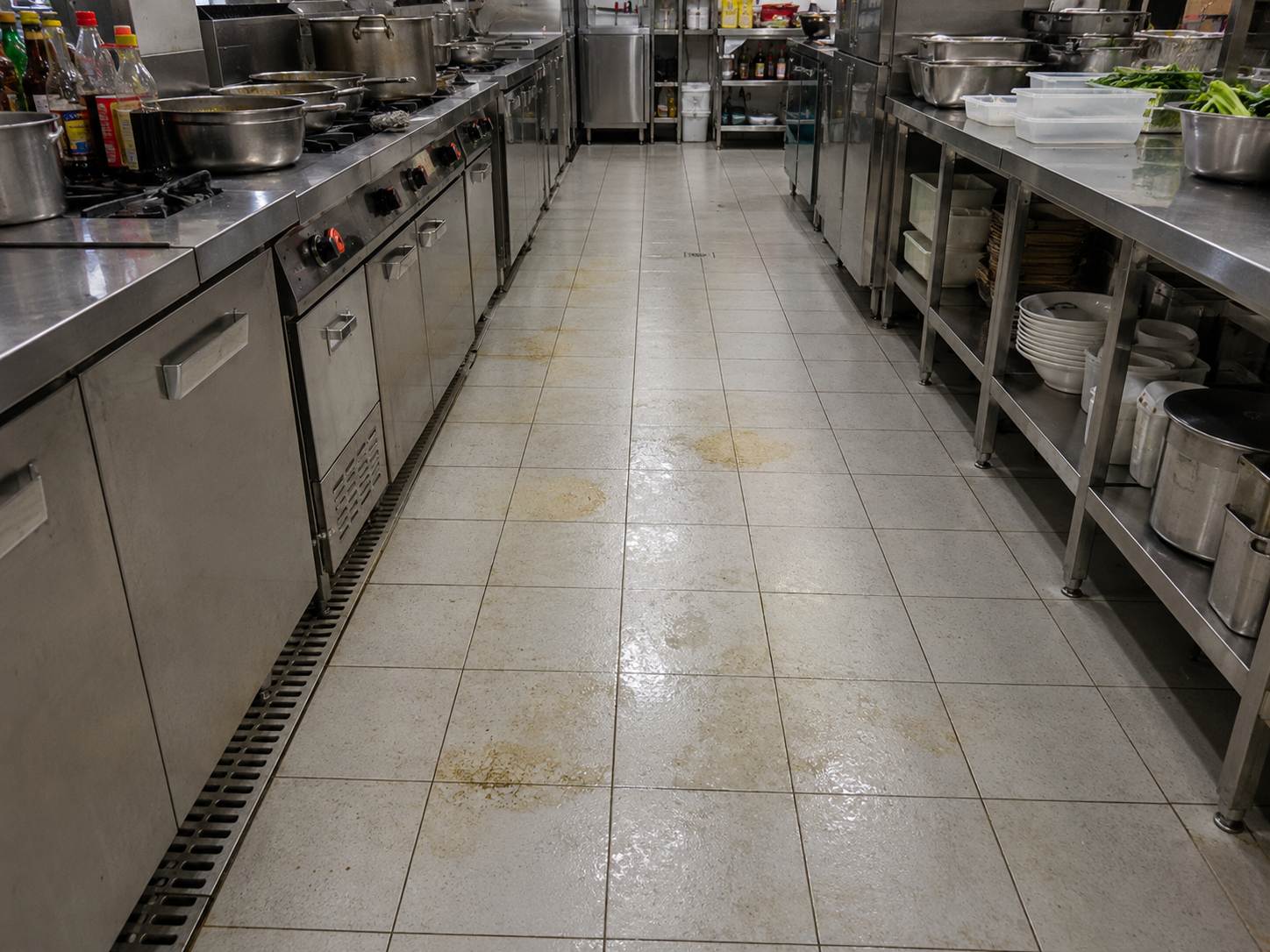
    Grease buildup is unavoidable in catering and food production. Cooking oil, soup, seasonings and production residues stick to floors in restaurant kitchens, school canteens and food factories. Untreated greasy floors hurt sanitation, create slip hazards and hinder daily operations. Restaurant Kitchens: Heavy Grease & Water, Slow Manual Mopping Kitchen floors are coated with oil, sauce and wastewater, forming slippery oil films. Mops only remove surface dirt. Repeated mopping wastes labor and leaves wet floors, greatly raising fall risks for staff. Canteens: Tight Cleaning Time, High Efficiency Requirements School and company canteens see heavy foot traffic. Food scraps and oil stains must be cleaned quickly between meal services. Manual mopping brings heavy workloads and uneven cleaning effects. Mechanized cleaning effectively cuts operating costs for large canteens. Food Processing Plants: Strict Sanitation & Standardized Compliance Food factories follow much stricter hygiene rules. Unremoved grease, powder and debris spread via workers and transport carts, ruining production environments. Clean, dry floors are essential for factory audits and food safety inspections. Factories need standardized cleaning to clear pollutants fast, avoid standing water and finish large-area cleaning during short downtime. Common Challenges for All Venues Stubborn grease cannot be fully removed by ordinary mopping Floors stay wet long after cleaning Manual cleaning is labor-intensive and low-efficiency Frequent daily cleaning pushes up labor costs Inconsistent cleaning standards weaken site management More enterprises switch to mechanical cleaning equipment to raise efficiency and unify sanitation standards. Jiechi A3D walk behind floor scrubber: Simplify Grease Cleaning Ideal for small and medium areas such as kitchens, canteens and food workshops, the Jiechi A3D integrates scrubbing, sewage recovery and drying in one step. It thoroughly strips floor grease and removes wastewater instantly for fast-dry floors. The compact flexible machine moves easily through narrow aisles, equipment gaps and packing zones. Simple operation requires only short staff training. It outperforms manual mopping with higher efficiency, lighter workload and stable, standardized cleaning results. Restaurants, canteens and food plants all have unique cleaning needs, yet efficient mechanical floor cleaning has become the top choice for food industry operators.
  • World Cup Stadiums Stay Match-Ready — Here's the Cleaning Technology Behind the Scenes
    Jun 23, 2026
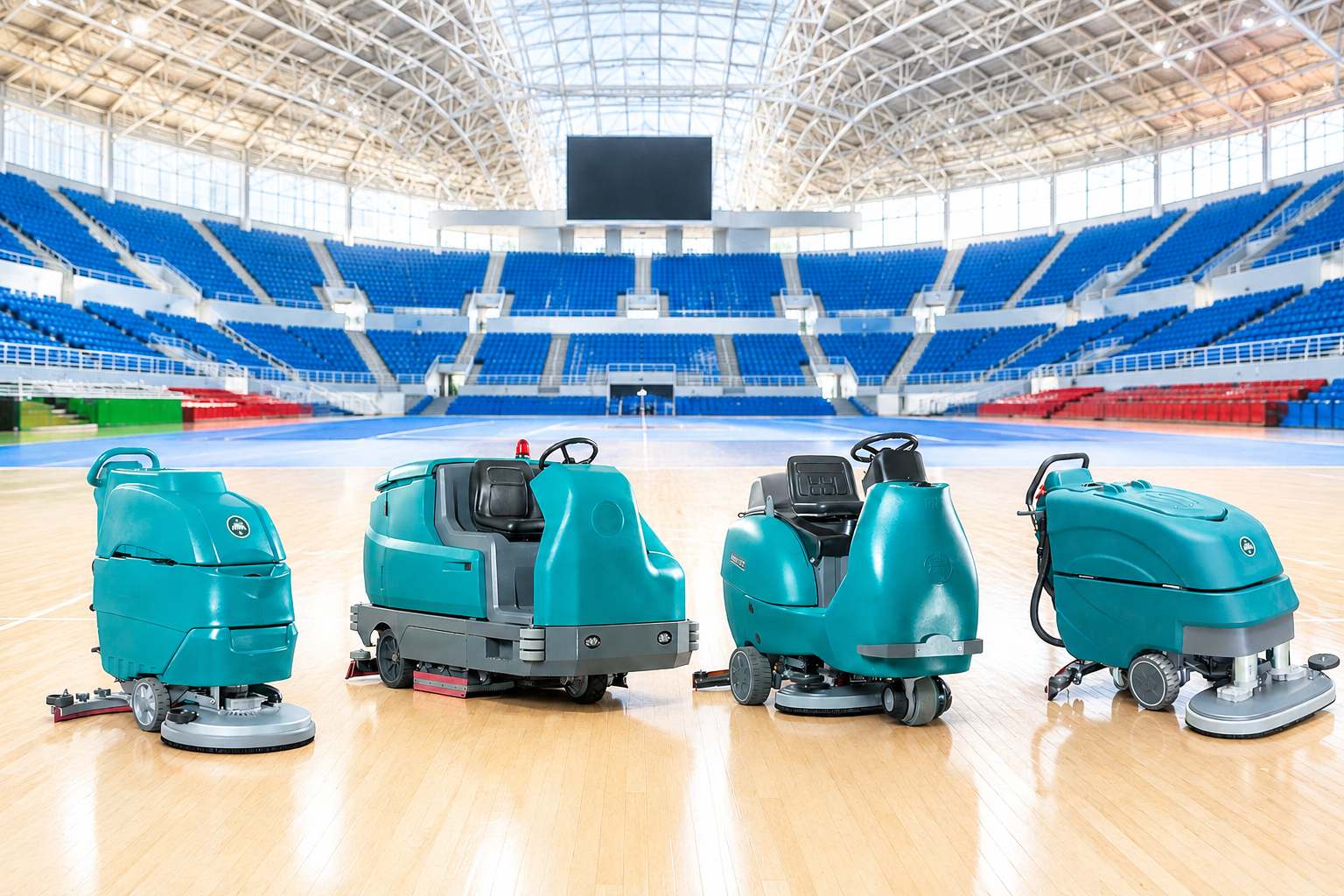
    The 2026 FIFA World Cup is electrifying fans across the globe. From the massive AT&T Stadium to the legendary Estadio Azteca, billions of viewers watch every pass, every goal — and every floor surface broadcast on camera. But what most spectators never see is the monumental cleaning challenge behind each match. A single World Cup venue can span 50,000 to 100,000 square meters of indoor space — concourses, VIP suites, locker rooms, media centers, and parking facilities. Within hours, tens of thousands of fans track in mud, spill drinks, and leave behind all kinds of debris. After the final whistle, cleaning crews have just 3 to 4 hours to restore the entire venue to pristine condition. Manual mopping simply cannot keep pace. For environments like these, industrial floor cleaning equipment from Shanghai Jiechi make large venue cleaning remarkably efficient. Our scrubber for floor cleaning delivers one-pass washing and drying, eliminating slip hazards and replacing repetitive manual mopping. These industrial floor cleaning machines dramatically reduce labor costs while enhancing the venue's overall image and operational efficiency. Whether it's a World Cup-class mega-stadium or a local sports center, Jiechi ride-on floor scrubbers deliver efficient, low-noise, and thorough floor cleaning — the best hard floor cleaning machine for keeping every surface match-ready, every single time.
  • How to Maintain Clean and Safe Commercial Floors During the Rainy Season?
    Jun 18, 2026
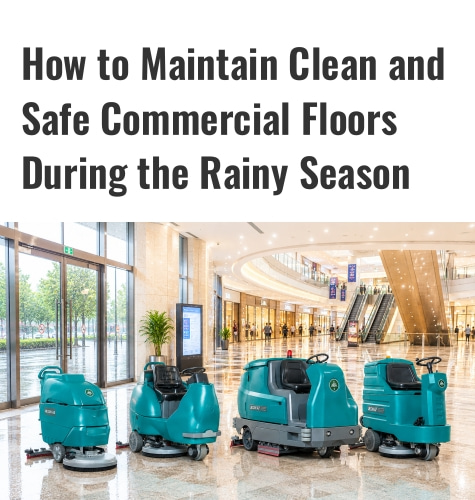
    Keep Floors Clean, Dry, and Safe During Wet Weather The rainy season brings continuous moisture, muddy footprints, standing water, and slippery floors. For shopping malls, office buildings, factories, schools, hospitals, and other commercial facilities, maintaining clean and safe floors becomes a daily challenge. Traditional cleaning methods often struggle to keep up with the increased cleaning demands. Mops leave excess moisture behind, require repeated cleaning, and consume significant labor resources. As a result, floors remain wet for extended periods, increasing the risk of slips and falls. JIECHI Scrubber Dryers are specifically designed to tackle these rainy-season cleaning challenges, delivering efficient floor washing, water recovery, and rapid drying in a single pass. 查看内容凭证 Common Cleaning Challenges During the Rainy Season Muddy Footprints Everywhere Rainwater carried in by pedestrians and vehicles quickly creates dirty footprints throughout entrances, corridors, and public areas. Frequent cleaning is required to maintain a professional appearance. Standing Water at Entrances Building entrances are especially vulnerable during rainy weather. Water accumulation not only affects cleanliness but also creates safety hazards for customers and employees. Increased Risk of Slips and Falls Wet floors can lead to accidents and liability concerns. Businesses need reliable solutions that leave floors dry immediately after cleaning. Higher Labor Costs Traditional mopping requires continuous manual effort throughout the day, especially during periods of heavy rainfall. Cleaning teams often struggle to maintain cleanliness standards efficiently.   How JIECHI Scrubber Dryers Solve Rainy-Season Cleaning Problems? Wash and Dry Simultaneously JIECHI Scrubber Dryers scrub floors with clean water and powerful brushes while immediately recovering dirty water through a high-performance vacuum system. Floors are left clean, dry, and ready for traffic within seconds. Powerful Water Recovery Advanced suction technology efficiently removes rainwater, muddy residue, and excess moisture, preventing water from spreading across the floor. Improve Workplace Safety By significantly reducing floor moisture, JIECHI machines help minimize slip hazards and create a safer environment for employees, visitors, and customers. Increase Cleaning Efficiency Compared with traditional mopping, a JIECHI Scrubber Dryer can clean large floor areas much faster, reducing labor intensity while improving cleaning quality. Suitable for Multiple Floor Types Whether cleaning epoxy floors, tile floors, concrete surfaces, PVC flooring, or stone floors, JIECHI machines deliver consistent cleaning performance.   Ideal Applications During the Rainy Season Shopping Malls and Retail Centers Maintain spotless entrances, walkways, and public spaces despite heavy customer traffic and wet weather conditions. Factories and Warehouses Quickly remove muddy footprints, water stains, and industrial dust to keep production and logistics areas clean and safe. Office Buildings Create a professional and welcoming environment by ensuring floors remain clean and dry throughout rainy days. Schools and Hospitals Maintain high hygiene standards while reducing safety risks in high-traffic facilities. Why Choose JIECHI? · Efficient cleaning and drying in one pass · Reduced labor costs and cleaning time · Enhanced floor safety during wet weather · Reliable performance for commercial and industrial environments · Durable design built for demanding daily use Stay Prepared for the Rainy Season Don't let rainy weather compromise cleanliness, safety, or operational efficiency. With JIECHI Scrubber Dryers, businesses can maintain clean, dry, and professional-looking floors even during the wettest months of the year.
  • How to Drastically Reduce Carpet Drying Time in Hotels and Offices
    Jun 11, 2026
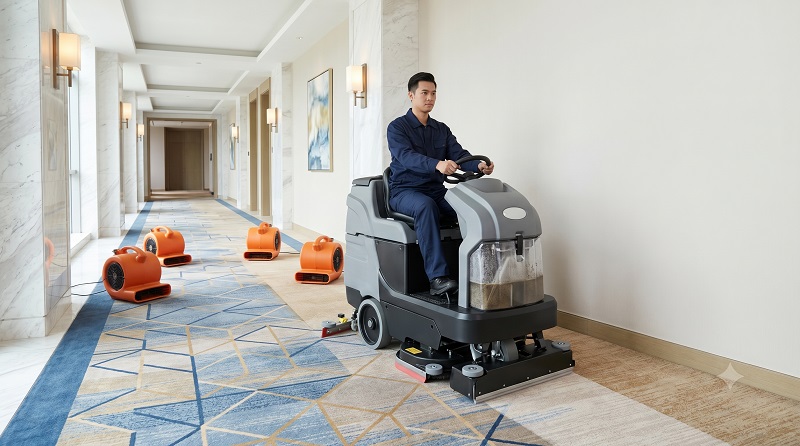
    For hotel managers and office facility directors, wet carpets are more than just a minor inconvenience—they are a direct hit to the bottom line. In the hospitality sector, an out-of-order room due to damp flooring means lost daily revenue. In corporate environments, wet carpets create slip hazards and unpleasant musty odors that disrupt the workday. The longer it takes for a space to dry, the higher the hidden operational costs. If your housekeeping or maintenance team is struggling with extended downtime after deep cleans, here are the most practical strategies to reduce carpet drying time effectively and get your commercial spaces back in action fast.     1. Maximize Water Extraction at the Source The fundamental rule of rapid drying is simple: leave less water behind in the first place. Traditional extractors often pump excessive amounts of water into the carpet fibers but lack the suction power to pull it all back out. Upgrading your equipment is non-negotiable here. By investing in heavy duty carpet cleaning machines equipped with high-water-lift vacuum motors, your team can extract up to 80-90% of the moisture immediately during the cleaning pass. Less residual water translates to exponentially faster drying times.   2. Implement "Dry Strokes" Technique Operator technique plays a massive role in moisture control. Train your cleaning staff to perform "dry strokes." This means passing the extraction wand or the machine over the exact same area a second time without dispensing any additional water. While it takes slightly more time upfront during the cleaning process, this extra vacuuming pass pulls out hidden moisture from the carpet backing and shaves hours off the total drying clock.   3. Strategic Airflow and Humidity Control Never rely solely on ambient room air to do the heavy lifting. Once the extraction is complete, immediately deploy industrial air movers. Position them to create a "cyclone" effect, circulating air rapidly across the surface of the carpet rather than just blowing downward on a single spot. If the building's HVAC system is running, make sure the air conditioning is actively cooling. Cold air conditioning removes humidity from the indoor environment much faster than leaving the system on a simple "fan" setting.   4. Utilize Low-Moisture Alternatives for Corridors Not every stain requires a flood of water. For high-traffic hallways and lobby areas, consider alternating deep extraction with low-moisture encapsulation cleaning. This method uses specialized polymers to trap dirt and requires minimal water. It’s an excellent strategy to maintain a pristine appearance while ensuring the area is completely dry and ready for foot traffic in under an hour.   Equip Your Team for Efficiency At the end of the day, rapid turnaround times require the right technology. Clinging to outdated, underpowered extractors will continue to cost your business money through blocked hotel rooms and disrupted office hours. If you are ready to eliminate lengthy downtimes, you need access to fast drying commercial carpet extractors built for the rigorous demands of hospitality and commercial spaces. Upgrade your facility maintenance arsenal today with reliable, high-performance solutions from https://www.rceautofloorclean.com. Protect your flooring investments, empower your staff, and never keep your guests waiting.
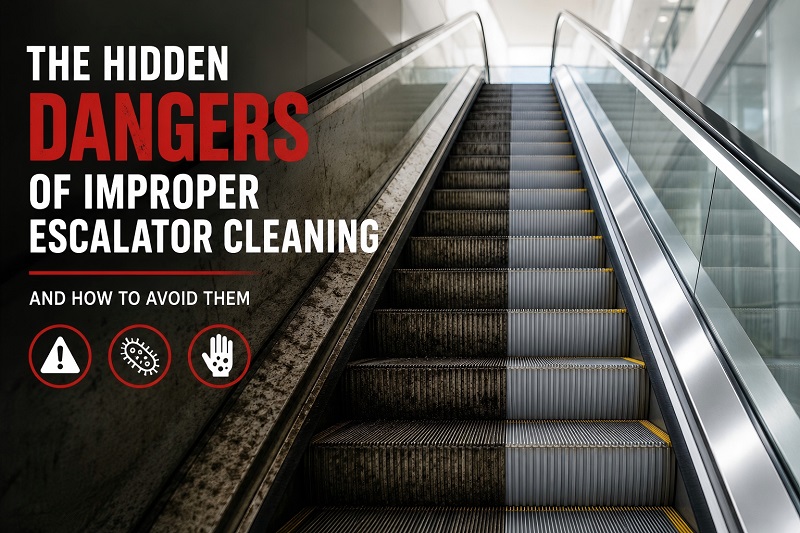
  • The Hidden Dangers of Improper Escalator Cleaning (And How to Avoid Them)
    Jun 10, 2026
    As a facility manager or the head of a commercial cleaning business, you tackle complex maintenance challenges daily. Escalators are the main arteries of shopping malls, airports, and transit hubs, making their upkeep one of the most demanding tasks on your checklist. While many view escalator cleaning simply as a matter of aesthetics, from a maintenance perspective, the wrong approach can quietly destroy one of your building's most expensive assets.     Today, we are uncovering the hidden risks of improper cleaning methods—and exactly how you can avoid them.   Danger #1: Moisture Infiltration Leading to Mechanical Failures The most fatal flaw in traditional cleaning is excess water. If crews use soaking wet mops or outdated tools, dirty water easily seeps through the gaps between the treads. The underbelly of an escalator is packed with sensitive sensors, electrical wiring, and drive chains. Once moisture pools inside, it washes away essential lubrication, causes rust, and worst of all, creates severe electrical short circuits and fire hazards.   How to Avoid It: It is time to retire the mop and bucket. When upgrading your toolkit, prioritize commercial escalator cleaning equipment designed with low-moisture technology. The best machines spray a precise, controlled amount of solution and instantly extract it along with the dirt. This simultaneous spray-and-vacuum action guarantees that zero moisture drips into the internal mechanics, safeguarding your motors.   Danger #2: Corrosive Chemicals Stripping the Anti-Slip Coating In a rush to melt away stubborn grease or compacted dirt, some cleaners resort to harsh, highly acidic or alkaline chemicals. This is a massive mistake. Escalator treads are typically made of aluminum alloy and often feature a specialized anti-slip coating. Aggressive chemicals accelerate metal oxidation and strip away this crucial friction layer, which directly increases the risk of passenger slip-and-fall accidents.   How to Avoid It: The true secret to how to clean escalator steps safely lies in physical agitation, not chemical corrosion. Stick to mild, pH-neutral detergents combined with equipment that utilizes custom-fitted guide brushes. These brushes are engineered to perfectly match the grooves of the steps, sweeping away debris without scratching or degrading the metal surface.   Danger #3: The Hidden Costs of Unexpected Downtime If your cleaning method requires dismantling the steps, or if a sloppy job triggers a mechanical fault due to water damage, you are looking at prolonged, unplanned downtime. This not only incurs astronomical repair bills but also disrupts traffic flow, frustrates visitors, and hurts the overall commercial experience of your facility.   How to Avoid It: Modern facility management demands seamless operations. To actively prevent escalator downtime during cleaning, you need a fast, "in-place" solution. By deploying a professional escalator cleaning machine, your team can perform deep cleaning during the night shift or low-traffic hours without taking the escalator apart. A single operator can restore the steps to a pristine condition in a fraction of the time, ensuring the system is fully operational when the morning rush begins.     Escalator maintenance is never just about dusting; it is a highly technical task deeply tied to electrical safety, risk management, and asset longevity. Investing in the right tools doesn't just make the metal shine—it saves you from incalculable repair costs and operational headaches.   If you are looking to eliminate these hidden risks while dramatically boosting your team's efficiency, visit https://www.rceautofloorclean.com. We provide high-performance, industry-standard cleaning solutions designed to keep your facilities safe, pristine, and running smoothly.
  • How Should Supermarket Chains Be Cleaned?
    Jun 09, 2026
    When we shop at supermarkets, we can immediately sense the quality of the store environment. Clean, dry floors make the entire store appear bright and spacious, encouraging customers to step inside. In contrast, some stores have sticky, yellowed floors in the deli section that discourage shopping, while standing water in the fresh produce and seafood sections can lead to safety hazards.   Most major chain supermarkets today combine retail, fresh produce, deli, and food service operations. With high foot traffic and a constant flow of customers, blood, grease, footprints, and dust are a constant problem. Cleaning has long been a top priority for store operations and remains a common challenge for many retailers.   Supermarkets have numerous aisles, dense shelving, and many corners, making it difficult for large equipment to maneuver; Daily dust and water stains in the fresh produce section make manual cleaning time-consuming and require significant manpower; The deli and dining areas operate as a single unit, resulting in frequent grease buildup. This necessitates floor cleaning that dries immediately without disrupting customer shopping. Jiechi’s push-type models—including the BA680BT, BA860BT, A1, and A3—can cover all operational scenarios in supermarket retail spaces.   【A1 and A3 Walk-Behind Floor Scrubbers: The Workhorses for Retail Environments】 With a compact and agile design and smooth steering, these machines can navigate easily between shelves and checkout areas. They scrub and vacuum simultaneously, leaving the floor dry instantly with no standing water. Operation is simple, and cleaning staff can get started after just a brief training session. The A3D model features a self-propelled function, making it even more efficient for large retail spaces.     【BA680BT Walk-Behind Floor Scrubber – Highly Flexible】 With a 68L (clean water) tank capacity, it minimizes the need for frequent refilling and waste disposal. Ideal for deli sections in medium-sized retail stores, it effectively removes bloodstains and animal/vegetable oil residues, keeping fresh food areas dry and hygienic.     【BA860BT Fully Automatic Floor Scrubber – Dual-Brush Efficiency】 With a dual-brush deck cleaning width of 860 mm and self-propelled operation, there’s no need for strenuous pushing. The 95-liter fresh water tank delivers cleaning efficiency several times greater than manual labor. Adjustable brush pressure allows for water and energy savings in lightly soiled areas, significantly reducing cleaning time for large spaces.     Mechanization replaces traditional mops and brooms, significantly reducing the cleaning staff required per store and effectively controlling labor costs; Standardized equipment ensures consistent cleaning results, leaving store floors free of grease and standing water, with even hard-to-reach corners clean and tidy, thereby continuously enhancing the customer shopping experience; Equipment parts are easy to replace, and with Jiechi’s nationwide after-sales service network, maintenance and repairs are handled quickly, ensuring that daily store cleaning operations are not disrupted.   Jiechi cleaning equipment has established a replicable model for cleaning in fresh produce supermarket chains. Catering to all types of general supermarkets and fresh produce markets nationwide, Jiechi meets diverse needs by leveraging mechanized and standardized cleaning to help retail stores reduce costs and improve efficiency, creating a clean and safe shopping environment.    
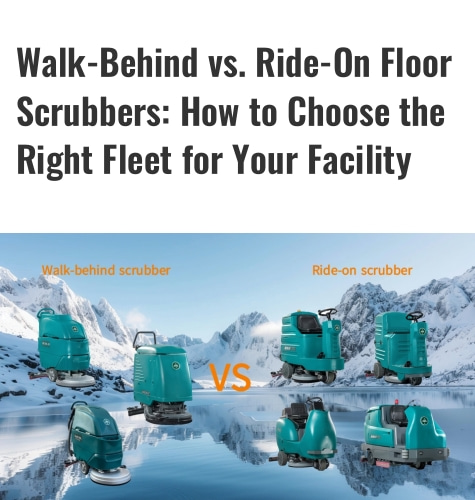
  • Walk-Behind vs. Ride-On Floor Scrubbers: How to Choose the Right Fleet for Your Facility
    Jun 02, 2026
    In the fast-paced world of industrial and commercial facility management, maintaining spotless floors is no longer just about aesthetics—it’s about safety, compliance, and operational efficiency. If you are still relying on traditional mopping, or looking to upgrade your current cleaning fleet, you’ve likely arrived at a critical crossroads: Should you invest in a walk-behind or a ride-on floor scrubber?     As a leading global manufacturer of floor scrubbers and sweepers, Jiechi has helped thousands of factories, warehouses, hospitals, and shopping malls optimize their cleaning protocols. Here is a data-driven breakdown to help you make the smartest investment for your business.     1. The Walk-Behind Scrubber: Agility Meets Precision Walk-behind floor scrubbers (like the Jiechi BA530BT or the A3) are operated by a technician walking behind the machine. Best Suited For:   Tight and Congested Spaces: Narrow aisles, office hallways, and doorways. Smaller Footprints: Facilities under2,000㎡. Corner Cleaning: Superior maneuverability around tight corners and under obstacles.       2. The Ride-On Scrubber: Maximum Productivity for Large Scale Ride-on scrubbers (like the heavy-duty Jiechi A7, BA900BT, A10, A17) allow the operator to sit comfortably while driving the machine.     Best Suited For:   Expansive Areas: Large logistics warehouses, transport hubs, and manufacturing plants. High-Frequency Cleaning: Spaces larger than $3,000\text{ m}^2$ that require rapid turnaround times.   Labor Optimization: When you need to cover double the square footage with half the manpower.   The Jiechi Advantage: Jiechi ride-on models boast high-capacity solution tanks and extended battery life, drastically reducing the time spent on "dump and refill" stops.     The Decision Matrix: How to Choose? To make your decision easier, our engineering team has summarized the key metrics in the comparison table below: Feature Walk-Behind Scrubbers Ride-On Scrubbers Average Cleaning Speed 1,500 - 2,500 ㎡ 3,500 - 6,500+㎡ Maneuverability Exceptional (Turns on a dime) Moderate (Requires wider turning radius) Initial Investment Lower upfront cost Higher upfront cost (Offset by rapid ROI) Labor Efficiency Standard High (Reduces labor costs by up to 50%) Ideal Environments Retail stores, schools, hospitals Warehouses, airports, large factories     The Bottom Line: Calculate Your ROI When choosing between a walk-behind and a ride-on machine, look closely at your Total Cost of Ownership (TCO). While a ride-on scrubber requires a higher initial capital expenditure, it slashes labor hours dramatically. In large facilities, a ride-on machine often pays for itself within the first 6 months purely through labor savings. However, many modern facilities don't just choose one—they deploy a hybrid fleet. For example, utilizing a Jiechi A7 for the main warehouse floor and a Jiechi A1 or A3 for the narrow packing zones.
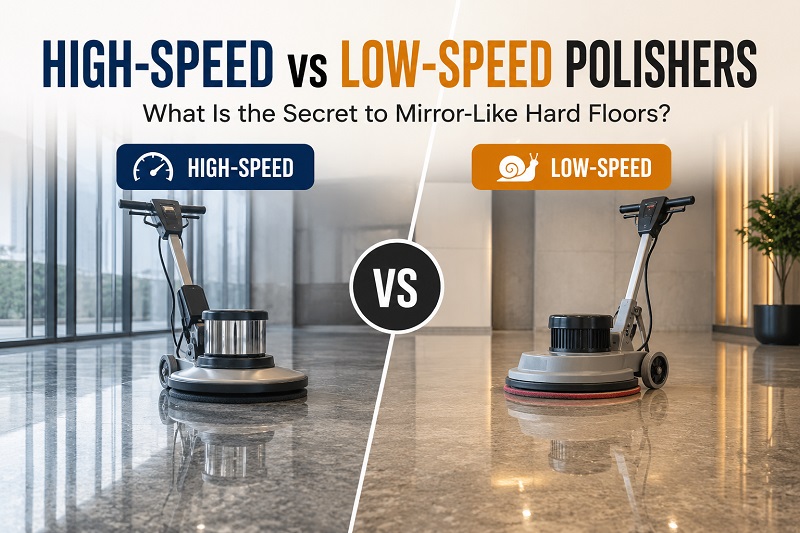
  • High-Speed vs. Low-Speed Polishers: What Is the Secret to Mirror-Like Hard Floors?
    May 28, 2026
    When walking into a luxury hotel lobby, a high-end retail boutique, or a pristine corporate office, the first thing that catches your eye is often the floor. A flawless, mirror-like finish doesn't just look clean—it reflects professionalism, meticulous maintenance, and high standards. But achieving that breathtaking gloss isn't a matter of luck. It comes down to a fundamental choice in commercial floor care: High-Speed vs. Low-Speed Polishers. If you have ever wondered how to get a high-gloss finish on concrete floors, marble, or vinyl tile, understanding the distinct roles of these two machines is your ultimate secret weapon. Let’s break down how they work, when to use each, and how to master the art of the perfect floor shine. The Core Difference: RPM and Action To the untrained eye, floor polishers might look similar. However, their internal mechanics and intended purposes are miles apart. The primary differentiator is speed, measured in Rotations Per Minute (RPM). Low-Speed Polishers (The Workhorses) Operating generally between 150 to 300 RPM, low-speed polishers (often called floor buffers) rely on friction, weight, and cleaning solutions rather than sheer velocity. Primary Function: Scrubbing, stripping, and deep cleaning. How they work: They move side-to-side, allowing the operator to maneuver across the floor to remove old wax layers, deep-seated dirt, and scuff marks. High-Speed Polishers (The Detailers) Operating anywhere from 1,500 to 3,000+ RPM, high-speed polishers (commonly known as floor burnishers) are built for one specific purpose: generating heat and friction. Primary Function: Polishing and creating that coveted wet-look shine. How they work: They move exclusively in a straight line (forward and backward). The intense speed melts the microscopic top layer of the floor finish just enough to flatten out ridges and scratches, resulting in a perfectly reflective surface. Choosing the Right Tool for the Job You cannot achieve a mirror-like finish by choosing just one machine; rather, it's about knowing how they complement each other in a comprehensive floor care program. Feature Low-Speed Polisher (Buffer) High-Speed Polisher (Burnisher) Speed Range 150 – 300 RPM 1,500 – 3,000+ RPM Motion Side-to-side (Swinging) Straight line (Forward/Backward) Best Used For Stripping wax, heavy scrubbing, shampooing Burnishing, restoring gloss, hardening finish Surface Finish Clean, matte, or satin prep layer Mirror-like, high-gloss "wet look" 1. Prepping the Canvas with Low-Speed Buffers You cannot polish a dirty floor. If you try to run a high-speed burnisher over dirt or old, yellowed wax, you will permanently bake those imperfections into the floor. This is where commercial floor buffers for vinyl tile and stone come into play. Use a low-speed machine to strip away old finishes and scrub the surface completely clean. 2. Creating the Reflection with High-Speed Burnishers Once the floor is clean, dry, and a fresh coat of finish has been applied, it’s time for the magic. The high-speed polisher glides over the floor, flattening the finish and hardening it against future foot traffic. If you are managing natural stone or polished surfaces, choosing the right industrial floor polishing equipment for marble ensures that the delicate stone isn't damaged while achieving maximum clarity. The Step-by-Step Secret to a Mirror-Like Finish If you want to achieve professional-grade results that last, follow this proven sequential process: Clear and Dust Mop: Remove all loose debris and dust. Particles trapped under a high-speed pad can act like sandpaper, ruining your floor finish. Deep Clean/Strip (Low-Speed): Use a low-speed polisher with a stripping pad to remove the old, tired layers of wax. Apply Floor Finish: Apply 2–4 thin, even coats of high-quality floor finish, allowing each coat to dry completely. Burnish (High-Speed): Pass over the completely dry finish with a high-speed burnisher using a specialized polishing pad (like a hog’s hair or synthetic polishing pad). Watch the dull surface instantly transform into a crystal-clear reflection. Elevate Your Floors with Jiechi Cleaning Achieving a flawless, mirror-like hard floor requires the perfect balance of technique, chemistry, and dependable machinery. Low-quality equipment leads to uneven finishes, operator fatigue, and frequent breakdowns. At Jiechi Cleaning, we engineer professional-grade floor care solutions designed for maximum efficiency and durability. Whether you need rugged low-speed buffers to tackle heavy restoration or ultra-high-speed burnishers to unlock that ultimate wet-look shine, our equipment delivers consistent performance with ergonomic handling. Explore our full range of advanced floor maintenance solutions at Jiechi Cleaning and give your facility the premium reflection it deserves.

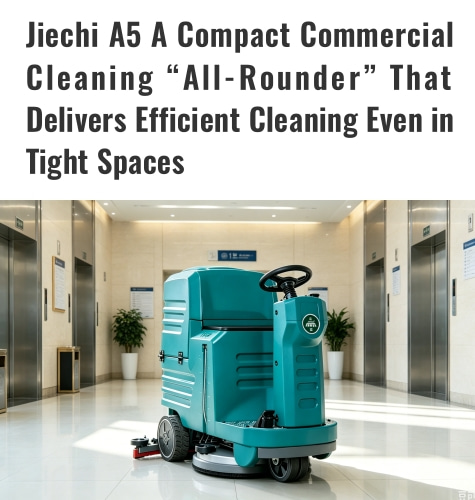
  • Jiechi A5: A Compact Commercial Cleaning “All-Rounder” That Delivers Efficient Cleaning Even in Tight Spaces
    May 27, 2026
    In small-to-medium commercial settings such as small shopping malls, office buildings, convenience stores, and laboratories, cleaning often faces the dilemma of “narrow spaces, bulky equipment, and low efficiency”: large machines cannot navigate narrow aisles, manual cleaning cannot keep up with foot traffic, and standard floor scrubbers are inefficient and prone to bumping into shelves.   For small-to-medium commercial spaces, the “adaptability” of cleaning equipment is far more important than “bigger is better.” The Jiechi A5 compact ride-on scrubber-dryer addresses the pain points of narrow-aisle cleaning, low efficiency, and difficult operation with its compact and agile body, powerful cleaning performance from imported components, and user-friendly design details. It not only saves on labor costs but also raises cleaning standards.   The A5’s design centers on “adaptability to compact spaces,” with every specification precisely tailored to the cleaning needs of small-to-medium commercial areas, balancing maneuverability and efficiency.   530mm cleaning width + 770mm squeegee: The narrow brush deck design is ideal for tight spaces like aisles between shelves, hallways, and elevator lobbies, ensuring precise coverage in a single pass without wasting cleaning time. 65L Fresh Water Tank + 75L Waste Water Tank: A compact body houses high-capacity tanks, reducing the frequency of refilling and emptying. A single cleaning session can cover nearly 10,000 square meters without interrupting operations. 2,700 m²/h Cleaning Efficiency: Powered by a high-performance motor, it can clean 2,700 m² of floor space per hour—several times more efficient than manual labor—significantly reducing labor costs.   “Compact without compromise”—from maneuverability to cleaning power, every detail of the A5 is tailored for small to medium-sized spaces.   Compact body (126×62×103 cm): Designed specifically for narrow hallways, elevator entrances, and aisles in convenience stores, it easily navigates areas inaccessible to large floor scrubbers, leaving no cleaning blind spots.  Integrated cast aluminum squeegee: Corrosion-resistant with consistent suction, paired with high-quality rubber strips that hug the floor to prevent leaks. It ensures thorough wastewater recovery, leaving no water marks or secondary contamination on the floor. Wastewater tank overflow protection: Automatically shuts down when the tank is full to prevent wastewater backflow from damaging the motor, extending the equipment’s lifespan and reducing maintenance costs. Easy-to-disassemble maintenance design: Brush decks, rubber strips, and filters can all be quickly removed for cleaning. Daily maintenance is simple and requires no specialized tools, saving time and costs.   With its compact body and stable performance, the A5 easily adapts to a variety of small-to-medium commercial settings, making it a true “all-rounder” in cleaning:   Convenience stores / Small supermarkets: Maneuvers flexibly between shelves to quickly clean tile floors, washing and drying instantly without disrupting customer traffic. Office Buildings: Cleans hallways, elevator lobbies, and break rooms with quiet operation that doesn’t disrupt work, leaving floors spotless with no residue. Factory Workshops / Small Production Facilities: Removes grease and dust from floors, suitable for epoxy and concrete surfaces, helping workshops meet environmental standards. Hotels / Restaurants / Parking Garages: Quickly cleans grease and water stains from floors, reducing slip hazards and ensuring kitchen safety and hygiene.   Whether for property maintenance, shopping mall operations, or factory logistics, the A5 is a cost-effective choice for cleaning small to medium-sized commercial spaces. It delivers a hassle-free and efficient cleaning experience to create a clean, safe, and orderly commercial environment.
1 2 3 4 5 6 7

leave a message

leave a message
If you are interested in our products and want to know more details,please leave a message here,we will reply you as soon as we can.
submit

Home

Products

WhatsApp

contact