other

Industrial cleaning

Home

Industrial cleaning

  • How to Keep Printing and Packaging Factory Floors Clean: A Practical Cleaning Guide
    Oct 30, 2026
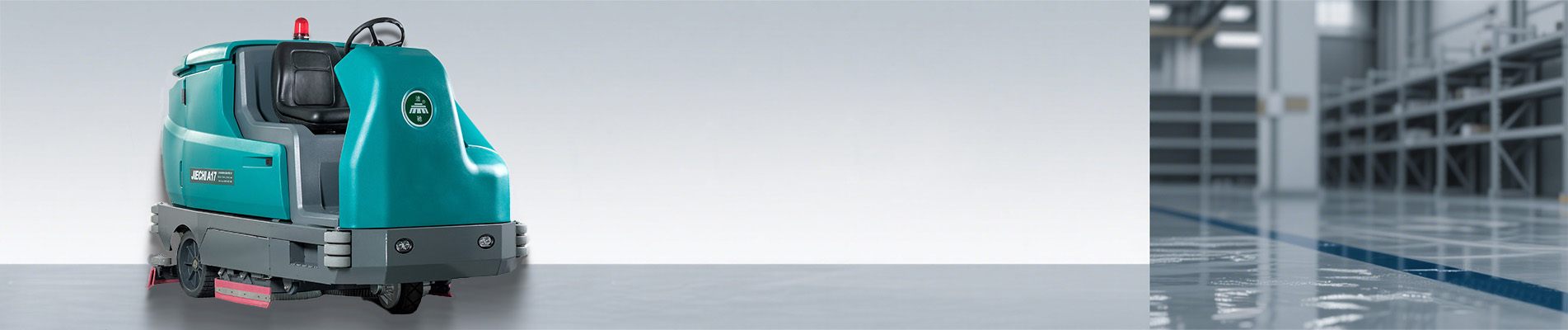
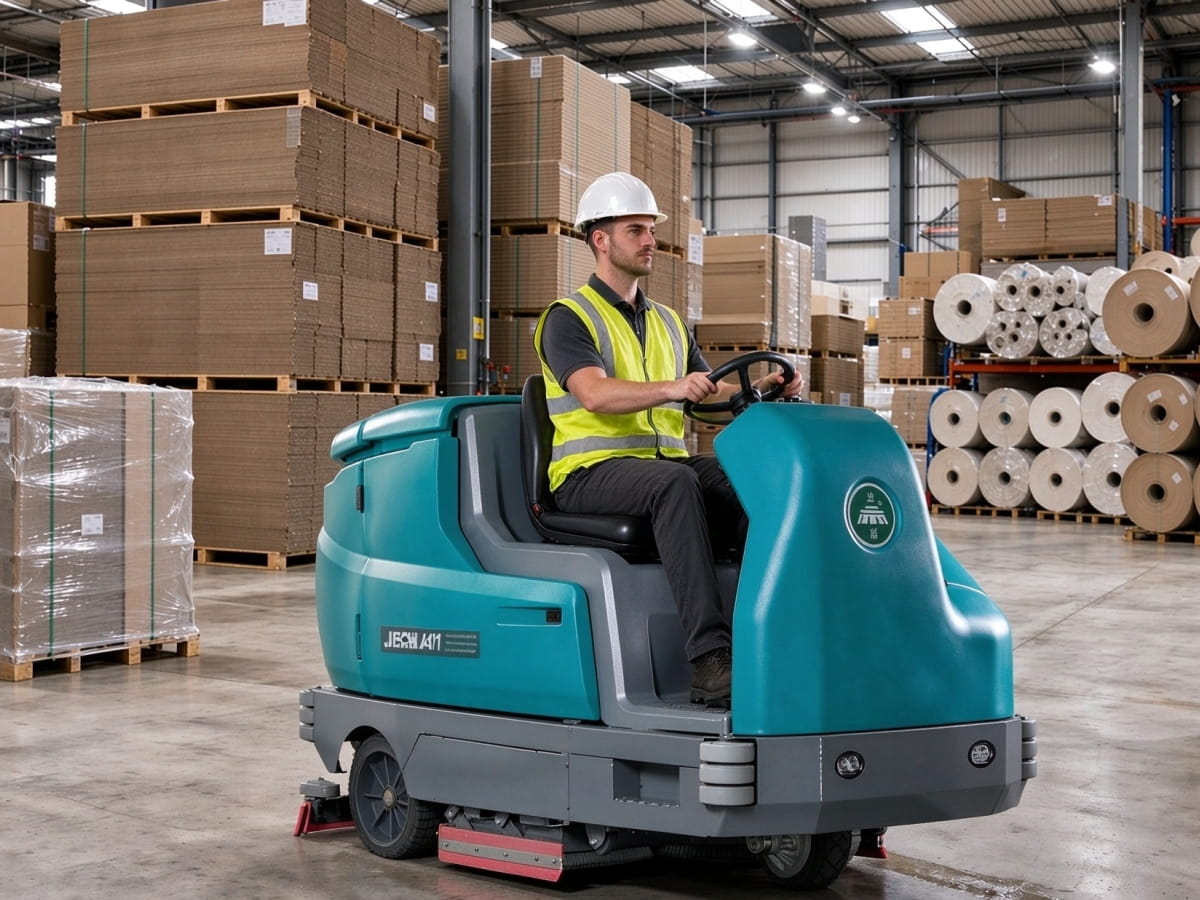
      A printing plant does not have one floor problem. It has four or five, sitting within shouting distance, and the operator who runs a single scrubber across all of them ends up with a film on the floor and a complaint list from production.     Machine split: press hall, corrugator, converting   The three areas want different machines. The reason is aisle geometry, not soil.   Press hall. Rolls, trolleys and press units sit close together, so what matters is footprint and turning. A mid-size ride-on at 860 mm scrub width and a 1,100 mm suction width fits the gaps and still covers the open run along the presses. Our A7 ride-on scrubber is rated at 5,500 m²/h with 140 L clean and 150 L recovery, which is roughly three press bays on one tank. It turns on the spot, which is what you need at the end of a press line.   Corrugator and paper store. Open floor and heavy dust. Run lengths are long and the floor is clear, so a larger machine earns its place here.   Converting and despatch. Pallet stacks change every shift. A large machine waits to pass; it only pays off in the open despatch lane.   Area Scrub width Rate Tanks Press hall (A7) 860 mm / 1,100 mm suction 5,500 m²/h 140 L / 150 L Despatch, paper store (A17) 1,060 mm / 1,400 mm suction 8,600 m²/h 300 L / 350 L   The A17 runs a 36V/460Ah pack and is quoted at 7–8 hours on one charge. That is a full shift with the charging done overnight, not a mid-shift swap. At 1,525 kg it also wants a floor slab you have checked, not assumed.   Step-by-step daily cleaning routine   Sequence matters more than effort.   1. Dry through first. Run a dry sweep from the cleanest end toward the press hall. Paper dust goes in the bin, not the recovery tank. On a corrugator line this step can run the length of the line and back.   2. Spot-treat at the source. Ink at the press feet, adhesive at the gluer. Scrape the bulk, apply degreaser, give it the dwell time on the label, then scrub. Ten minutes here saves a full-hall scrub.   3. Scrub clean end to dirty end. Aisles last, not first, or you drag press-hall water back through the clean zone.   4. Watch the recovery water. When it turns grey-black, stop and dump before the next aisle. A full tank does not suction, and a machine that is not suctioning is just spreading.   5. Squeegee check before the last pass. One nick in the rubber leaves a line across a whole aisle, and it will still be there in the morning.     Slip risk, dust and worker safety   Two safety issues come straight from the floor here: slip on damp sealed concrete, and dust in the air during dry sweeping.   Sealed concrete becomes genuinely slippery when damp. That is why the scrubber should leave the floor as dry as it can, and why the squeegee and suction motor deserve more attention than the brush. A pass that looks clean but leaves a sheen is a hazard.   Dry sweeping a corrugator line lifts paper dust into the air, where it settles on wet ink and machine guards. A damp pass or a scrub-sweep with a hopper does the job without the cloud.   FAQ Can a floor scrubber remove dried ink from a press hall floor? Fresh mist, yes, with a degreaser and short dwell. Ink bonded into a sealer needs mechanical action first. Brush pressure alone will not do it. Why does the floor look worse after scrubbing? Usually dirty recovery water or a worn squeegee. Both leave a film that dries as haze. Dump the tank when it turns grey and check the squeegee edge before the final pass. What size scrubber fits a press hall? Around 860 mm scrub width with a 1,100 mm suction path, on a machine that can turn on the spot. Measure the narrowest gap between a press and the nearest roll or trolley before you shortlist anything. Printing plant floor cleaning is three jobs in one building. Sweep dry before anything gets wet, treat ink and adhesive at the source, and size the machine to the aisle rather than the square metres. A7 for the press hall, A17 for the open despatch floor, and a Sunday shutdown for everything the daily pass cannot reach. That combination keeps the floor dry, the squeegee honest and the incident log short. Size a machine for your plant Send us your floor plan, aisle widths and the soils you fight most. We will come back with the scrub width that fits . Tel: +1 2403149021  |  Email: kliu@jiechi.com
  • Factory Floor Cleaning Program for Audit Readiness: ISO, 5S and Customer Visits
    Oct 17, 2026
     What auditors look at on the floor   ISO 9001:2015 treats the environment your processes run in as something you must determine and manage, cleanliness included. In a machine shop that means oil under a lathe, swarf in an aisle, water tracked in from the dock. Inspectors turn it into plain questions: how often, who checks, where is it written down. That is ISO 9001 floor cleaning in practice.   What 5S adds. 5S gives you a vocabulary the auditor already knows. Shine is the cleaning step, but Standardize and Sustain are the ones that get tested, because they are about a written standard followed by somebody other than its author. On 5S factory floors, that usually shows up as a board in the aisle with the week's sign-off on it.   Zone map: production, warehouse, walkways, loading   One program for the entire site is why cleaning plans fall apart at audit. Soil, traffic and risk differ by zone, so the task list has to differ too. Draw it on a print of your layout and give each zone an owner.   Production. Coolant mist, hydraulic oil, metal fines, plastic dust. The hard part is the perimeter: the machine base, the cable tray shadow, the space behind the chip conveyor. Cleaning here has to reach the edge without pushing fines into a drain.   Warehouse. Tyre marks, pallet dust, and the polished patch where a forklift brakes at the end of a run. Aisles are long and open, which is where wide ride-on machines earn their keep, provided they can turn at the end without a shuffle.   Walkways. Foot traffic, handover points and door entries. This is what a visiting customer sees first, and it is usually the zone with no owner. Marked lanes make the standard visible and give you a boundary to point at.   Loading. Grit, diesel soot, rainwater, the odd broken pallet. The dock door line is where the outside arrives. A mat and a sweep routine there cuts the soil load on every zone inside, and it is the cheapest decision on this list.   Cleaning without stopping production Production will not pause for the floor, so the program has to fit the gaps that exist: changeovers, breaks, shift handover and the hours after last shift. Battery machines help here for a reason that has nothing to do with power. No mains cable means no trip hazard strung across a walkway, which is a finding on its own, and no lead to drag around a running line.   Work the site in slices. Clean one aisle at a time, dry it before traffic returns, and plan the route around the turning circle rather than straight-line speed. A route needing three-point turns in a two-metre aisle takes twice as long as the spec suggests.   Drying time decides whether the task survives. A squeegee in good condition and sensible brush pressure leave a floor that takes foot traffic in minutes. If the floor is still wet when the next shift walks in, the task gets dropped within a fortnight, whatever the sheet says.   From the field: what actually decides the machine Jiechi has built scrubbers and sweepers since 2003 across two bases totalling 60,000 m². When a plant layout lands with us, the useful questions are almost never about total area. They are about where soil collects, which aisles take traffic, and when the floor is free of people and pallets. Those three answers set the machine class and the pass pattern. We size to the window you have, not to the number on a brochure. Machine choice by zone Buy to the zone, not to the biggest area on the plan. One large machine for everything ends up too wide for the production aisle and too slow to turn in the warehouse. Zone Machine class What to look for Production Ride-on scrubber, dual brush 850 to 1,000 mm scrub width, tight turn radius, low noise for changeover work Warehouse Ride-on scrubber or combination unit Long run time, tanks over 200 L, good transport speed Walkways Compact walk-behind Under 800 mm, useful edge cleaning, quiet enough for daytime Loading Sweeper-scrubber combination Debris hopper, suction path over 1.2 m, dust control on dry days   For the two biggest zones, an industrial ride-on scrubber with dual brush carries the middle of the plant: 860 mm on the A8 and 1,015 mm on the A10, with 280 L of solution and 300 L of recovery on a 36V/220Ah pack, rated at 6,500 and 7,000 m²/h. Two brush motors give the pressure to lift cured coolant film a single brush skates over.   Where the floor is half outside, grit has to be swept before it can be washed. The large ride-on sweeper-scrubber M17 does both in one pass, rated at 8,600 m²/h with a 1,400 mm suction path, 300 L solution and 350 L recovery on 36V/460Ah. It is the machine for the dock approach, not the aisle beside line three.   Whatever you shortlist, ask for the demonstration on your floor, in your narrowest aisle, at the hour you would really clean. A machine that only performs in an empty warehouse will not last a month.   FAQ How often should a factory floor be machine scrubbed? Daily in production aisles and walkways, weekly in loading bays, plus a deep clean at each planned shutdown. Set it by how fast soil returns. What records does an audit expect for floor cleaning? Enough to follow one date backwards: task, zone, frequency, who signed it and what was used. Photos from fixed viewpoints once a week are usually enough. Who should own the cleaning program? One named person per zone, not a department. Where cleaning belongs to everybody, nothing gets signed. Can we clean while the line is running? Yes, in slices. Battery machines remove the cable hazard, a good squeegee returns the floor to traffic in minutes, and the route should avoid the busiest aisle at peak times. Build your zone map with us Send us your layout, floor area and production windows. We will map the zones and size a machine to each one. Tel: +1 2403149021  |  Email: kliu@jiechi.com

  • Summer Floor Scrubber Maintenance Guide: 5 Essential Tips to Keep Your Machine Running at Peak Performance
    Jul 21, 2026
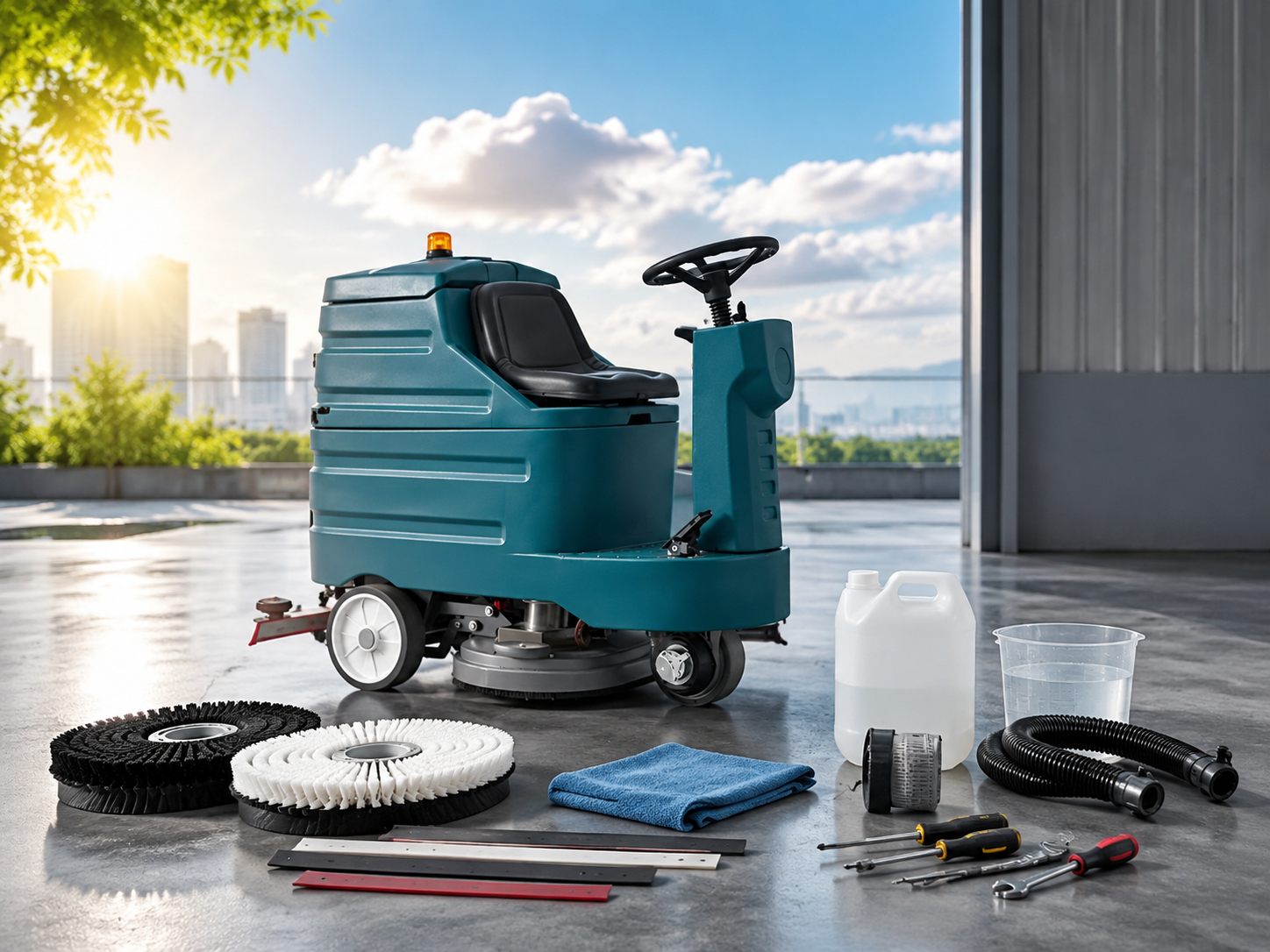
    As summer temperatures rise, cleaning demands in factories, shopping malls, commercial properties, and warehouses often increase. High heat, humidity, and long hours of continuous operation place extra stress on key components of floor scrubbers — including the battery system, water recovery system, and cleaning assemblies. Without proper maintenance, equipment performance declines. You may see reduced runtime, weaker water pickup, and lower cleaning efficiency. To help users improve equipment reliability and reduce downtime, Jiechi has prepared this summer maintenance guide covering essential care tips to keep your scrubber for floor cleaning running at peak performance.   1. Battery Maintenance: Maintain Stable Runtime The battery is the power source of every floor scrubber. In high-temperature environments, increased battery temperature affects both charging and discharging efficiency. Long-term exposure to excessive heat can also accelerate battery aging. Recommended maintenance tips:✅ Avoid leaving the machine under direct sunlight for extended periods✅ Park the equipment in a cool, well-ventilated area after operation✅ Avoid charging immediately after heavy-duty cleaning when the battery is still hot✅ Regularly check battery connections and terminals for looseness or oxidation For Jiechi floor scrubbers equipped with lithium battery systems, proper usage and heat management — including on commercial floor scrubber machine models — help maintain stable performance and improve overall operating efficiency.   2. Water Recovery System Maintenance: Ensure Fast Floor Drying Cleaning performance depends not only on scrubbing power but also on how well the water recovery system works. During hot weather, residual wastewater in the recovery tank can quickly develop unpleasant odors. Dirt buildup inside the recovery hose can also reduce suction. Daily maintenance tips:✅ Empty the recovery tank after each use✅ Rinse the inside of the recovery tank regularly✅ Check the suction hose for blockages✅ Inspect squeegee blades for wear and damage Jiechi floor scrubbers use efficient water recovery systems for quick floor drying. Properly maintaining suction components improves safety and ensures consistent results.   3. Brush System Inspection: Maintain Cleaning Performance In high-frequency environments like factories, warehouses, and parking garages, brushes face constant exposure to dust, oil stains, and debris. This can cause accelerated wear or entanglement. Regularly check:✅ Brush wear condition✅ Brush height and cleaning effectiveness✅ Whether plastic strips, cables, or packaging materials are wrapped around the brush✅ Whether the brush is securely installed A heavily worn brush reduces cleaning performance and increases machine workload. Regular inspection and timely replacement of consumables — including the commercial floor scrubber brush deck — are essential for maintaining the best cleaning results.   4. Water System Cleaning: Prevent Uneven Water Flow During summer, increased dust and oil contamination can affect the clean water system. Common issues include clogged filters and uneven water distribution. Key maintenance points:✅ Clean the clean water filter regularly✅ Check whether spray nozzles are blocked✅ Use clean water sources to reduce impurities entering the system✅ Drain the water system before long-term storage Keeping the water system clean ensures consistent water supply to the brush assembly and improves overall cleaning efficiency.   5. Proper Storage: Reduce Equipment Wear Many equipment problems don't happen during operation — they result from improper storage. After finishing work: ✅ Empty both the clean water tank and recovery tank ✅ Remove dust and dirt from the machine surface ✅ Lift the brush deck and squeegee assembly ✅ Store the equipment in a dry, shaded environment ✅ Regularly check machine operating conditions Proper storage reduces component aging and keeps the machine ready for reliable operation. Smart Maintenance Delivers Long-Term Value During the summer season, floor scrubbers often handle longer working hours and higher cleaning frequencies. Regular maintenance of the battery, water recovery system, brush system, water circuit, and storage conditions can reduce equipment failures, minimize downtime, and improve overall cleaning efficiency. For professional environments such as factories, commercial properties, shopping malls, and warehouses, stable equipment performance depends on both correct operation and scientific maintenance. Whether you use a walk-behind or ride-on floor scrubber machine, these summer care tips apply. Jiechi is committed to providing reliable cleaning equipment and professional support — helping businesses achieve more efficient, safer, and smarter cleaning management.
  • How to Choose a Commercial Floor Scrubber for Different Settings?
    May 16, 2026
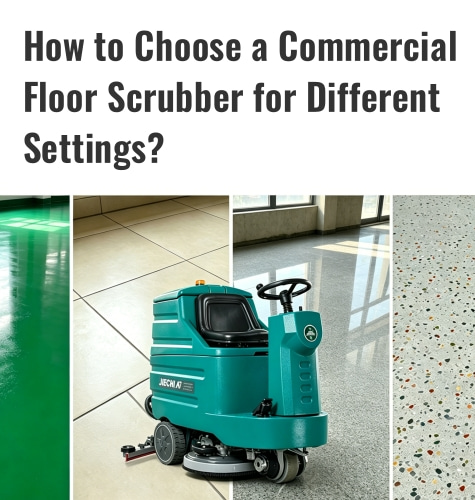
      Whether it’s factories, property management, shopping malls, or transportation hubs, every cleaning scenario has its own “tough challenges”—whether it’s grease that won’t come off, a complex environment that’s hard to manage, or low manual efficiency that costs too much! Don’t worry—Jiechi has already developed tailored cleaning solutions for these four common scenarios, precisely addressing each pain point so you don’t have to lift a finger.   1️⃣ Factories/Industrial Parks (Heavy Grease, Large Particles, Large Areas) Challenges: Vast areas, stubborn engine oil and metal shavings, incomplete manual cleaning, and dust generation. Solution: Choose a ride-on or fully automatic push-type machine based on the area. With powerful scrubbing capabilities, it works on both concrete and epoxy floors, providing deep cleaning while preventing dust-related secondary contamination—compliant and hassle-free.   2️⃣ Property Management/Residential Complexes (Diverse Areas, Quiet Operation, Frequent Cleaning) Challenges: Hallways, garages, and plazas feature diverse layouts and multiple floor materials, requiring quiet operation to avoid disturbing residents. Solution: Compact push-type and ride-on models can navigate narrow elevators and stairwells, enabling a single machine to clean multiple floors. Small-to-medium ride-on floor scrubber cover garages and plazas, protecting epoxy floors and tiles while ensuring scratch-free, residue-free cleaning. They fit in elevators and prevent floor scratches.     3️⃣ Commercial Complexes / Shopping Malls (High Foot Traffic, Need for Rapid Cleaning, Shiny Floors) Challenges: Long operating hours and heavy foot traffic; cleaning must not disrupt shoppers’ experience; floors must dry quickly to prevent slipping and maintain the mall’s image. Solution: Select low-noise, maneuverable push-type or ride-on models based on area size; large-capacity water tanks and long battery life allow for quick cleaning of large areas. Floors are left shiny and streak-free, enhancing the mall’s prestige and customer experience.   4️⃣ Transportation Hubs/Underground Parking Garages (Extremely Large Areas, Heavy Tire Marks, Heavy Dust) Challenges: Open spaces, high cleaning frequency, and extremely low manual cleaning efficiency. Solution: Large ride-on models can clean tens of thousands of square meters daily, efficiently removing tire marks and dust to enhance the hub’s prestige and ensure safe passage, safeguarding the city’s image.   There are no industrial or commercial cleaning challenges we can’t solve—only the wrong cleaning solution! Choose Jiechi to keep every corner spotless!
  • Complete Guide | Match Your Floor Scrubber by Area & Floor Type
    May 06, 2026
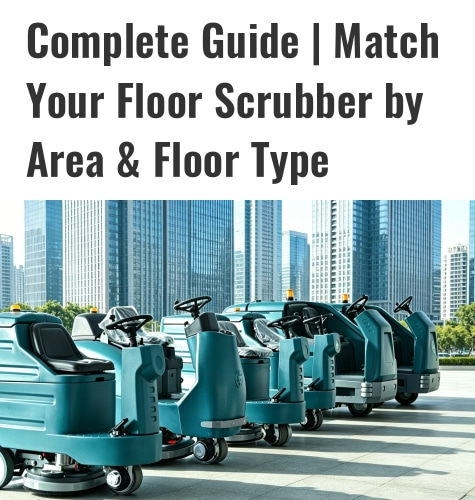
      If you’re the owner or a buyer for a factory, property management company, or retail store, I bet you’ve been driven crazy by cleaning at some point.   The floors remain dusty and dull, which not only hurts customer impressions but also gets you in trouble when management comes for an inspection; When it comes to large-scale cleaning, a few people work until dark and still can’t finish the job.   So, what should you look for when choosing a floor scrubber?   <3,000 sq m (e.g., small campuses, hallways, small workshops): Choose Jiechi’s push-type scrubber! Compact and agile, it fits in elevators and navigates narrow aisles. It’s incredibly easy to operate—cleaning staff can get the hang of it in just five minutes.   3,000–10,000 m² (e.g., medium-sized residential complexes, shopping malls, standard workshops): Choose Jiechi’s small-to-medium-sized ride-on scrubber! They ensure cleaning efficiency while maneuvering flexibly through various areas without being too bulky.   >10,000 m² (e.g., large industrial parks, underground parking garages, heavy industrial plants): Choose Jiechi’s large ride-on models or wash-and-sweep combination machines! Effortless continuous operation allows them to clean tens of thousands of square meters in a single day—no more relying on a large crew working around the clock.   Smart factories or facilities requiring 24/7 cleaning: Go straight for Jiechi’s industrial autonomous floor scrubbers! They automatically plan routes, recharge, and discharge wastewater, plus they support data-driven management—no human supervision required, freeing up your hands completely.   Beyond area size, match the machine to the floor type: - For epoxy floors and tile surfaces, choose soft brush decks to prevent scratching. - For concrete floors and areas with heavy oil stains, choose hard brush decks. You can also pair them with cleaning agents to remove even the most stubborn engine oil and grime.
  • JIECHI BA850BT The Leader in Large-Area Cleaning with High Efficiency & Low Noise
    Apr 28, 2026
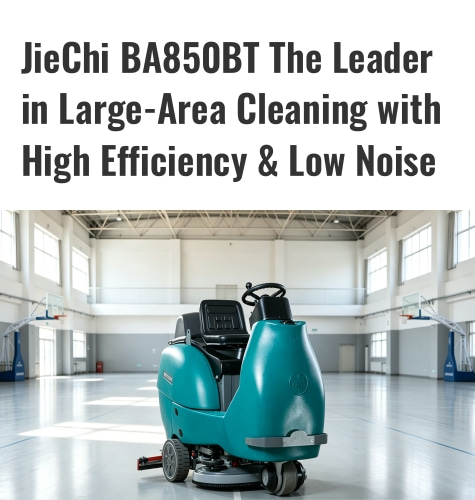
    Large-scale indoor cleaning scenarios demand higher-performance cleaning equipment. ⚠️Factory workshops struggle with heavy oil stains on floors;  ⚠️hospitals and schools enforce strict standards for hygiene cleanliness and noise control;  ⚠️underground parking lots and logistics warehouses feature vast floor areas where manual sweeping is time-consuming and labor-intensive.   The JieChi BA850BT Large-scale floor scrubber delivers a perfect solution to all these challenges.   JieChi BA850BT Core Advantages   850mm Ultra-wide Cleaning Path Equipped with an extra-large brush disc, it delivers extensive single-pass coverage, minimizing repeated cleaning strokes and drastically boosting efficiency in open areas such as corridors, workshops and parking lots, while cutting labor costs effectively.   180L Clean Water Tank + 195L Sewage Tank Dual large-capacity tanks reduce frequent water refills and sewage disposal, supporting long-duration continuous operation. Even for large-scale logistics warehouses spanning thousands of square meters, one-stop uninterrupted cleaning is achievable to avoid workflow disruptions.   Full-body Anti-collision Strips Protects the equipment from impact damage and prevents scratches on floors, walls and surrounding facilities.   Ultra-quiet Operation Design The suction motor is embedded in a sound-absorbing system with premium noise-dampening materials, ensuring extremely low operating noise.   Applicable Scenarios   Shopping Malls & Supermarkets Efficiently cleans tile and marble floors with instant washing and drying performance, ensuring pedestrian safety and maintaining a neat, tidy shopping environment. Factory Workshops & Industrial Plants Effectively removes oil stains, metal scraps and industrial dust. Compatible with cement floors, epoxy flooring, wear-resistant floors and more, it helps factories meet sanitation standards and ensure safe production. Hospitals, Schools & Office Buildings The low-noise design eliminates noise disturbance, with dust-free and residue-free cleaning results. It meets the stringent hygiene requirements of medical, educational and commercial office spaces for a healthy and sanitary environment. Underground Parking Lots The wide cleaning coverage greatly improves operational efficiency, easily removing dust, sediment and tire marks to prevent dust accumulation and keep parking areas well-maintained. Logistics Warehouses & Distribution Centers Long battery life and large tank capacity fully meet large-area cleaning demands, supporting high-efficiency daily sanitation without disrupting warehousing operations and cargo turnover. Hotel Lobbies & Exhibition Centers Leaves floors spotless and completely dry after cleaning, elevating overall venue hygiene and brand image.     Ideal for property management supervisors, factory administrative teams, shopping mall operators, and facility managers of hospitals and schools, the JieChi BA850BT stands as the top choice for daily large-area indoor cleaning and post-construction site cleanup. It enables full-scenario, high-efficiency, and low-consumption cleaning operations, helping create a cleaner, quieter, and safer working and public environment.
  • Commercial Floor Scrubber Classification & Selection Tips for All Scenarios
    Apr 25, 2026
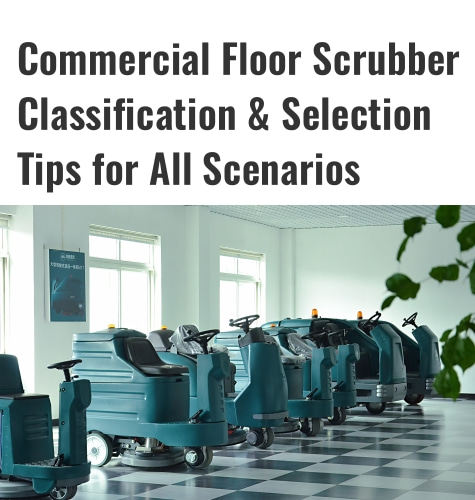
    Do procurement, property management and factory facility staff always feel overwhelmed when choosing commercial floor scrubbers?   The core criteria for classifying commercial floor scrubbers lie in site size + cleaning demands — higher price never means better performance, and perfect compatibility is the top priority.   Walk-behind Scrubber | First Choice for Small Spaces ✨ Applicable Scenarios: Small and medium areas within 5,000 square meters, including convenience stores, small workshops, office corridors, restaurant back kitchens, hospital wards and nursing home activity rooms.   ✅ Core Advantages: Compact body design to easily navigate narrow aisles and equipment gaps. User-friendly operation requires no professional training, easy for general staff to operate. Low maintenance cost and space-saving for storage.   A3 BA530BT   ✅ Procurement Tips: For limited budgets and small-area usage, prioritize models with over 6 hours of battery life and adjustable brush pressure.     Ride-on Scrubber | Main Workhorse for Medium & Large Spaces ✨ Applicable Scenarios: Medium to large areas of 5,000–20,000 square meters, such as mid-sized factories, shopping malls, underground parking lots, large warehouses and industrial parks.   A5 A7 BA850BT A17 【 More machine information 】   ✅ Core Advantages: Hands-free cleaning with ride-on design, doubling working efficiency (4,000–9,200 sq.m/h). Equipped with 6+ hours long battery life and adjustable brush pressure (20–90kg), capable of handling light, moderate and heavy oil stains. Sewage recovery rate ≥95%, ensuring quick-dry non-slip floors.   ⚠ Notes: Larger body requires dedicated storage space. Higher cost than walk-behind models, ideal for large-area cleaning with sufficient budgets. For workshops with dense equipment, select models with flexible steering.   Intelligent Unmanned Scrubber | Optimal for Large & High-end Venues ✨ Applicable Scenarios: Large venues above 20,000 square meters, including logistics parks, large industrial zones, airports, high-speed railway stations, lithium battery dust-free workshops and hypermarkets. ✅ Core Advantages: 24-hour unattended operation and compatible with intelligent management systems, perfect for continuous large-area cleaning. AI automatically identifies dirt types and adjusts cleaning modes; precise navigation and intelligent obstacle avoidance greatly cut labor costs. Meets high-standard demands for dust-free and sterile environments.   ⚠ Notes: High initial investment and regular debugging & maintenance required. Recommended to cooperate with walk-behind scrubbers for supplementary local cleaning.   For large factories and high-end dust-free workshops, choose brands with nationwide after-sales networks and fast response services, to prevent project delays caused by equipment malfunctions.
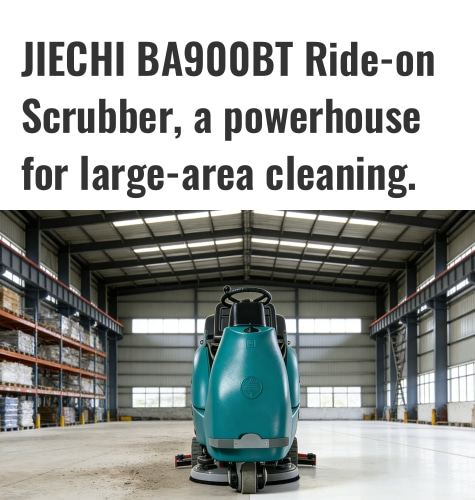
  • JIECHI BA900BT Ride-on Scrubber, a powerhouse for large-area cleaning, the top choice for initial deep cleaning.
    Mar 25, 2026
    How to perform renovation cleaning and daily cleaning quickly, stably, and efficiently in large-scale venues of tens of thousands of square meters, such as factories, logistics warehouses, and large parking garages?   Today, we introduce a robust model designed specifically for large-area scenarios — the JIECHI BA900BT Ride-on Scrubber. With strong power, high efficiency, and durable reliability, it is a recognized "powerful performer" for cleaning large venues.   The BA900BT features a stable body and wide cleaning coverage, specially optimized for heavy dirt, large spaces, and environments with many corners. It easily handles both daily cleaning and in-depth renovation cleaning.   Ride-on Operation, Clean While Seated   Say goodbye to the laborious push-type operation. Sit on it and drive easily, maximizing cleaning efficiency for large areas and greatly reducing the intensity of cleaning work.     Larger Water Tanks + Heavy-duty Body for Stronger Cleaning Power   180L clean water tank / 195L sewage recovery tank. It works for a long time with one water fill, eliminating frequent water refills, ensuring higher efficiency and stable endurance.     Imported Integrated Drive Wheels for Super Flexible Turning   Extremely small turning radius. It maneuvers flexibly in warehouses or garages with many columns and corners, cleaning without dead ends.     Front Bumper for Safer Operation   Effectively buffers collisions during operation, protecting the machine body, walls, and shelves. Even beginners can operate it with confidence.     Adjustable Squeegee for Stable Ground Adhesion and Fast Drying   The angle and pressure of the rubber blade are adjustable. Running smoothly with guide wheels, it dries the floor quickly with no residue and prevents slipping.     Low Noise Design, Suitable for Malls and Hospitals   The suction motor is equipped with high-grade sound-absorbing material for low working noise, so daytime operation does not disturb others.     Triangular Buckle Brush Deck, Tool-free Quick Replacement   Self-developed buckle structure allows brush replacement without tools in just 10 seconds. Maintenance is simple without delaying work.     Maintenance-free Large-capacity Battery for Lasting Power   36V/200AH strong power ensures stable continuous operation, never letting you down during large-area cleaning.     Applicable Scenarios   Large Factories & Heavy Industrial Workshops Handles dusty and oily floors with sufficient power and thorough cleaning.   Logistics Warehouses & E-commerce Warehouses Efficient and fast ride-on cleaning for long aisles and many columns without affecting shipping operations.   Large Underground Garages & Parking Lots Cleans large areas in one pass, washing and drying instantly to avoid slippery floors.   Malls, Supermarkets & Convention Centers Low noise and high efficiency allow safe cleaning during business hours.   Airports, High-speed Rail Stations & Large Venues Fast cleaning of large areas for high cleanliness and a better image.   Renovation & Post-construction Cleaning Strong power and stable body easily handle heavy dirt, cement stains, and construction waste.      
  • How Fiercely Competitive Has the World Become in the Intelligent Era?
    Mar 02, 2026
    Recently, we came across the research data of the cleaning industry, which is truly striking: the recruitment of cleaning enterprises in the southeast coastal areas has surged by 80%, yet the profit margin is a meager 2%.   "The market is extremely competitive" has become a catchphrase across all walks of life.   ?How fierce is the competition in your industry now?   The Intelligent Era Is Corporate Cleaning Still Relying on Manual Labor Alone?   As practitioners in the field of professional large-scale cleaning equipment, we have seen numerous predicaments faced by those in the cleaning industry. The core of the fierce competition in the cleaning industry has never been "too many people with low prices", but rather still using "pure manual labor" to do "mechanized" work.   Dimension Real Data Industry Misconception Equipment Investment 70% of small and medium-sized cleaning enterprises lack systematic technical equipment Thinking that "purchasing equipment = increasing costs", without realizing that human-machine collaboration can reduce costs by more than 30%   If enterprises fail to calculate this account clearly, they can only get caught in the internal friction of low prices.Here are several real cases ⬇️   Case 1 A property management company of a residential community in Shanghai is responsible for the cleaning work of 3 communities. At the beginning of last year, they reported to us that:   The main road of the community covers more than 1,600 square meters. 5 cleaning workers worked non-stop from 8 a.m. to 12 p.m., yet there were constant complaints from property owners, and the client almost terminated the cooperation.   After understanding their difficulties, we recommended the Jiechi BA2100T Ride-on Sweeper. Soon after, they gave us feedback: this equipment is such a relief!   1 cleaning worker can operate it by sitting on it and clean more than 1,600 square meters of the main road in about 20 minutes, even sweeping away the dust and fallen leaves in the cracks, and the complaints from owners have decreased. The work that used to take 5 people 4 hours to finish can now be done by 1 person in less than half an hour, saving nearly 20,000 RMB in labor costs every month. What's more reassuring is that a single charge supports continuous work for 6-8 hours, covering both the community corridors and parking lots. Now, they have redeployed the saved labor to do refined cleaning work and finally renewed the cooperation smoothly. Case 2 A food processing factory, mainly engaged in the processing of pastries and cooked food, has been plagued by the problem of workshop cleaning for a long time. Food workshops have extremely high hygiene requirements, and failure in random inspections may even result in forced suspension of production for rectification.   At first, cleaning was entirely done by manual labor. Anyone in the food industry knows how troublesome it is to clean oil stains—it is labor-intensive and time-consuming, and poor handling may cause workers to slip and fall, creating potential safety hazards.   Later, they adopted the Jiechi Walk-behind Floor Scrubber, which is extremely flexible to operate. With a gentle push, all oil stains are cleaned wherever it goes, and the ground is left water-free, completely solving this big worry. After the improvement of the production environment, the order volume has also increased significantly. Case 3 A cleaning aunt at a RT-Mart store once shared her genuine experience of using the Walk-behind Floor Scrubber A3 with us. She said that the supermarket is crowded with people and has dense shelves, making it impossible for large floor scrubbers to maneuver. She used to mop the floor manually, walking tens of thousands of steps every day, and the mopped floor was prone to water stains, worrying that customers might slip and fall accidentally.   Later, the store was equipped with the walk-behind floor scrubber, which is compact in size and can easily weave through the shelves. The floor becomes dry immediately after mopping with no water stains left. The aunt said that it used to take her 4 hours to mop the floor every day, but now it only takes 2 hours. She can do other cleaning work with the remaining time, and her waist is not as sore as before. Facts have proven that instead of struggling in the vicious competition of low prices, it is better to spend a small amount of money on the right equipment. The labor and time saved are pure profits. Regardless of the industry, the core demands for cleaning are "saving time, saving labor, and achieving a thorough clean".   Founded in 2003, Jiechi is a time-honored brand that not only focuses on the R&D and production of cleaning equipment but also has served well-known brands such as China High-speed Railway, Midea, Hema, Country Garden, BYD, etc. With guaranteed quality and after-sales service, we can respond promptly to any problems.   The cleaning industry is now in the "stage of equipment popularization" and is starting to transition to intelligence. Robots cannot work completely independently yet, but the proportion of manual labor will gradually decrease in the future, and equipmentization is definitely an inevitable trend.   Comply with the market trend, and benefit early by adopting equipment early.

leave a message

leave a message
If you are interested in our products and want to know more details,please leave a message here,we will reply you as soon as we can.
submit

Home

Products

WhatsApp

contact